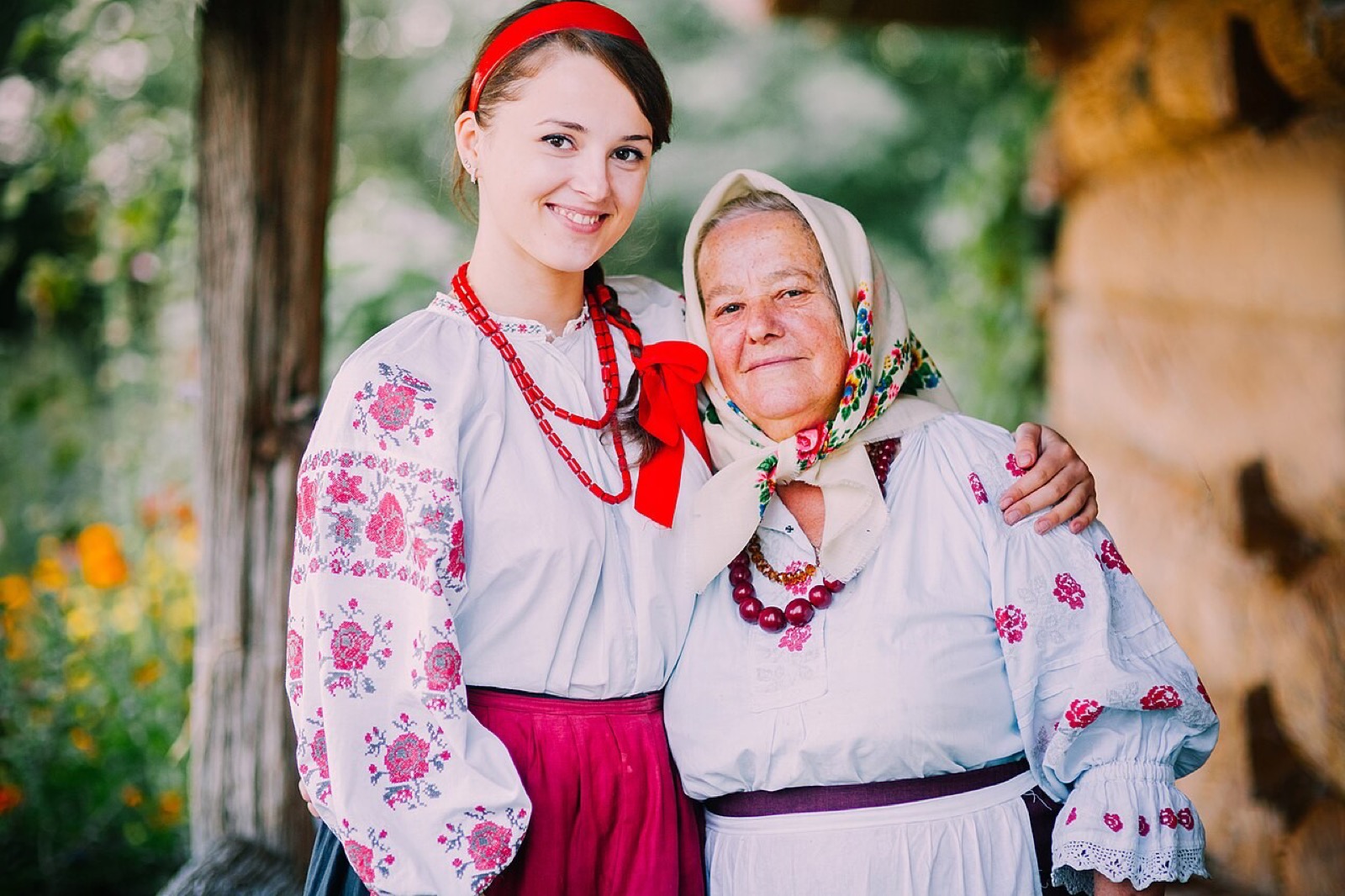
ANATOMY AND PHYSIOLOGY · CHAPTER 6 · AGING SKIN, DAY 1
Aging Skin Lab
Follow along with your worksheet, one question at a time.
mrsajdak.com/aging-skin
Photo: Mikhail Kapychka, CC BY-SA 4.0
START HERE · PICK AN OPENER
Choose how to open the lesson

Click a card to jump to it. Every option ends at the same Observe, Wonder, Predict slide and the same driving question.
OPTION A · VIDEO
21 Years, One Face
Noah Kalina took a photo of himself every day for more than 20 years, from age 19 to about 40. Clip 1 plays all of them in just over two minutes. Clip 2 is a short news story about the project.
Watch for
Watch the skin around the eyes and mouth.
When do you first see lines that stay?
Same face, same parts. What is changing?
Videos on YouTube: Noah Kalina; CNN 10; Thomas Leveritt.
OPTION B · TRY IT · 4 MINUTES
Raisin Rescue
1
Look at a grape and a dry raisin side by side. A raisin is a dried grape.
2
Now look at raisins that soaked in water overnight. Compare them with a dry raisin.
3
Pinch the back of your hand for 5 seconds and let go. Watch it go flat.
4
Think: if water smooths a raisin, would water or lotion smooth a grandparent’s wrinkles?
You need
A few grapes
A few dry raisins
Raisins soaked in water overnight (start the day before)
Paper towels. No eating in the lab.
Watch for
The soaked raisins swell and smooth out.
Did the wrinkles in the raisin come from losing water?
Do you think the wrinkles in older skin come from the same thing?
OPTION C · PHOTOS
Phenomenon: Two Hands, Sixty Years Apart
Photos: A, AL.Eyad, CC BY 2.0; B, Øyvind Holmstad, CC BY-SA 3.0
START HERE
Observe, wonder, predict
Young skin and old skin have the same parts: an epidermis, a dermis, fibers, blood vessels and fat. They are sixty or more years apart.
OBSERVEWhat is different about the older skin? Look at the folds, the lines and the veins.
WONDERWhat could have changed inside the skin to make it look and act this way?
PREDICTPinch the back of each hand and let go. Whose skin goes flat faster? Why: more water, or springier fibers?
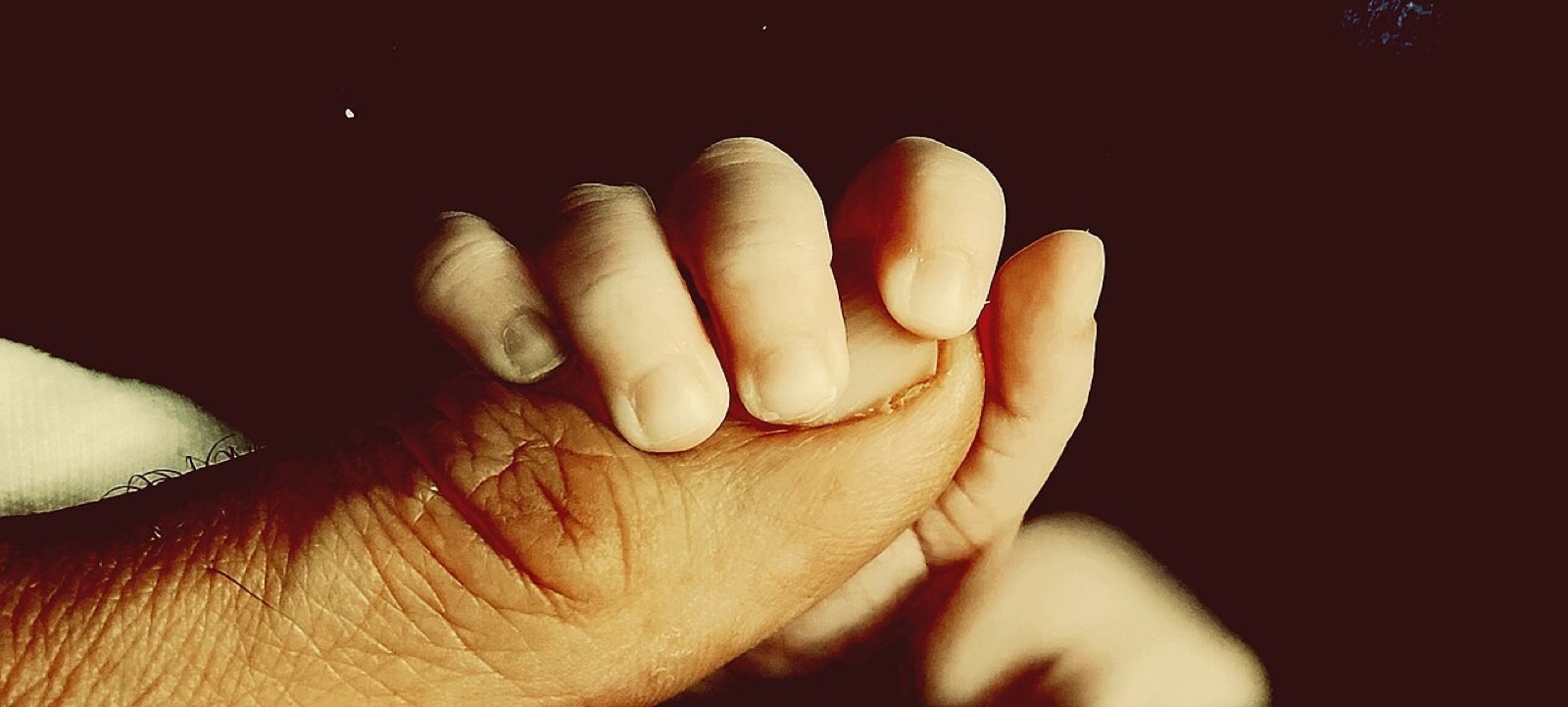
Photo A, up close.
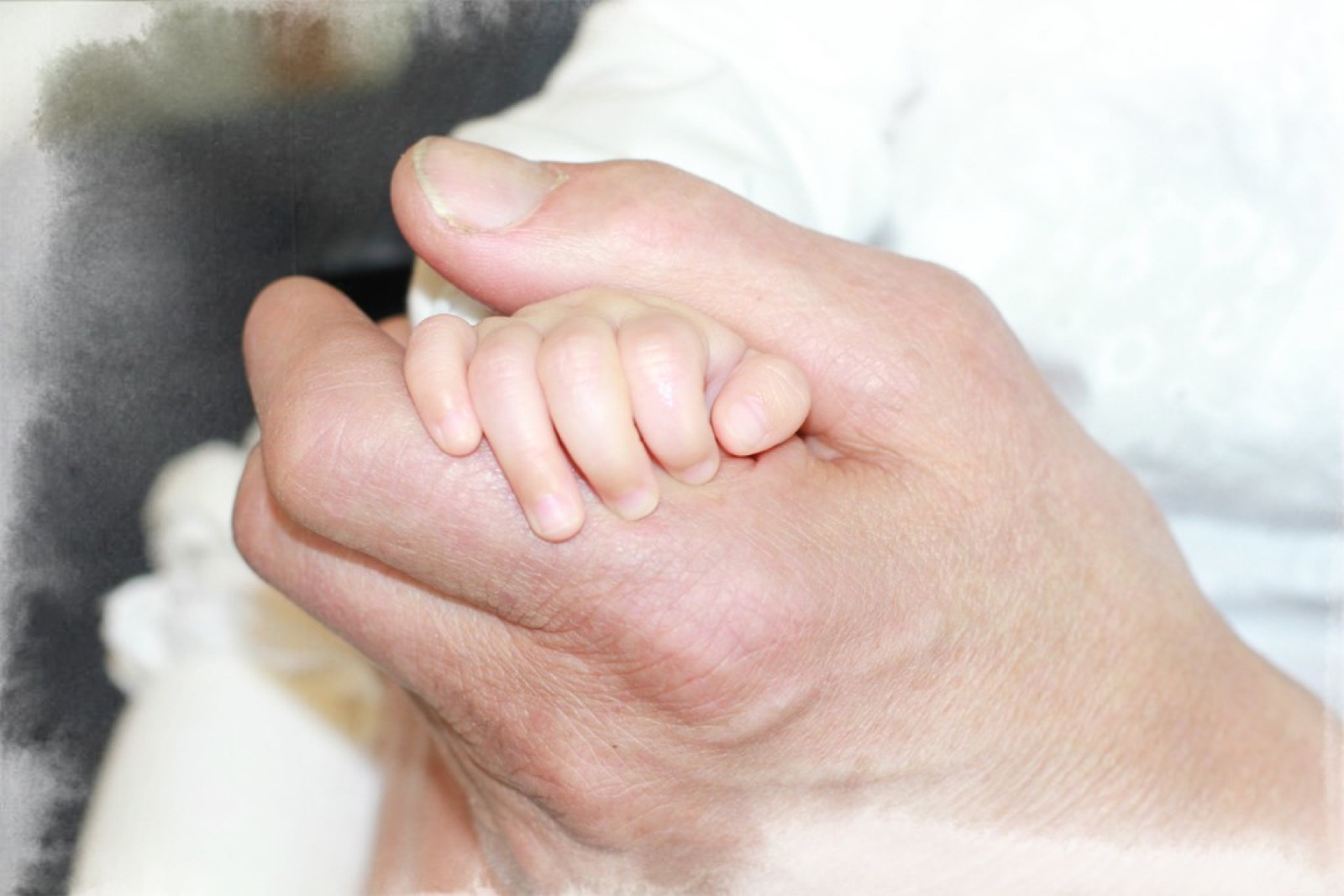
Photo B, up close.
Photos: A, AL.Eyad, CC BY 2.0; B, Øyvind Holmstad, CC BY-SA 3.0
DRIVING QUESTION
Same skin parts, sixty years apart. What does time do to skin, and how can we measure it?
START HERE
What Happened Here?
Finished observing? Click here to find out.
Nothing went wrong with either older hand. Both photos show a baby or a small child holding the hand of an older family member. The older skin is healthy skin that has been in use for sixty years or more. Every part is still there. Time changed how those parts are built.
Watched the video or tried it? Click here.
The video is one healthy man from age 19 to about 40, one photo a day. The soaked raisins smoothed out because their wrinkles came from losing water. Whether skin wrinkles the same way is what the lab tests.
Today, you will time how fast pinched skin goes flat at six ages, stretch a model of the dermis, look inside the skin at 20 and at 80, and help a nurse care for a patient who is 84. At the end, you will come back to these photos and the driving question.
BEFORE YOU START
The parts you already know
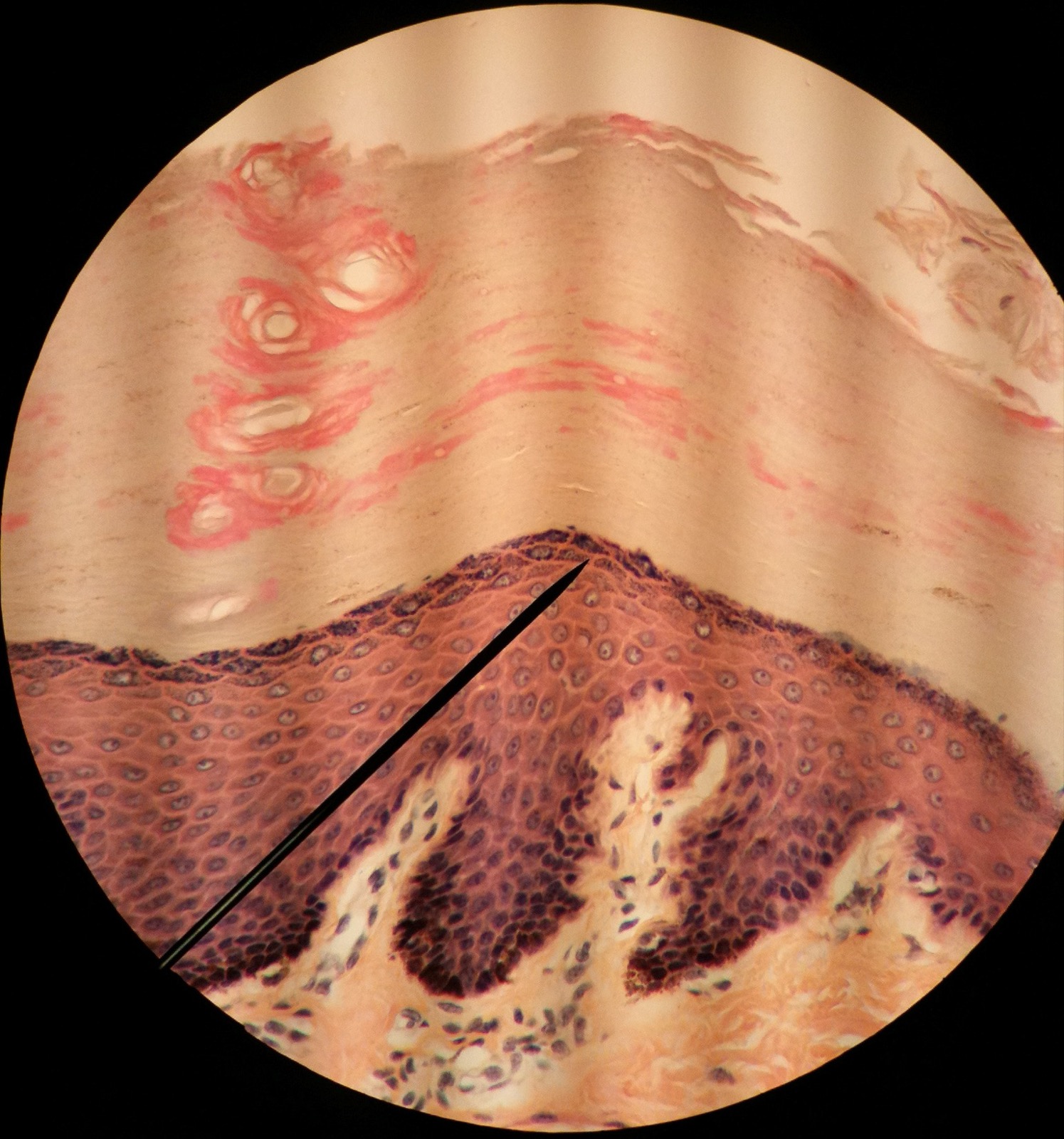
Skin under a microscope: the epidermis on top, the dermis below.
Words for this lab
The epidermis is the outer layer. New cells are made in its bottom row, the stratum basale.
The dermis is the thick layer under it, with fibers and blood vessels.
The subcutaneous layer under the dermis holds fat.
Which of these parts could time change?
Photo: Iceclanl, CC BY-SA 3.0
BEFORE YOU START
What you will learn
I can describe how the collagen, elastic fibers, epidermis, fat and blood vessels of the skin change with age.
I can use snap-back data to show that older skin springs back more slowly, and explain why.
BEFORE YOU START
Get set up
1
Open mrsajdak.com/aging-skin on your device.
2
Write your name, the date and your period on the worksheet.
3
Find the tabs at the top of the lab. Each tab goes with one part of the worksheet.
4
Start on Tab 1. Do not skip ahead.

| Tab in the lab | Worksheet | Questions |
|---|---|---|
| 1. Pinch test | Part 1 | 1 to 5 |
| 2. Fiber model | Part 2 | 6 to 10 |
| 3. Inside at 20 and 80 | Part 3 | 11 to 14 |
| 4. A patient, age 84 | Part 4 | 15 to 18 |
Screenshot: mrsajdak.com/aging-skin
TAB 1 · QUESTIONS 1 TO 5
Part 1. The pinch test
Pinch the skin on the back of your hand. Let go. It goes flat almost at once.
Would it happen the same way for a grandparent?
You will time it at six ages.
Photo: Miluša Snidová, CC BY-SA 4.0
PART 1 · QUESTION 1
Three trials and an average
1
Pick Age 16 and Flat on the desk.
2
Press Pinch. The fingers hold the fold for 5 seconds, then let go.
3
The timer stops when the skin is flat. That is one trial.
4
Do 3 trials. Copy them from Your pinch tests. Add them and divide by 3.
5
Now pick Bent in a fist and do 3 more.
PART 1 · QUESTIONS 2 TO 4
Every age, and the pattern
QUESTION 2
Look at your Question 1 numbers
Were the three flat trials all the same?
What did bending the hand do to the average?
QUESTIONS 3 AND 4
Six ages, hand flat
Do 3 trials at every age. Copy each average and the range on that age’s data card.
Divide the age-65 average by the age-16 average.
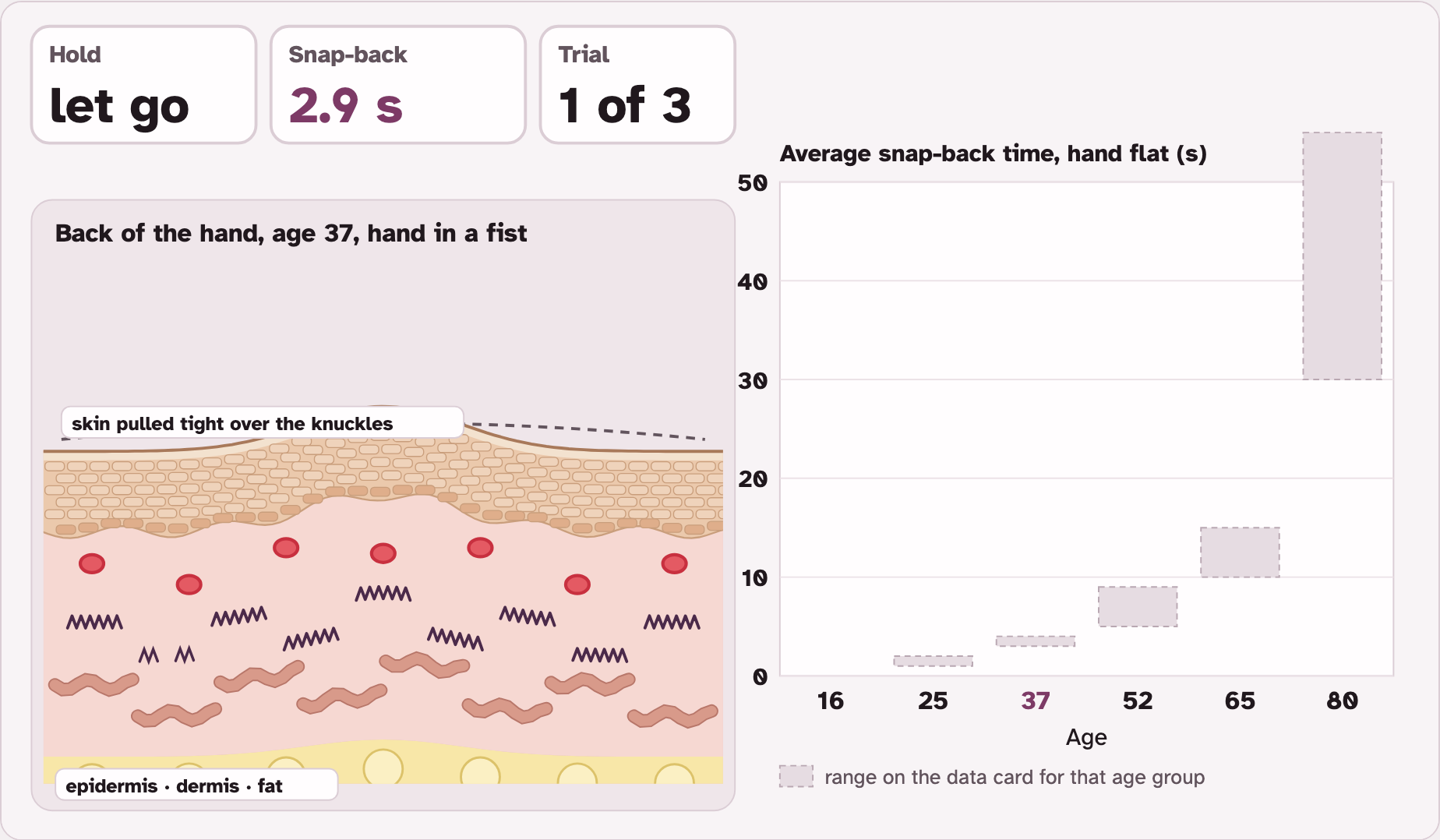
Age 37, hand in a fist. This run is not on your worksheet.
Screenshot: mrsajdak.com/aging-skin, Tab 1
PART 1 · LEARN IT · 1 OF 4
Elasticity
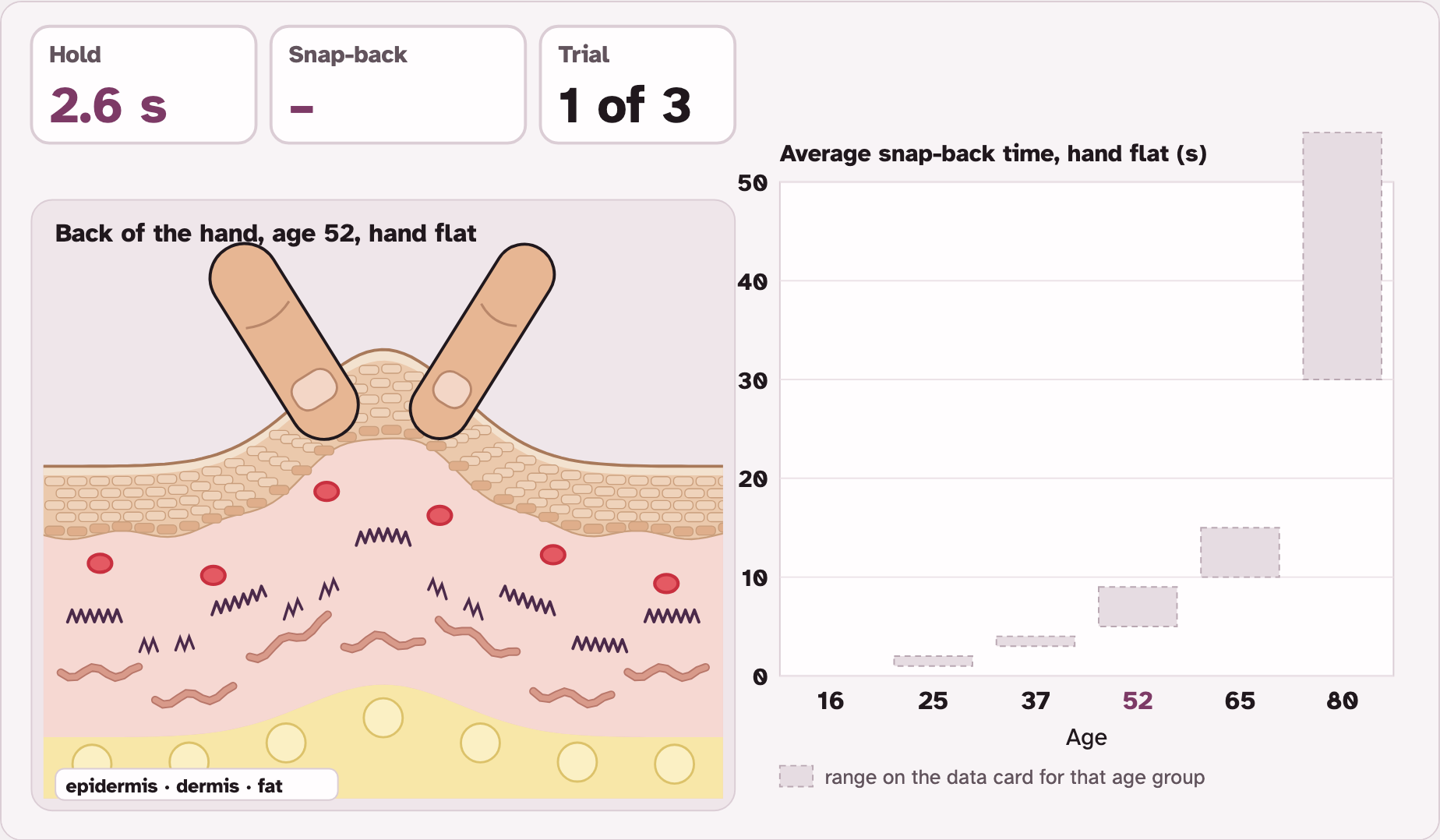
Skin can stretch and then go back to its shape. This is called elasticity. The pinch test measures it. The faster the fold goes flat, the more elastic the skin.
Screenshot: mrsajdak.com/aging-skin, Tab 1
PART 1 · LEARN IT · 2 OF 4
The pull comes from the dermis
The fold is pulled flat by fibers in the dermis, the thick layer under the epidermis. Part 2 shows you which fibers.
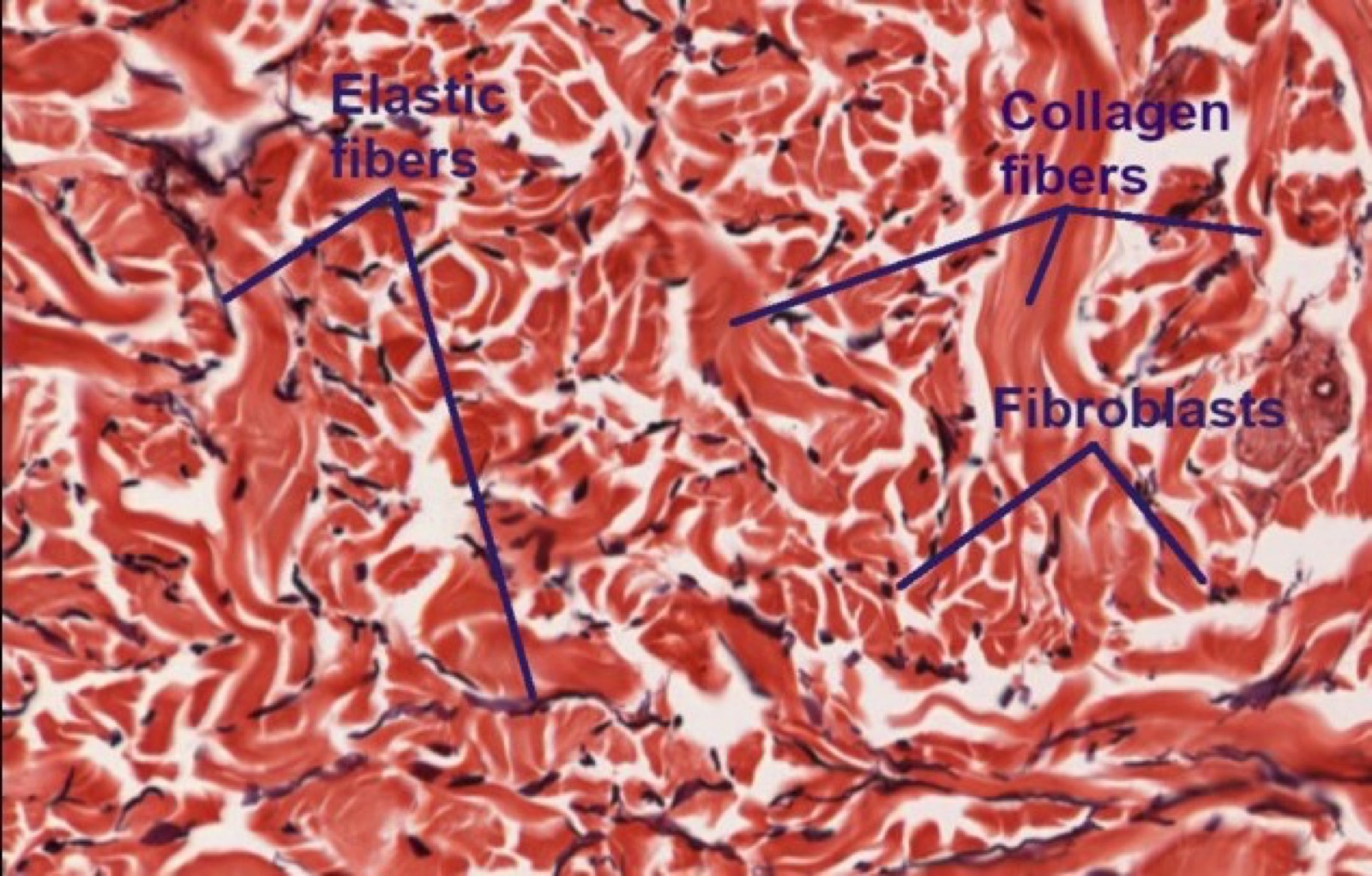
Photo: RWhitwam, CC BY-SA 4.0
PART 1 · LEARN IT · 3 OF 4
A fair test
Change only the age. Keep the rest the same: the same spot, a flat hand, the same 5-second hold. These are controlled variables. A bent hand changes the time for a reason that is not age.
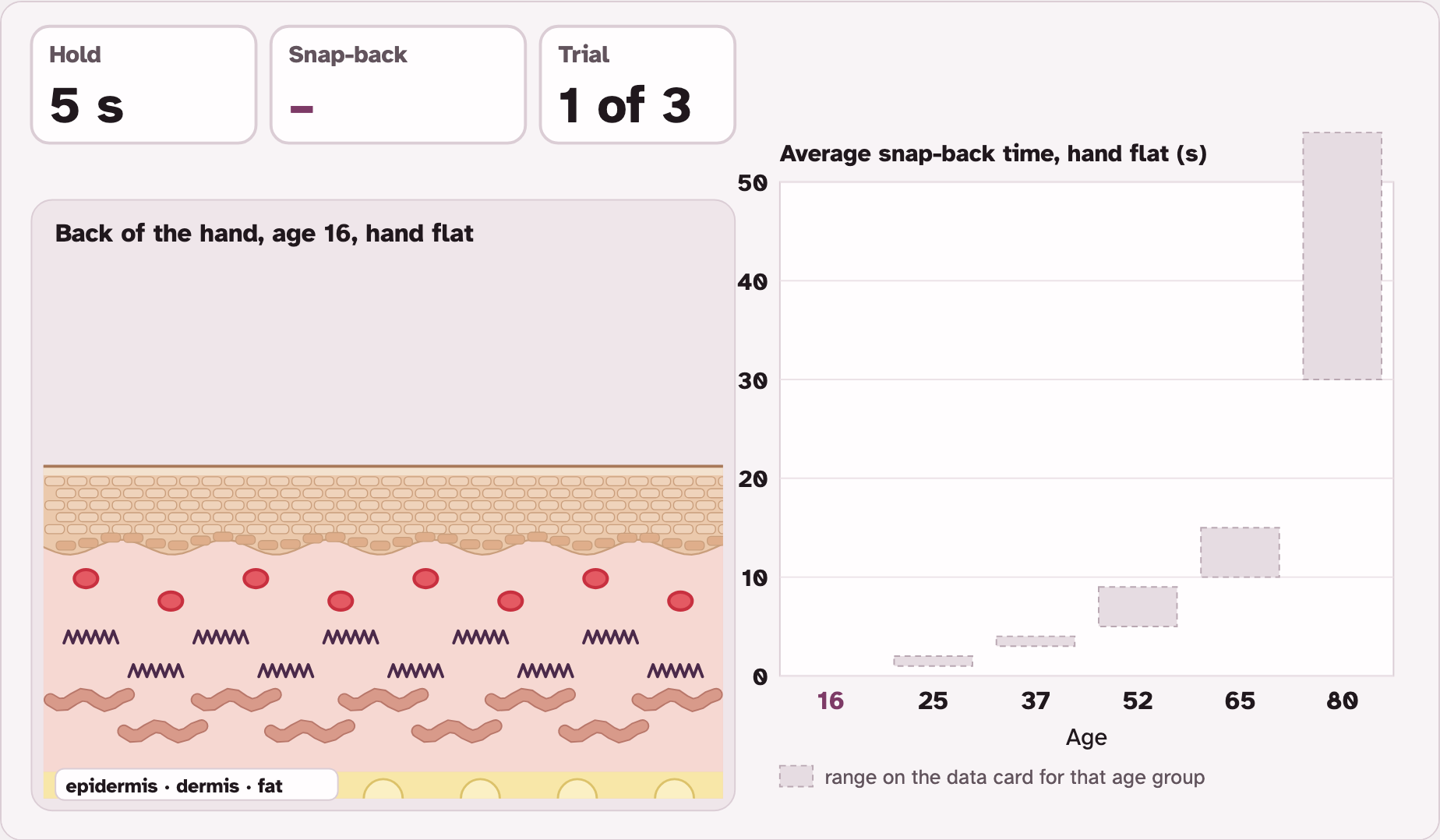
Screenshot: mrsajdak.com/aging-skin, Tab 1
PART 1 · LEARN IT · 4 OF 4
Three trials and an average
One trial can be a fluke. The average of three is more trustworthy than any one. People also vary, so each data card gives a range.
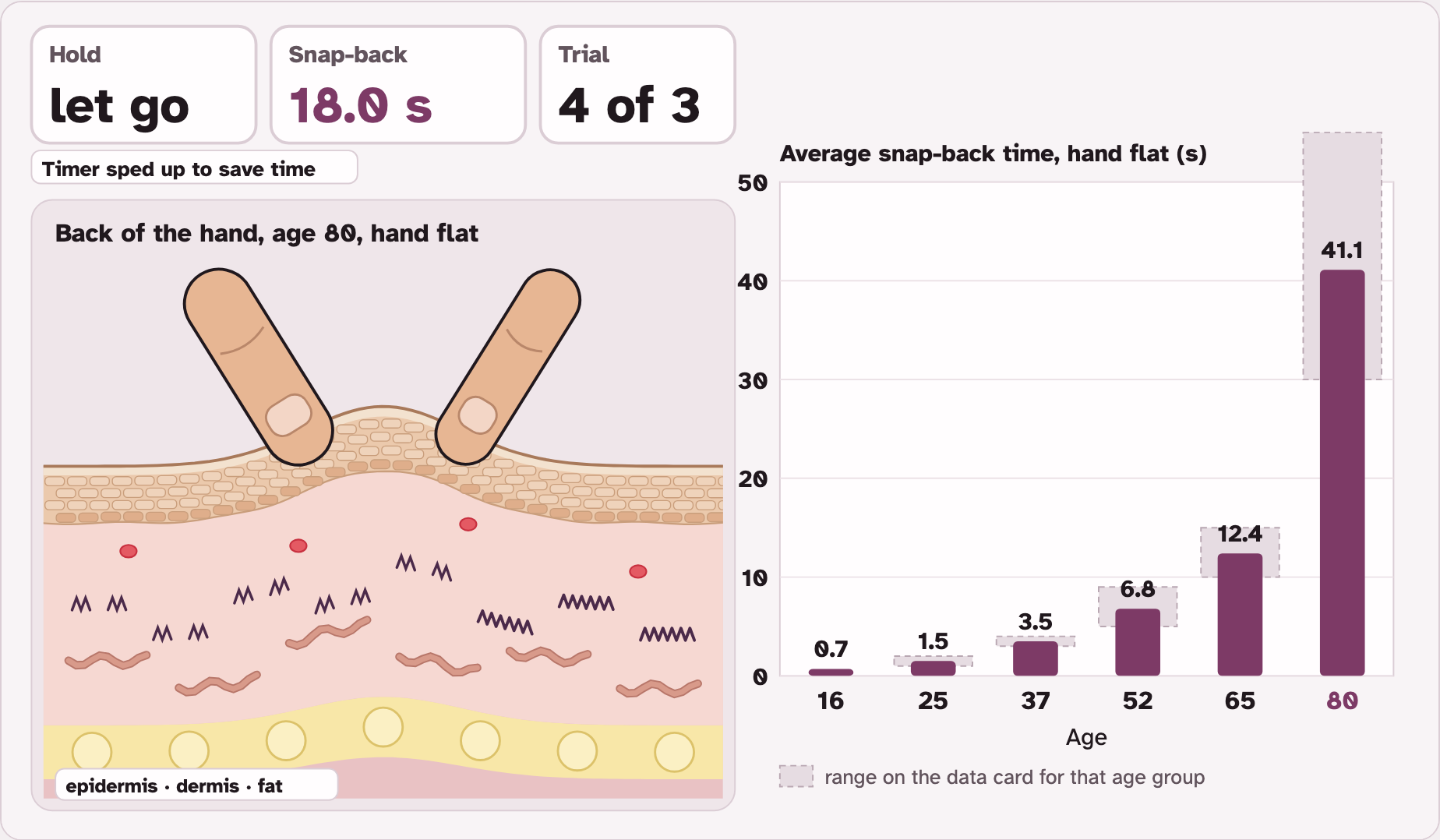
Screenshot: mrsajdak.com/aging-skin, Tab 1
PART 1 · QUESTION 5
Reply to a classmate
She says
“I pinched with my hand in a fist and got 2.4 seconds. My skin is aging early.”
Your reply
Use the words controlled variable and average. Say what the pinch test measures.
Think
Did her test change only one thing?
PART 1 · THE BIG IDEA
The pinch test measures elasticity. In a fair test, the time goes up with age: slowly at first, then steeply after 60.
IN YOUR WORDSWhy must everyone pinch the same spot with a flat hand?
TAB 2 · QUESTIONS 6 TO 10
Part 2. A model of the dermis
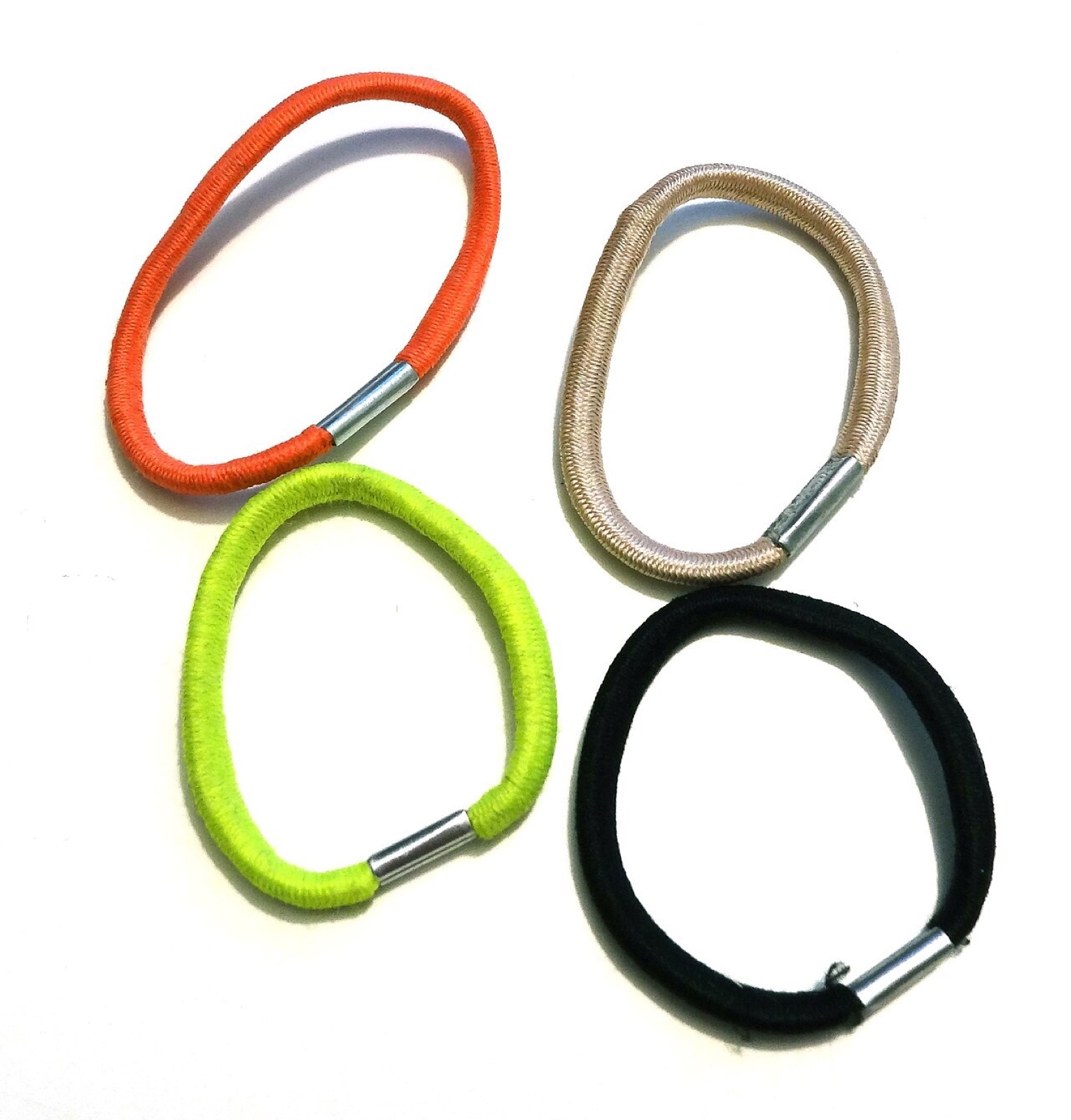
A new hair tie snaps right back. One that has been stretched over a can for two weeks does not.
A cotton string hardly stretches at all.
Which one acts like young skin? Like older skin?
Photo: Alicia Fagerving, CC BY-SA 3.0
PART 2 · QUESTION 6
Stretch, let go, measure
1
Pick Lane 1: new hair tie.
2
Press 1. Lay it flat. Read the length.
3
Press 2. Stretch to 15 cm. It holds for 5 seconds, then lets go.
4
Press 3. Wait 1 minute. Copy the row from Your measurements.
5
Do the worn tie. Then the string: it gets a firm pull instead.
PART 2 · QUESTION 7
Which piece acts like which hand?
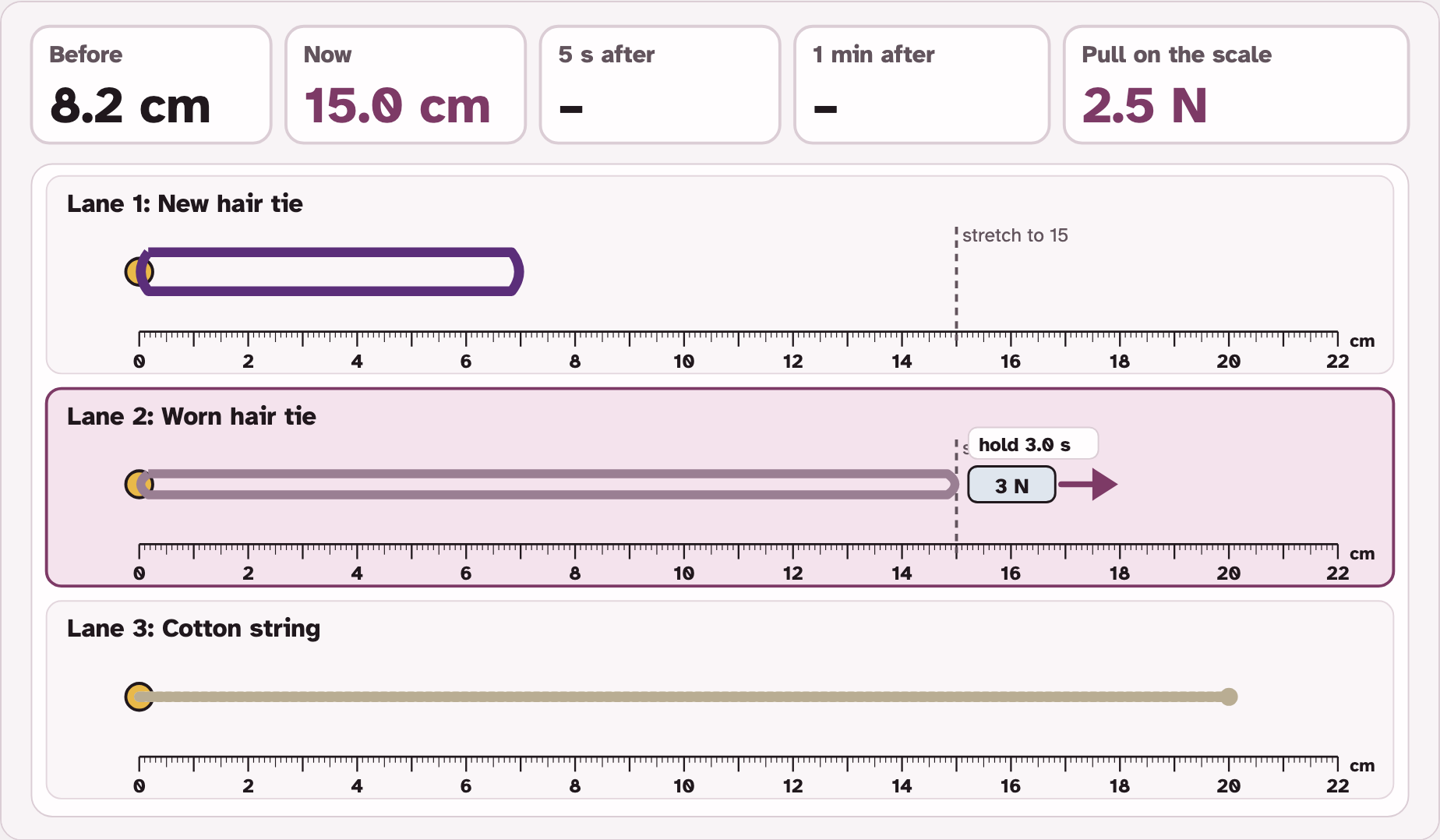
The worn tie, mid-stretch.
QUESTION 7
Compare with Part 1
Which piece came back fast, like the age-16 fold?
Which came back slowly, like the age-80 fold?
Which took the biggest pull but hardly stretched?
Screenshot: mrsajdak.com/aging-skin, Tab 2
PART 2 · LEARN IT · 1 OF 4
Collagen fibers: ropes
Collagen is a protein. Collagen fibers are like ropes. They give the dermis its strength, and they hardly stretch. In the model, the string is collagen.
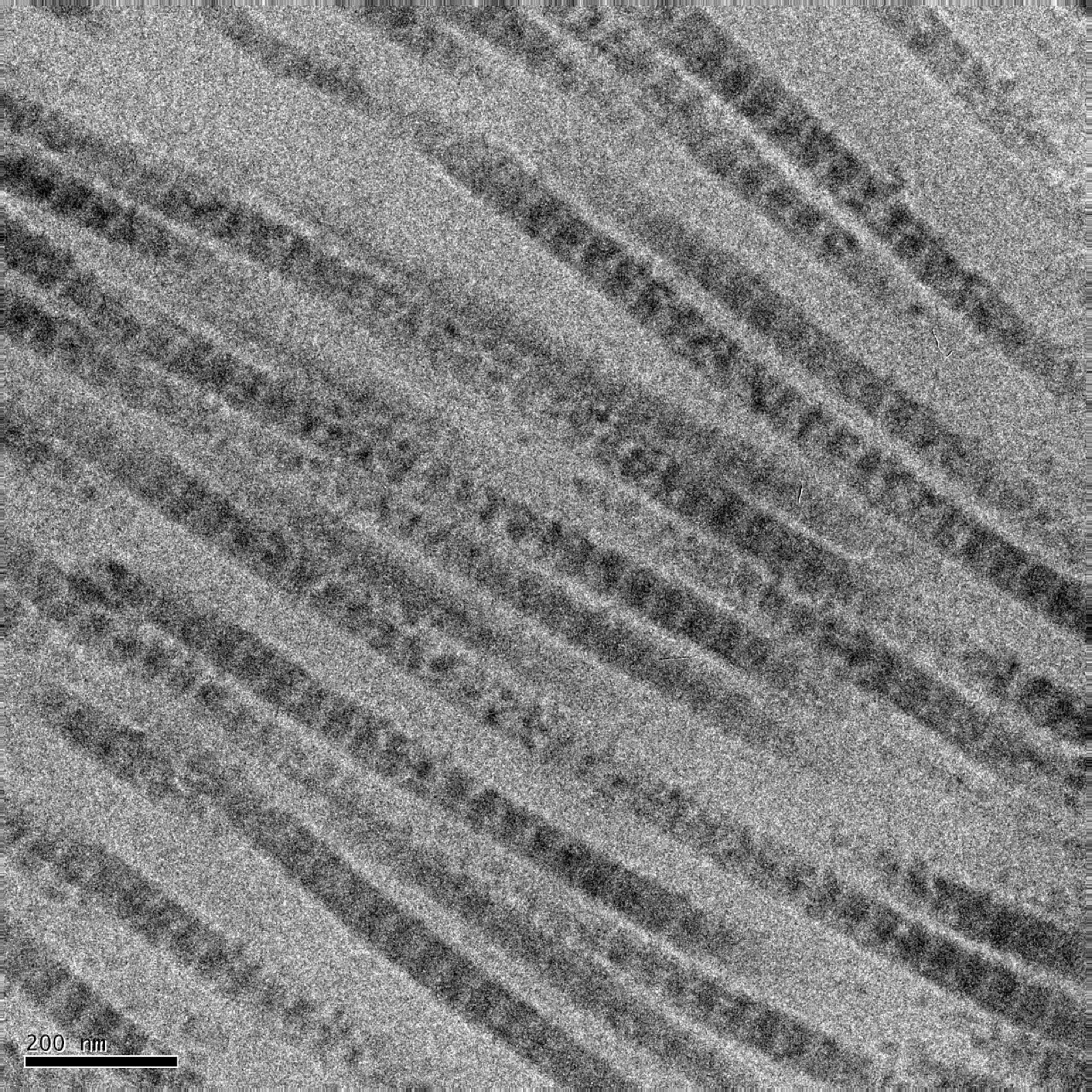
Photo: Vincesherman, CC BY-SA 4.0
PART 2 · LEARN IT · 2 OF 4
Elastic fibers: springs
Elastic fibers stretch and then spring back. They give skin its elasticity. In the model, the new hair tie is young elastic fibers. Cells called fibroblasts make both fibers.
Photo: RWhitwam, CC BY-SA 4.0
PART 2 · LEARN IT · 3 OF 4
With age: fewer, stiffer, broken
Over many years, fibroblasts make less collagen, and what is left gets stiff. Elastic fibers become fewer, stretched out and broken: the worn tie. So a pinched fold comes back slowly.
Screenshot: mrsajdak.com/aging-skin, Tab 2
PART 2 · LEARN IT · 4 OF 4
Wrinkles: a fold that stays
Skin folds when you smile or bend a finger. With fewer springs and stiffer ropes, the fold stops going all the way back. That is a wrinkle. It starts in the dermis. Lotion helps the surface. It cannot rebuild fibers.
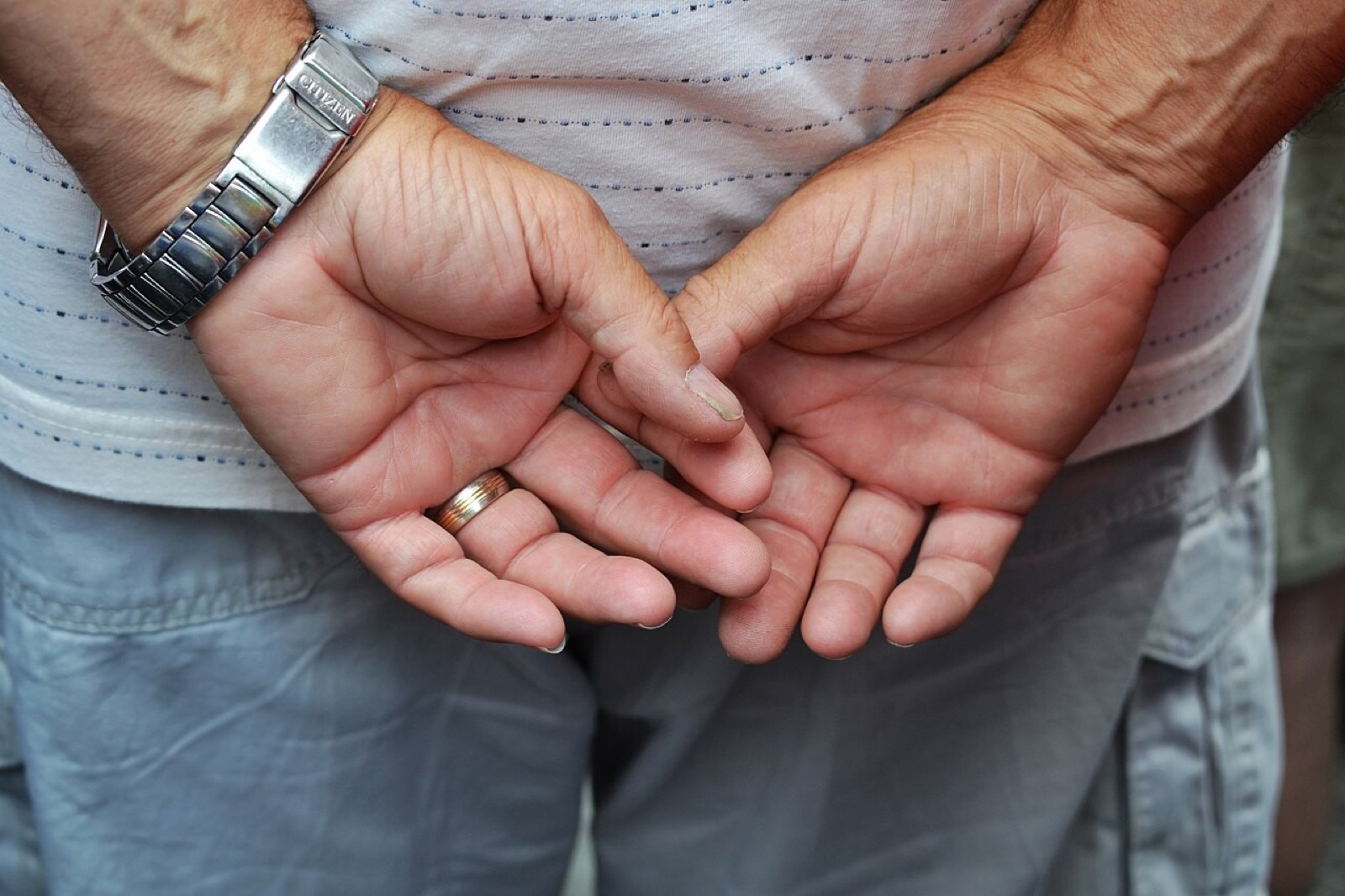
Photo: Tony Alter, CC BY 2.0
PART 2 · QUESTIONS 8 TO 10
Label it, check it, fix it
QUESTION 8
Label the mat
Place the five label cards in the lab.
Two cards fit no lane. Why not?
QUESTION 9
Model check
How is the worn tie like old elastic fibers?
How is the model not like real skin?
QUESTION 10
Fix the sentence
“Wrinkles come from skin drying out, so lotion will fix them.”
Start: Wrinkles come mostly from …
PART 2 · THE BIG IDEA
Collagen fibers give skin strength. Elastic fibers let it spring back. With age, both become fewer and damaged, so skin snaps back slowly and folds stay.
IN YOUR WORDSWhy does an 80-year-old’s pinched skin flatten slowly, even after a glass of water?

TAB 3 · QUESTIONS 11 TO 14
Part 3. Inside at 20 and 80
Fibers are not the only thing time changes.
You will look inside the forearm at 20 and at 80, count what you see, time a new skin cell, and bump both arms.
Photo: CEphoto, Uwe Aranas, CC BY-SA 3.0
PART 3 · QUESTIONS 11 TO 13
Count, clock and bump
1
Pick Count. Pick each thing in the list. Copy both numbers.
2
Pick Cell clock. Run the Forearm, then the Upper inner arm.
3
Watch the purple cell climb from the stratum basale to the top.
4
Pick Bump test. Press Bump both arms.
5
Copy everything from Inside the skin.
PART 3 · LEARN IT · 1 OF 4
A thinner epidermis
With age the epidermis gets thinner. The wavy edge where it meets the dermis gets flatter, so the two layers hold on to each other less well.
Photo: Iceclanl, CC BY-SA 3.0
PART 3 · LEARN IT · 2 OF 4
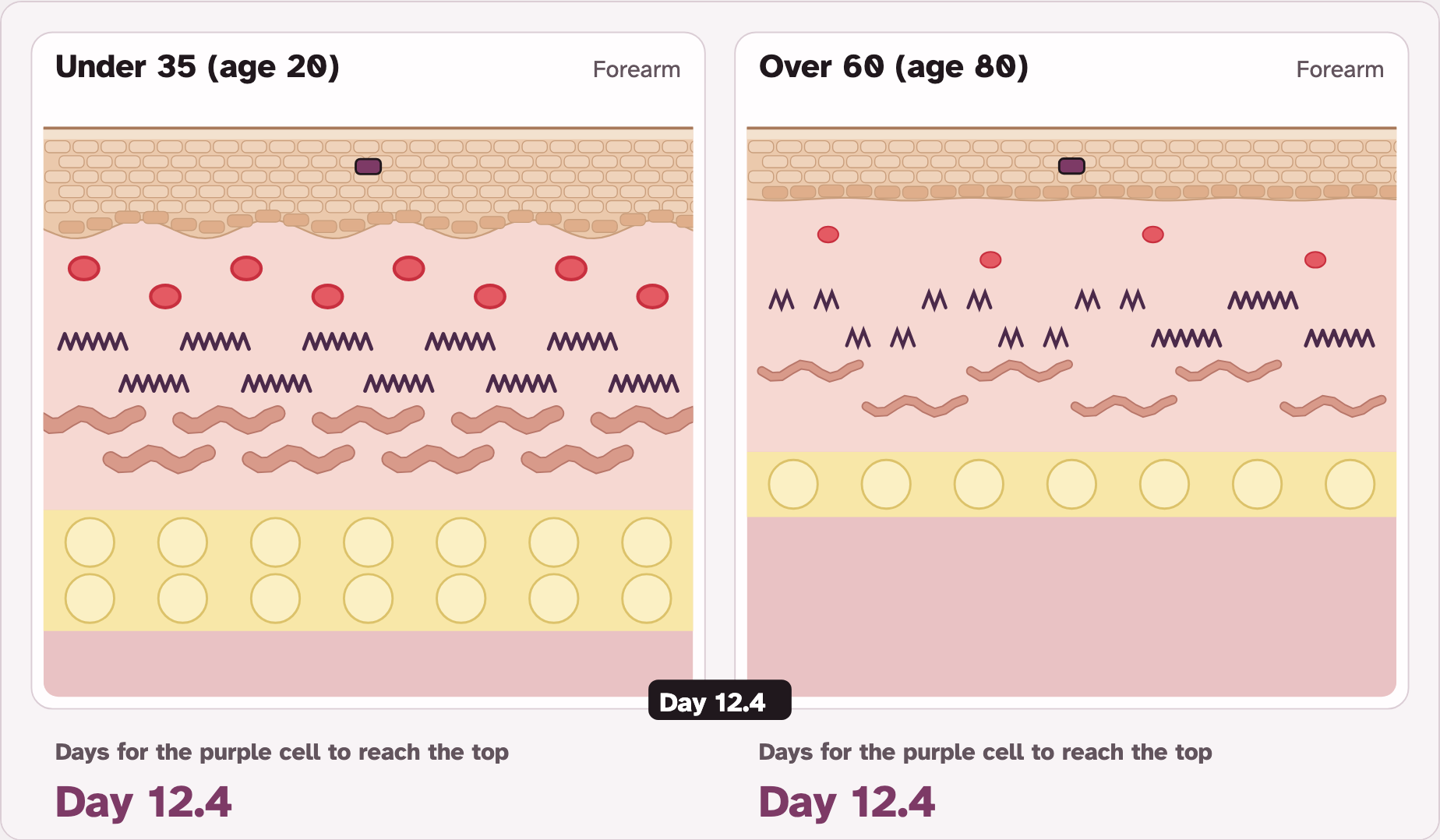
A slower stratum basale
New cells are made in the stratum basale. With age they divide more slowly. A new cell takes about 20 days to reach the top in young adults, and about 28 after 60. Cuts heal more slowly.
Screenshot: mrsajdak.com/aging-skin, Tab 3
PART 3 · LEARN IT · 3 OF 4
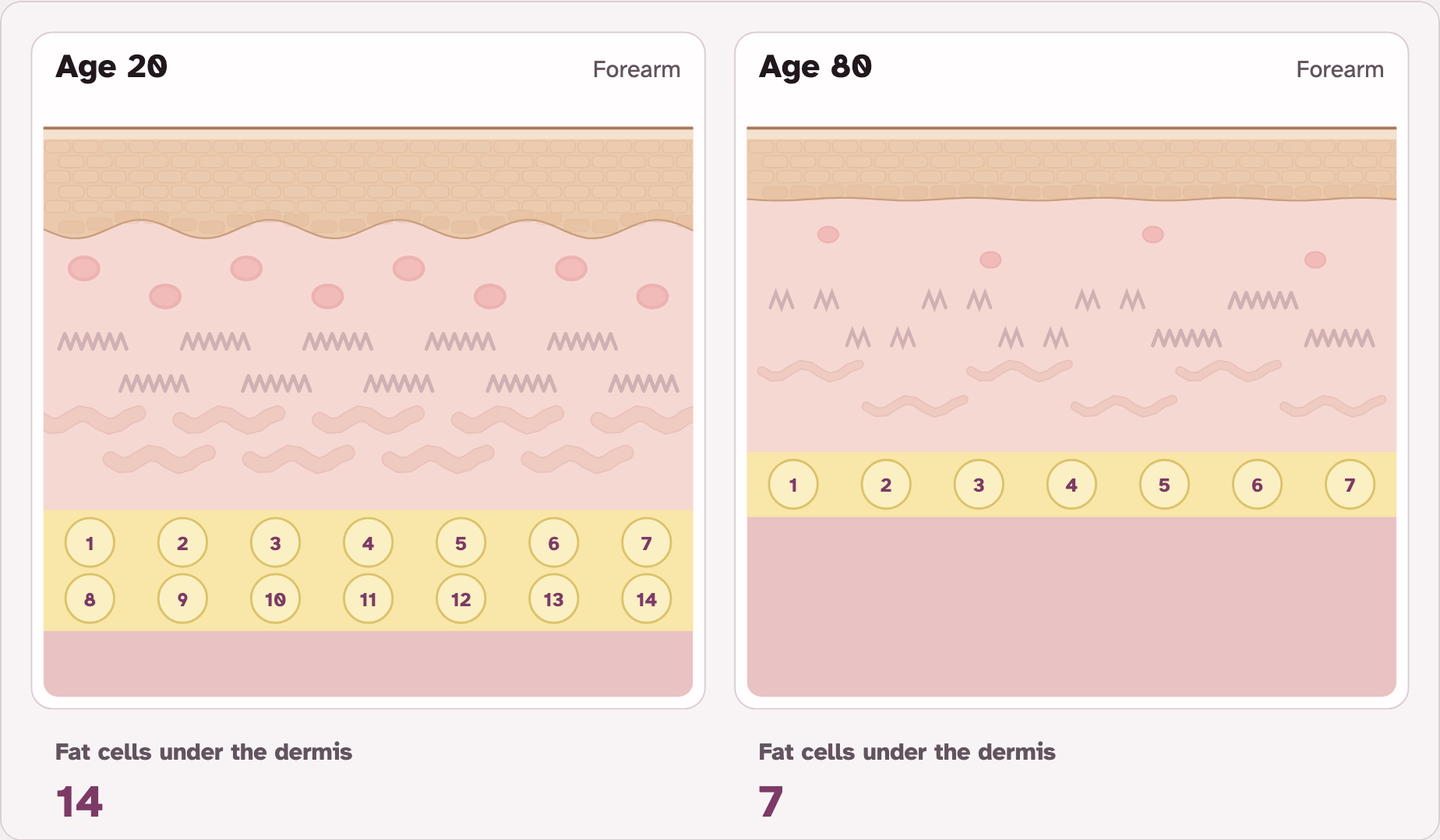
Less fat under the skin
The subcutaneous layer holds fat. Fat is a cushion and keeps heat in. With age there is less, so older adults feel cold more easily, and veins on the hand show.
Screenshot: mrsajdak.com/aging-skin, Tab 3
PART 3 · LEARN IT · 4 OF 4
Fewer, thinner blood vessels
The dermis has fewer blood vessels, with thinner walls. A small bump can break one, and blood leaks out: a bruise. Less warm blood near the surface means colder hands.
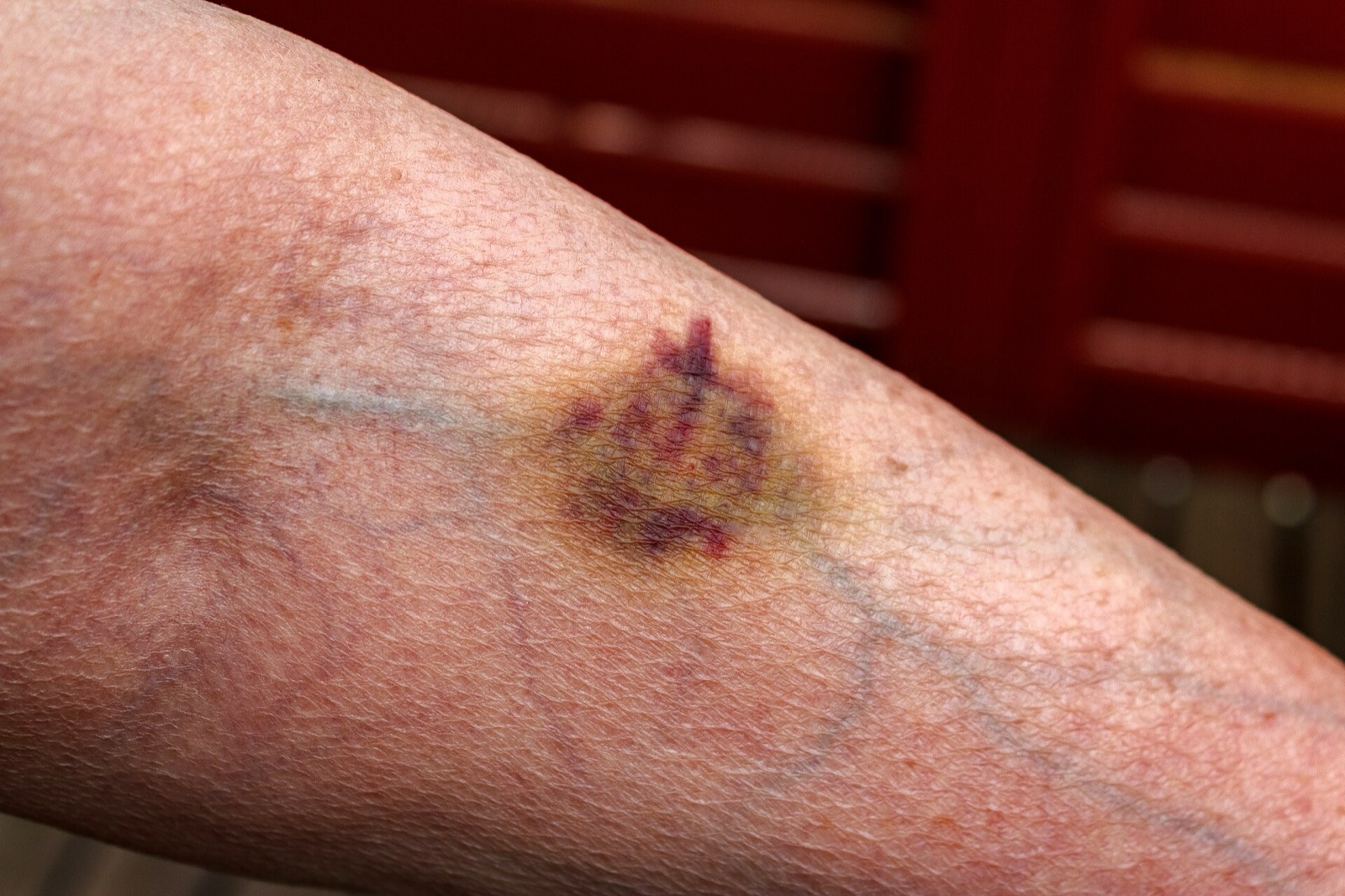
Photo: W.carter, CC BY 4.0
PART 3 · QUESTION 14
Change, and what it does
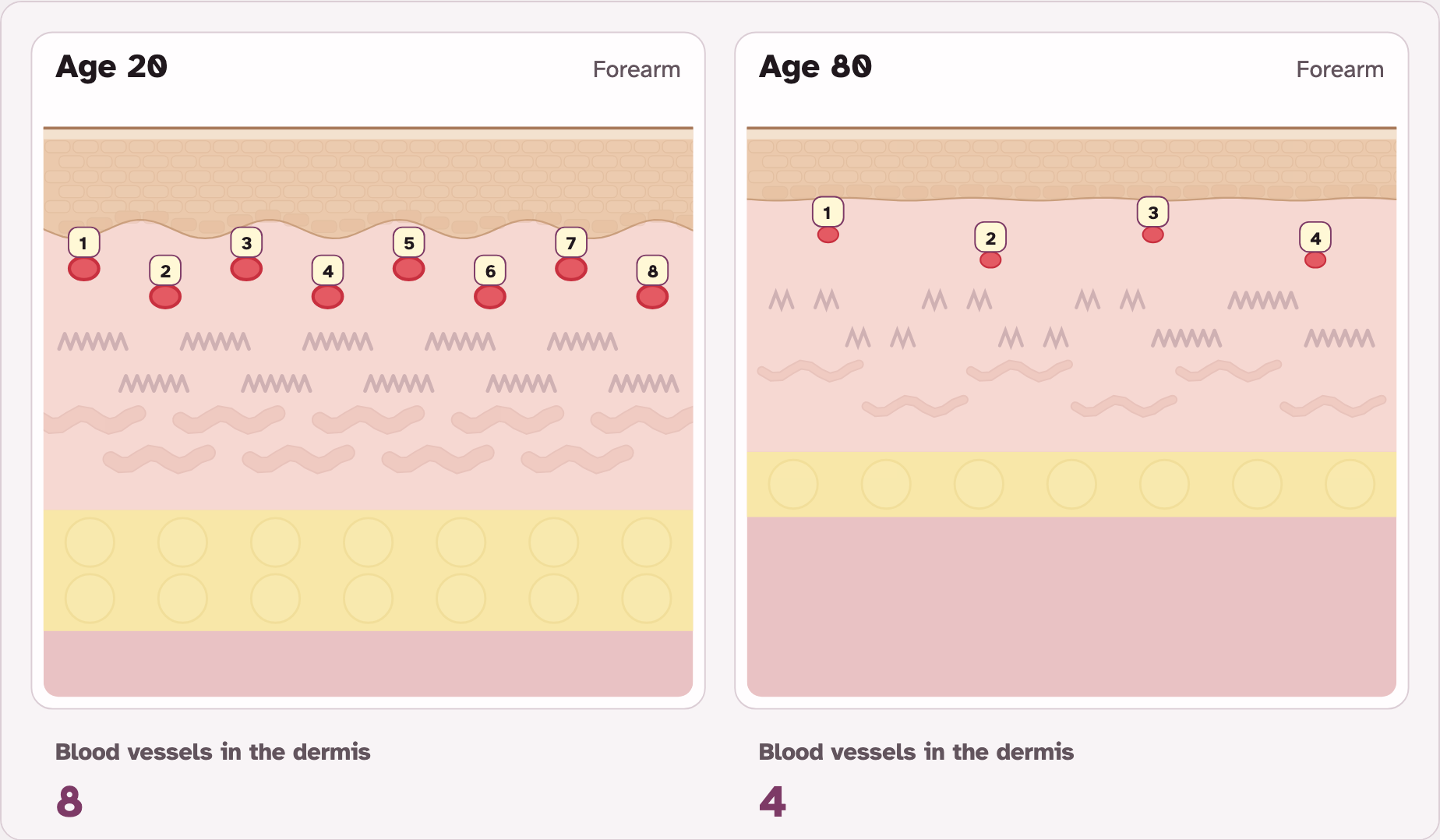
Vessels, counted.
QUESTION 14
Fill in the table
For each part of the skin: what changes with age, and what you can see or feel.
Use your numbers from questions 11 to 13.
Screenshot: mrsajdak.com/aging-skin, Tab 3
PART 3 · THE BIG IDEA
With age the epidermis thins and its new cells come more slowly, the fat layer shrinks, and the dermis has fewer, thinner blood vessels.
IN YOUR WORDSWhy does an older adult bruise from a bump that a teen would not notice?
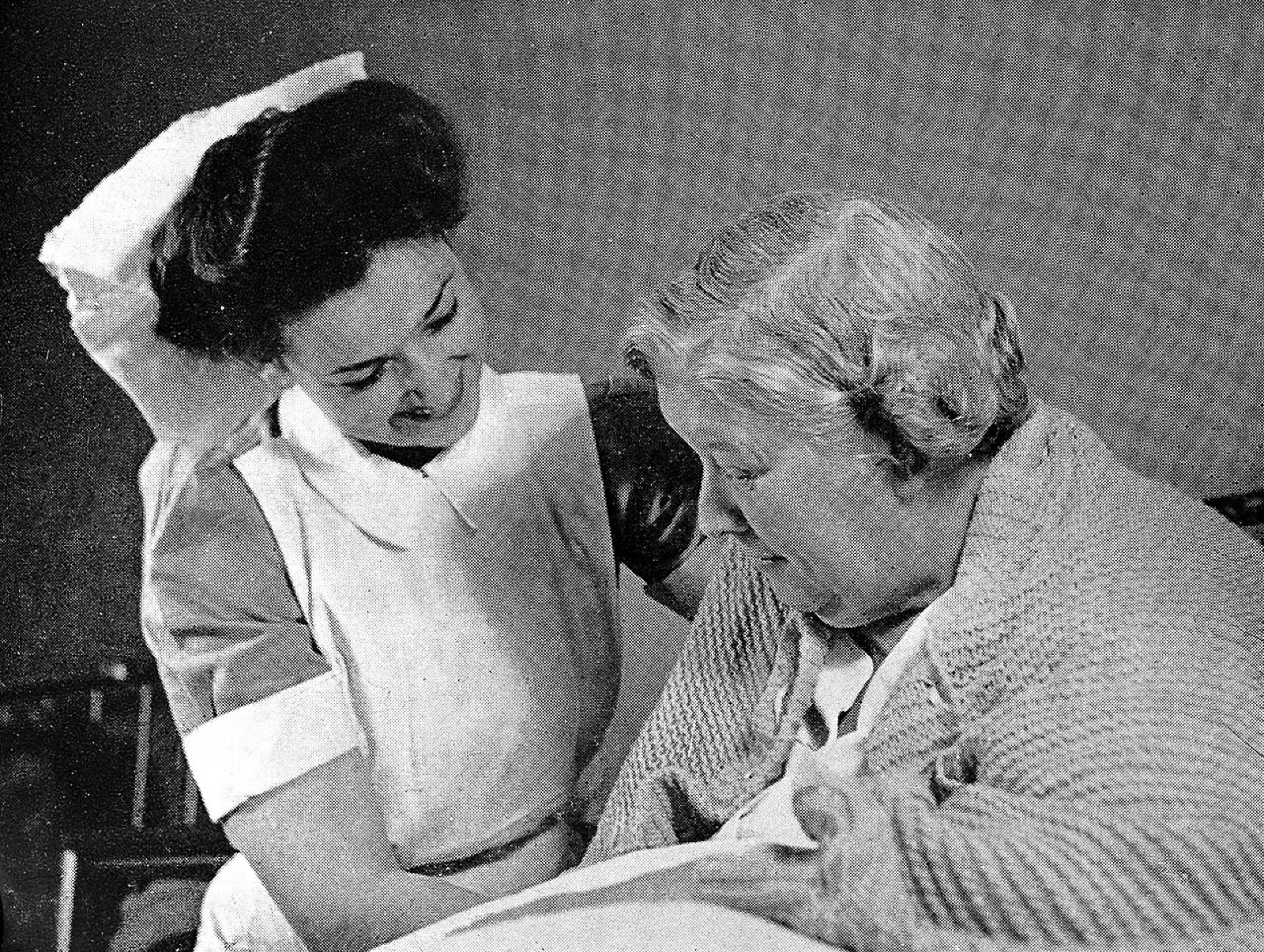
TAB 4 · QUESTIONS 15 TO 18
Part 4. A patient, age 84
She scraped her forearm on a bed rail. A bandage is taped over it.
Her nurse uses soft tape and peels it off slowly.
Why does that matter for her, and not for her grandson?
Photo: Wellcome Collection, CC BY 4.0
PART 4 · QUESTION 15
Take off the tape
1
Pick Patient, age 84.
2
Pick a tape and a peel. Press Peel the tape.
3
Watch the bars: the tape’s pull against the skin’s hold.
4
Test all four choices on her arm.
5
Then pick Her grandson, regular tape, peeled fast.
PART 4 · QUESTION 16
Pull against hold
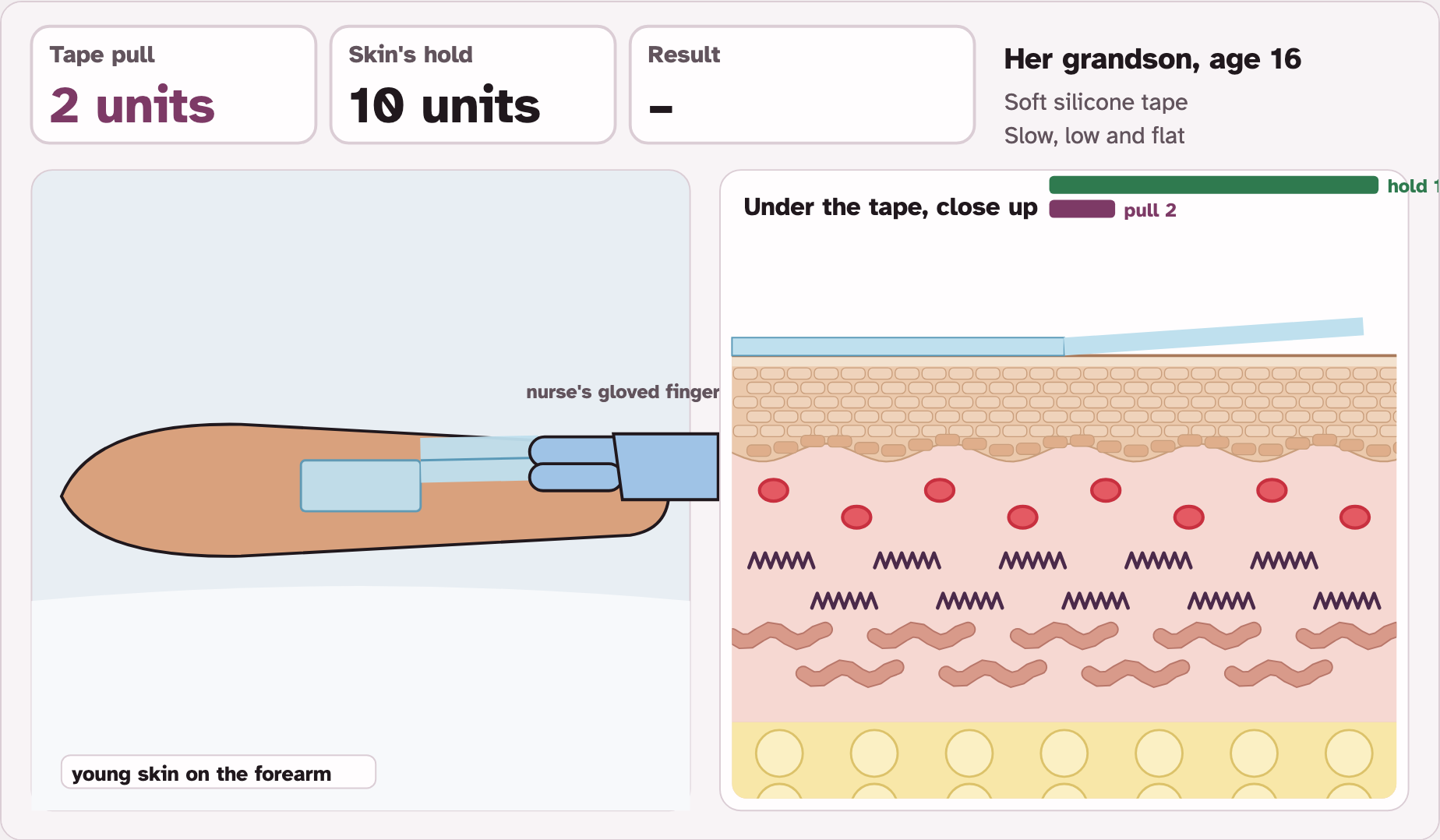
Her grandson, silicone, slow. This run is not on your worksheet.
QUESTION 16
Find the rule
When did the skin tear: when the pull was bigger or smaller than the hold?
What are her hold and her grandson’s hold?
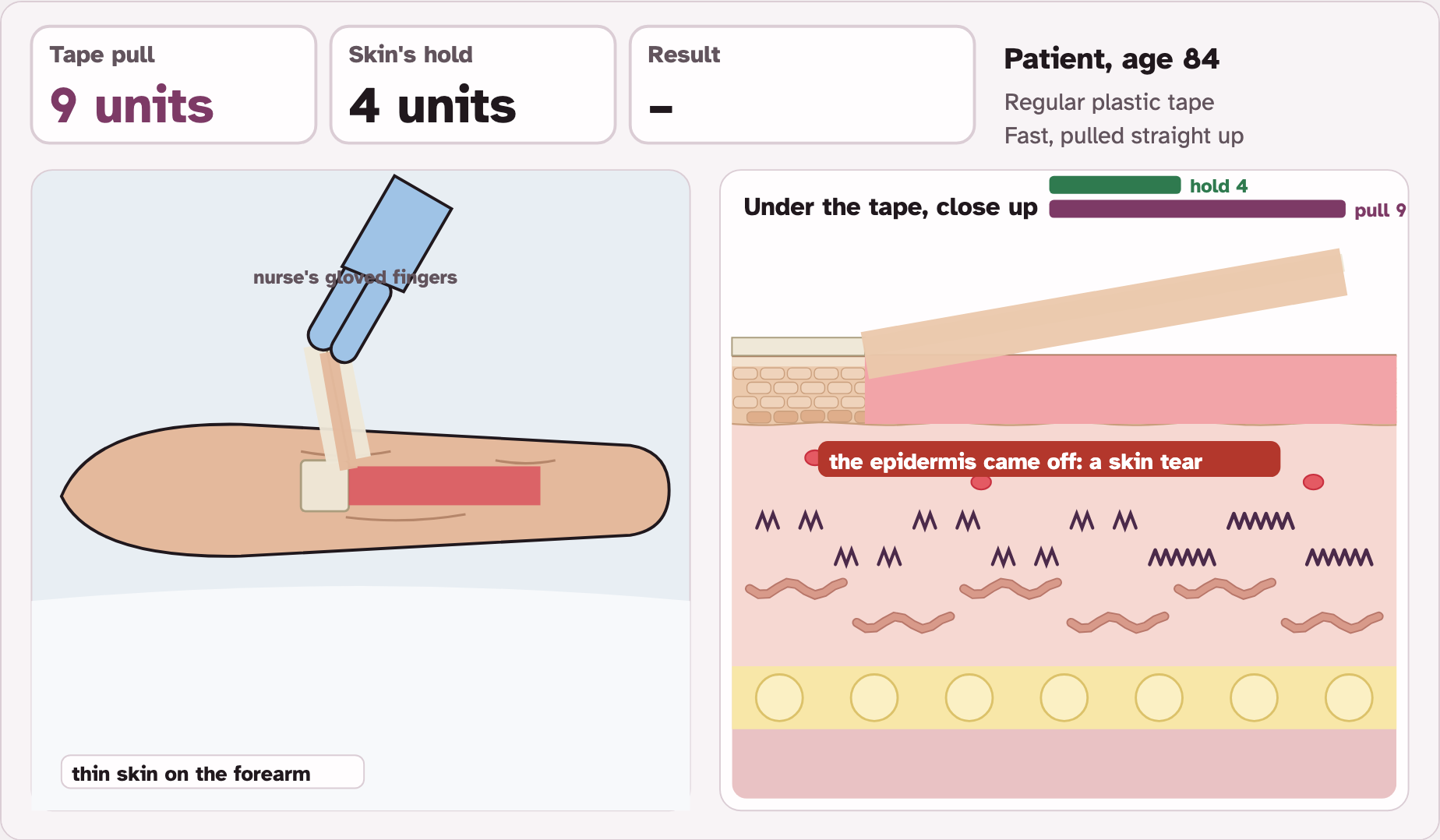
Screenshot: mrsajdak.com/aging-skin, Tab 4 · The counts in Tab 3 and the pull and hold in Tab 4 are from a model made to show the pattern.
PART 4 · LEARN IT · 1 OF 4
A skin tear
In older skin, the thin epidermis is held weakly to the dermis. A strong pull can lift the epidermis right off. This is called a skin tear.
Screenshot: mrsajdak.com/aging-skin, Tab 4
PART 4 · LEARN IT · 2 OF 4
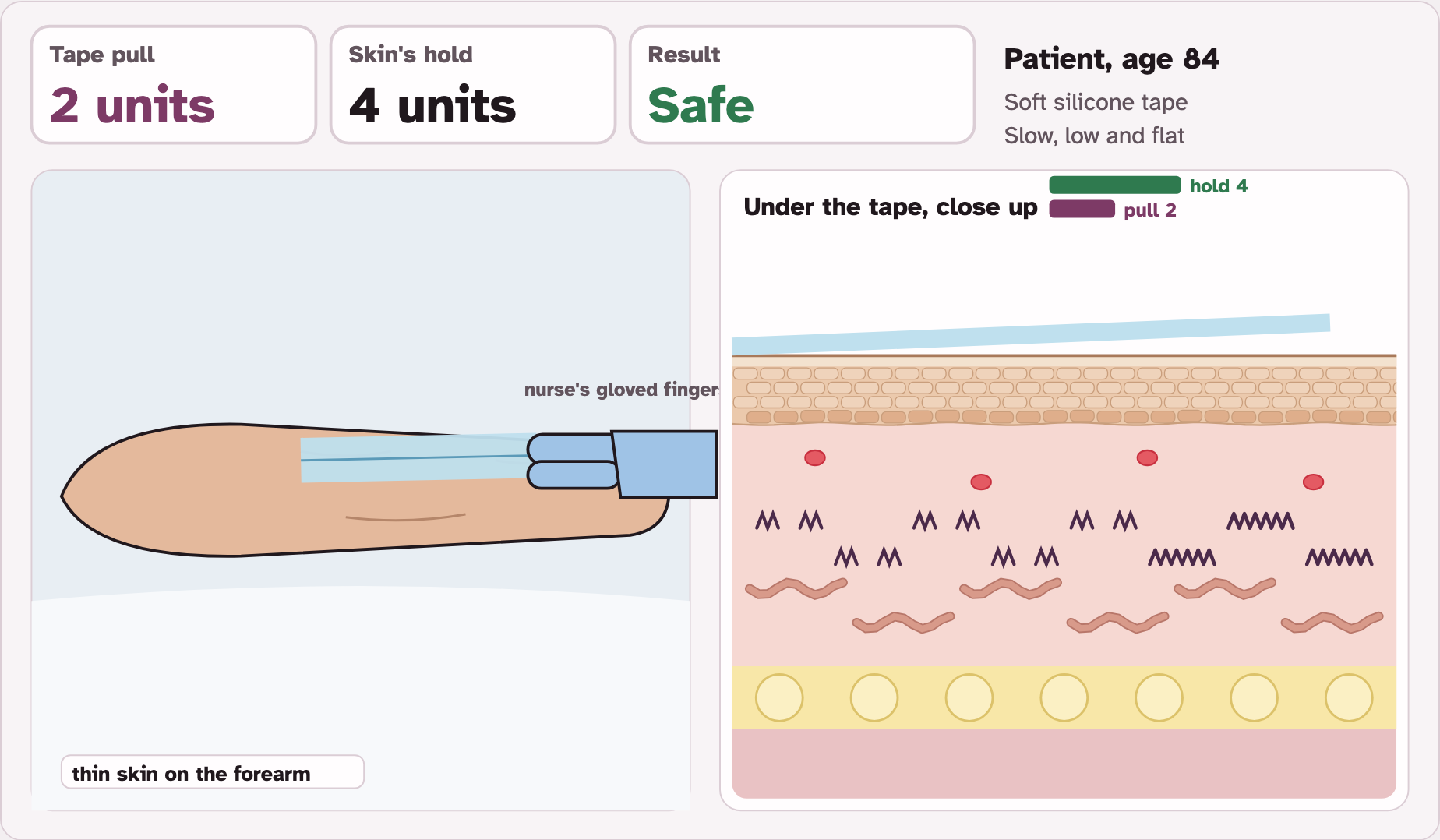
Pull against hold
If the tape’s pull is bigger than the skin’s hold, the skin tears. Young skin holds on much harder, so the same tape is safe on it.
Screenshot: mrsajdak.com/aging-skin, Tab 4
PART 4 · LEARN IT · 3 OF 4
Soft tape, peeled low and slow
Soft silicone tape grips gently. Peeling it slowly, low and flat along the skin, spreads the pull out. Nurses do both for older patients.
Photo: Wellcome Collection, CC BY 4.0
PART 4 · LEARN IT · 4 OF 4
Why her scrape heals slowly
New cells from the stratum basale cover a scrape. Hers divide more slowly: about 8 more days to renew the forearm’s outer layer. In one study, shallow wounds took adults over 65 about 1.9 days longer to close.
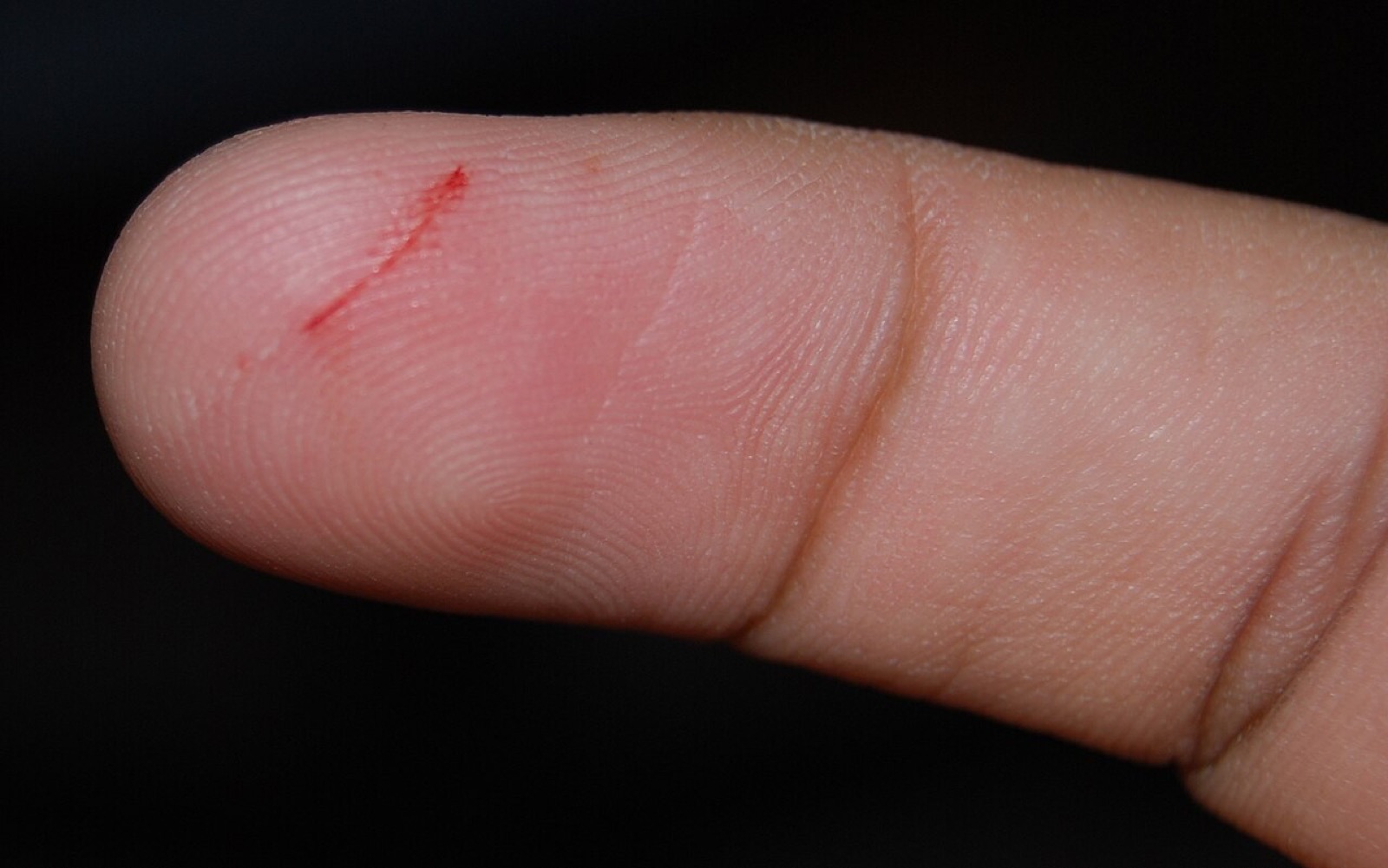
Photo: Laurence Facun, CC BY 2.0
PART 4 · QUESTIONS 17 AND 18
Explain it
QUESTION 17
Her scrape
Why will her scrape close more slowly than her grandson’s?
Use stratum basale and one number from Question 12.
Question 18
Why soft silicone tape, peeled slowly, low and flat?
What happened
Two numbers from Question 15.
The science idea
What is happening in her skin.
How the data shows it
Connect the numbers to the idea.
PART 4 · THE BIG IDEA
Older skin is thin and held weakly, and its new cells come slowly. Gentle care, like soft tape peeled low and slow, protects it.
IN YOUR WORDSWhy is the same tape safe on a teen and not on an 84-year-old?
WRAP IT UP · BACK TO THE START
Revisiting the Phenomenon
Same skin parts, sixty years apart. What does time do to skin, and how can we measure it?
1Pinch the older hand in Photo A. About how long would it take to go flat? Use your Part 1 data.
2The older skin has more lines and folds. Which fibers changed, and how? Was it dryness?
3The veins show on the back of the older hand. Which layer got thinner?
4If the baby and the grandparent both got a small scrape, whose would close first? Why?
Photos: A, AL.Eyad, CC BY 2.0; B, Øyvind Holmstad, CC BY-SA 3.0
LAST CHECK
Before you hand it in
Name, date and period are on top.
Both sides are done.
Every table is full.
Your explanations use numbers from your own tables.
Next lesson: Aging Skin, Day 2. Oil, sweat, sun and time.
Photo: Mikhail Kapychka, CC BY-SA 4.0