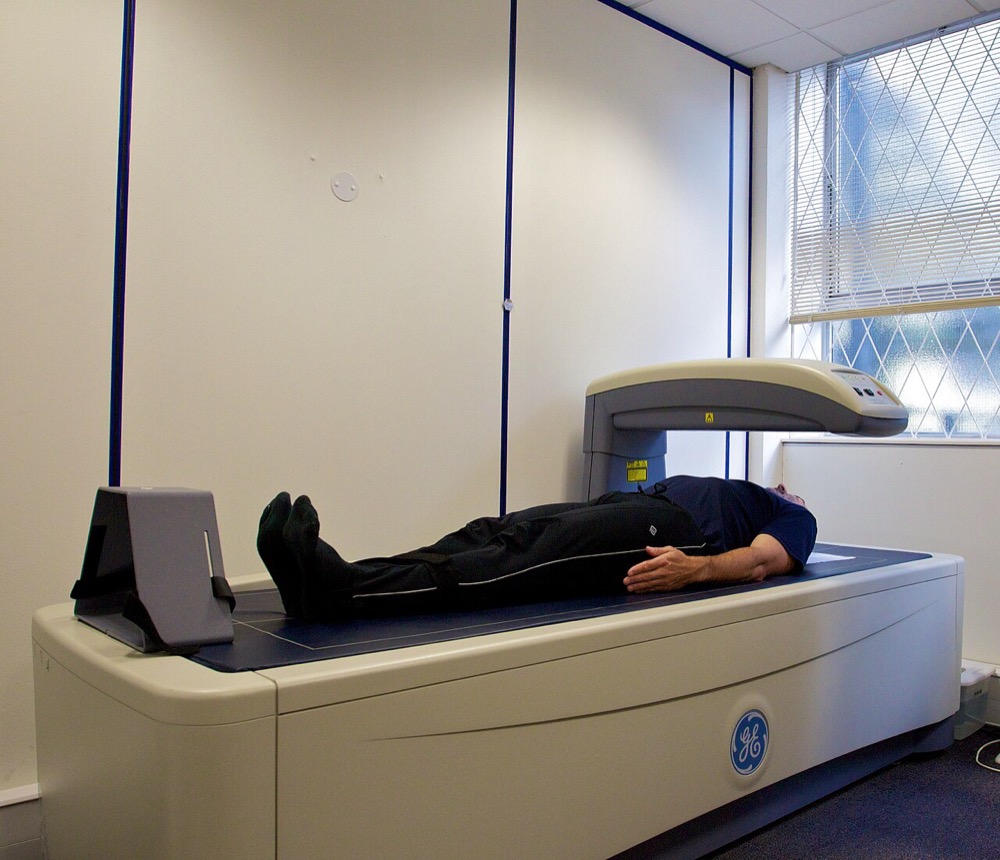
ANATOMY & PHYSIOLOGY · AGING OF THE SKELETON
Bone Bank Lab
Follow along with your worksheet, one question at a time.
mrsajdak.com/bonebank
Photo: Nick Smith photography, CC BY-SA 3.0
START HERE · PICK AN OPENER
Choose how to open the lesson
Click a card to jump to it. Every option ends at the same Observe, Wonder, Predict slide and the same driving question.
OPTION A · VIDEO
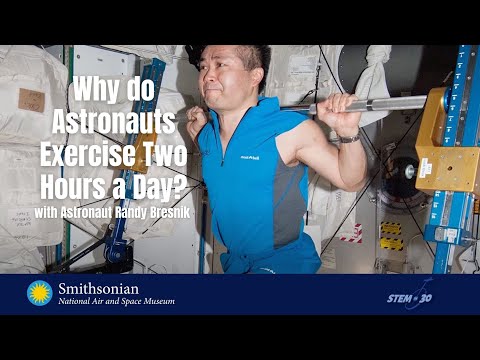
Bones in Space
Clip 1 is the Smithsonian Air and Space Museum on why astronauts exercise in space. Clip 2, from the same museum, tries bone density in microgravity at home.
Watch for
Why do astronauts have to exercise so much?
What happens to their bones without it?
Does that happen to people on Earth too?
Videos on YouTube: Smithsonian National Air and Space Museum.
OPTION B · TRY IT · 3 MINUTES
Squeeze Two Sponges
1
Pick up the whole sponge. Squeeze it hard from the top.
2
Pick up the sponge with holes cut in it. Squeeze it the same way.
3
Which one gives way first?
4
The second sponge lost only a little. Did it lose only a little strength?
You need
Two kitchen sponges per pair
Scissors (teacher cuts holes in one sponge ahead of time)
Watch for
The sponge with holes squashes more easily.
A few holes made a big difference.
What would make the inside of a bone get more holes?
OPTION C · PHOTOS
Phenomenon: Two Back Bones
Photos: Turner Biomechanics Laboratory, CC0
START HERE
Observe, wonder, predict
Many people get shorter as they get older. Some lose an inch or more. This X-ray shows the spine of an older adult.
OBSERVEWhat looks different about one of the back bones?
WONDERWhat do you wonder about bones as people age?
PREDICTDoes an adult’s bone keep changing?
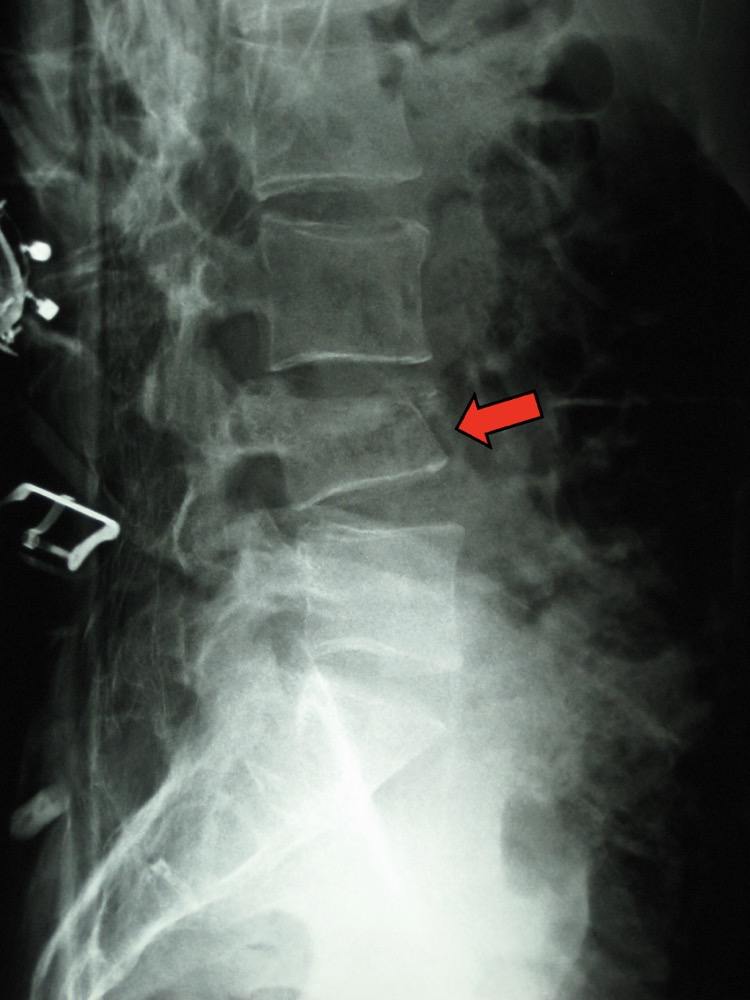
Look at the shape of each back bone.
X-ray: James Heilman, MD, CC BY-SA 3.0
DRIVING QUESTION
Many people get shorter as they get older. Where does the height go, and can a teen do anything about it now?
START HERE
What Happened Here?
Finished observing? Click here to find out.
One back bone in that X-ray is squashed. Bone is alive. It is broken down and rebuilt your whole life, and the balance can tip.
Today, you will read real hip scans from thousands of Americans. You will test a model of spongy bone. Then you will see how much bone you can bank before age 30.
TAB 1 · QUESTIONS 1 TO 6
Part 1. Bone over a lifetime
Real hip scans. Ages 8 to 80 and up.
Photo: Nick Smith photography, CC BY-SA 3.0
PART 1 · QUESTIONS 1 TO 3
Read every age group
1
Pick Women. Click all 10 age groups.
2
Pick Men. Click all 10 again.
3
Copy the numbers you need.
4
Answer Questions 1 to 3.
PART 1 · LEARN IT · 1 OF 3
New words
Bone density: how much bone mineral is packed into a space. Peak bone mass: the most bone a person ever has. Remodeling: old bone is removed and new bone is built, all through life.
Photo: Nick Smith photography, CC BY-SA 3.0
PART 1 · LEARN IT · 2 OF 3
Bone is a bank account
You saw the numbers climb to the late teens. That is peak bone mass. Osteoblasts make deposits. They build new bone. Osteoclasts make withdrawals. They break old bone down. In the teens, deposits win. Somewhere in adulthood, withdrawals start to win. Bone density slowly falls.
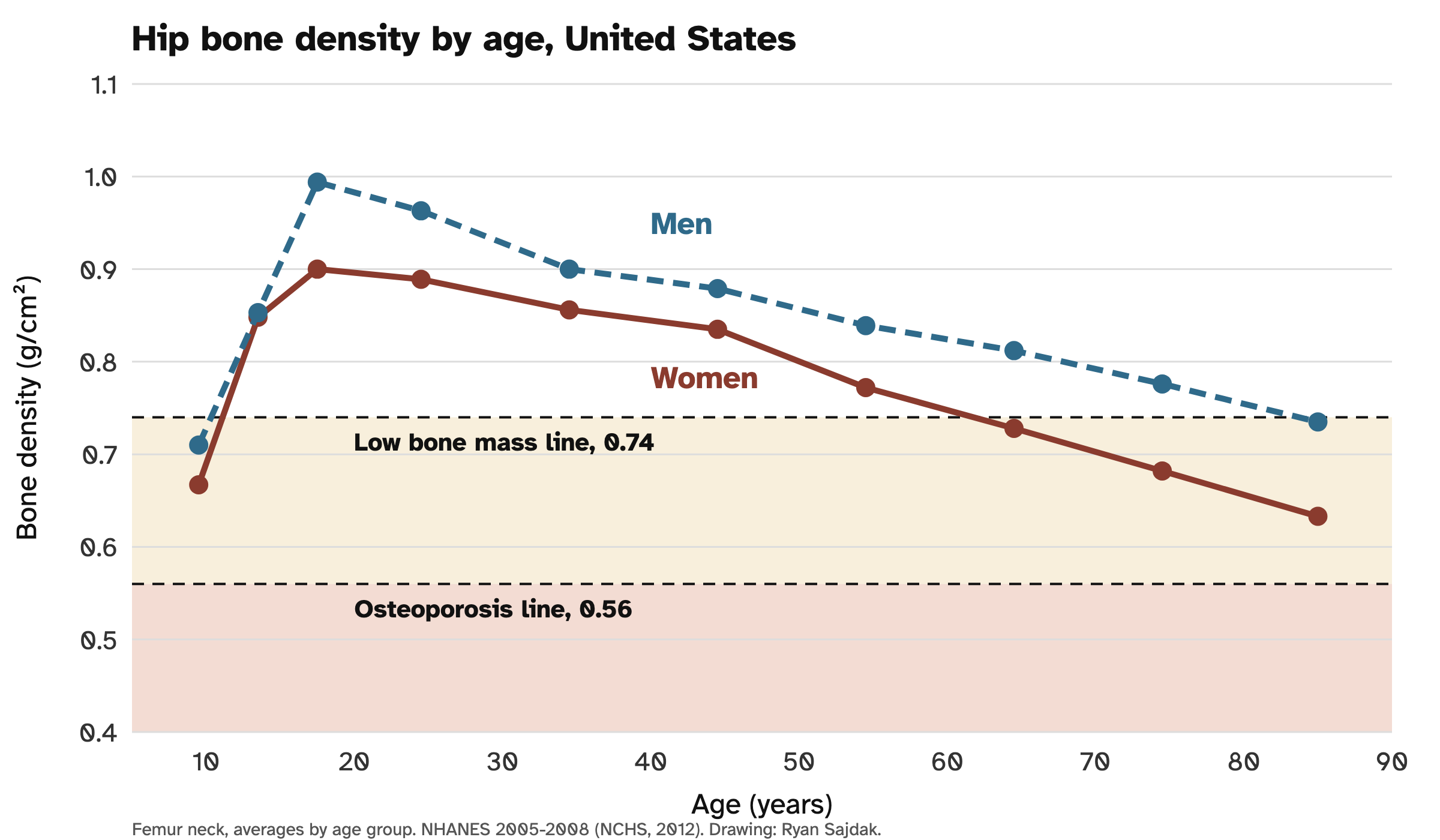
Drawing: Ryan Sajdak
PART 1 · LEARN IT · 3 OF 3
Why women lose bone faster
The hormone estrogen helps hold osteoclasts back. Around age 50, women go through menopause. Estrogen drops. Osteoclasts speed up. That is why the women's numbers fall faster after 50. Men lose bone too. They start with more, and they lose it more slowly.
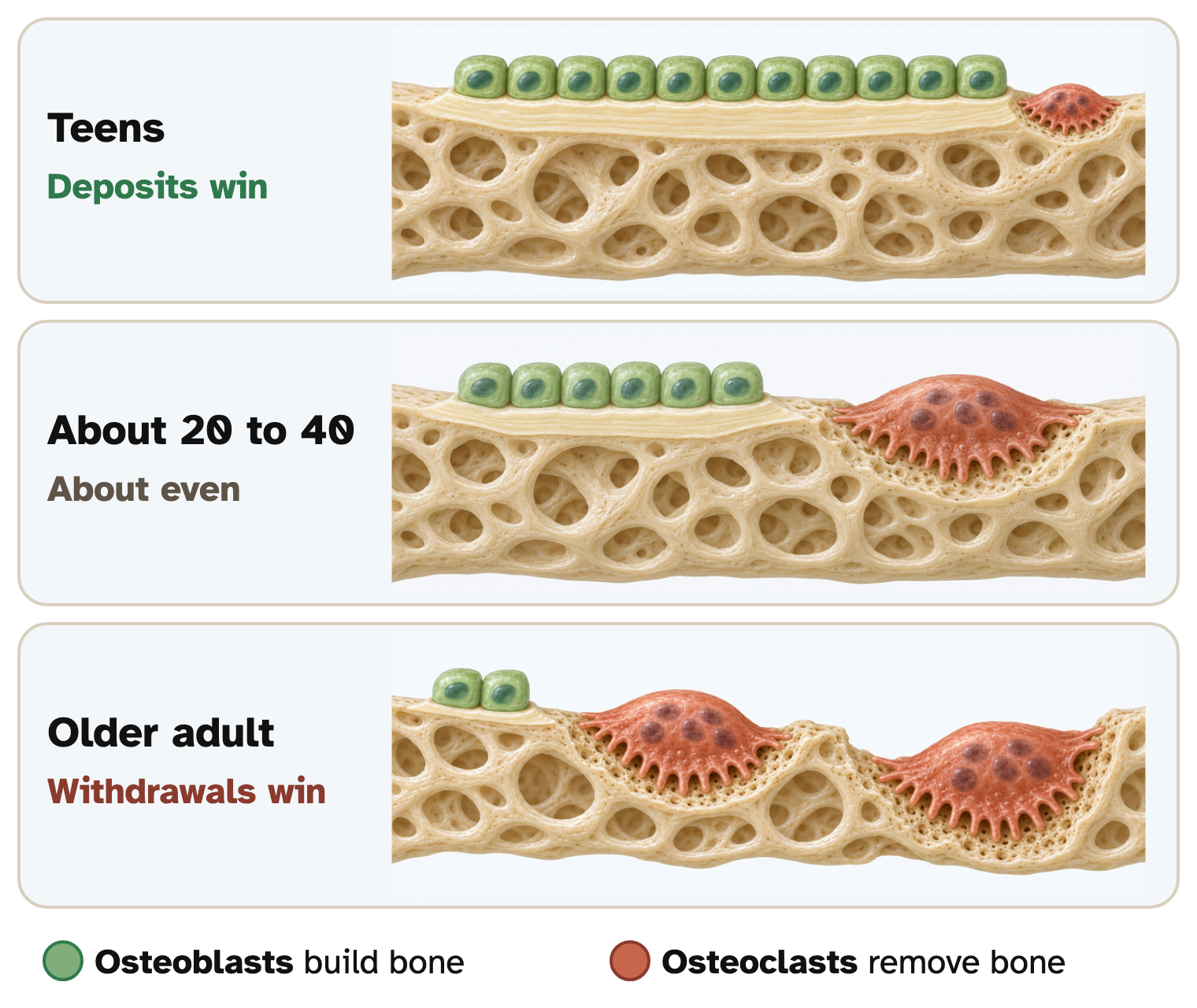
Illustration: AI-generated for mrsajdak.com/bonebank, checked and labeled by Ryan Sajdak
PART 1 · QUESTION 4
Percent lost
THE RULE
Loss ÷ start
Loss = start − end.
Percent lost = loss ÷ start, then times 100.
Example
Start 1.00. End 0.80.
Loss = 0.20.
0.20 ÷ 1.00 = 20%
These are not your numbers. Use your own.
PART 1 · QUESTIONS 5 AND 6
The lowest 10 in 100
1
Pick Women.
2
Press Lowest 10 in 100.
3
Find the first age group under 0.56.
4
Use the Learn It for Question 6.
TAB 2 · QUESTIONS 7 TO 11
Part 2. Inside spongy bone
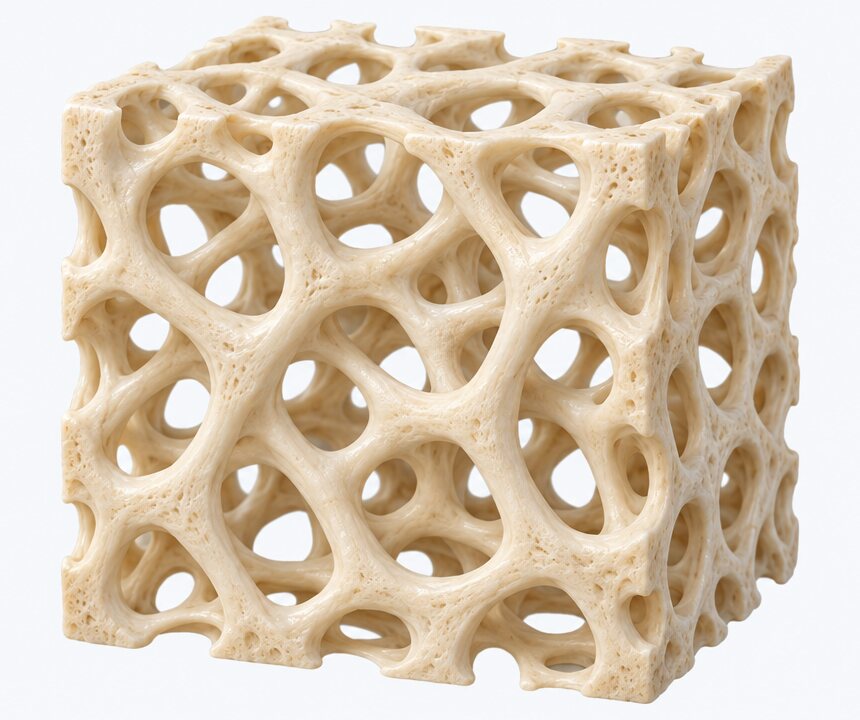
A model of the spongy bone in the top of the femur.
Illustration: AI-generated for mrsajdak.com/bonebank, checked and labeled by Ryan Sajdak
PART 2 · QUESTIONS 7 AND 8
Load test four ages
1
Pick Women.
2
Pick an age. Press Load test.
3
Do all four ages.
4
Copy your records.
PART 2 · LEARN IT · 1 OF 3
Porous bone
Osteoporosis means porous bone. The bone has lost so much density that it breaks easily. The struts of spongy bone are called trabeculae. They get thin, and some break and are lost. The outside of the bone stays the same size. There is just less bone inside.
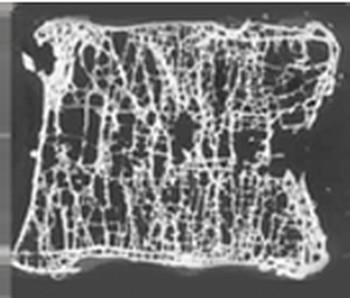
Photo: Turner Biomechanics Laboratory, CC0
PART 2 · LEARN IT · 2 OF 3
Strength falls faster than density
You saw it in the load test. Lose some density, and you lose even more strength. A bone at 71% of its density has only about half its strength. Then a small fall can break it. That is a fragility fracture. The hip, the spine and the wrist break most.
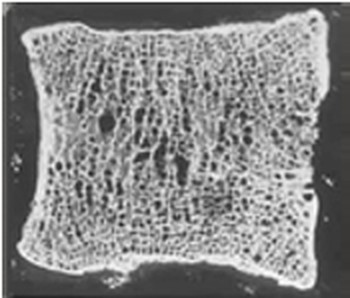
Photo: Turner Biomechanics Laboratory, CC0
PART 2 · LEARN IT · 3 OF 3
Where the height goes
The back bones (vertebrae) are mostly spongy bone. With osteoporosis, a vertebra can crush flat under the body's own weight. Each crushed vertebra makes a person a little shorter. Several can curve the back forward.
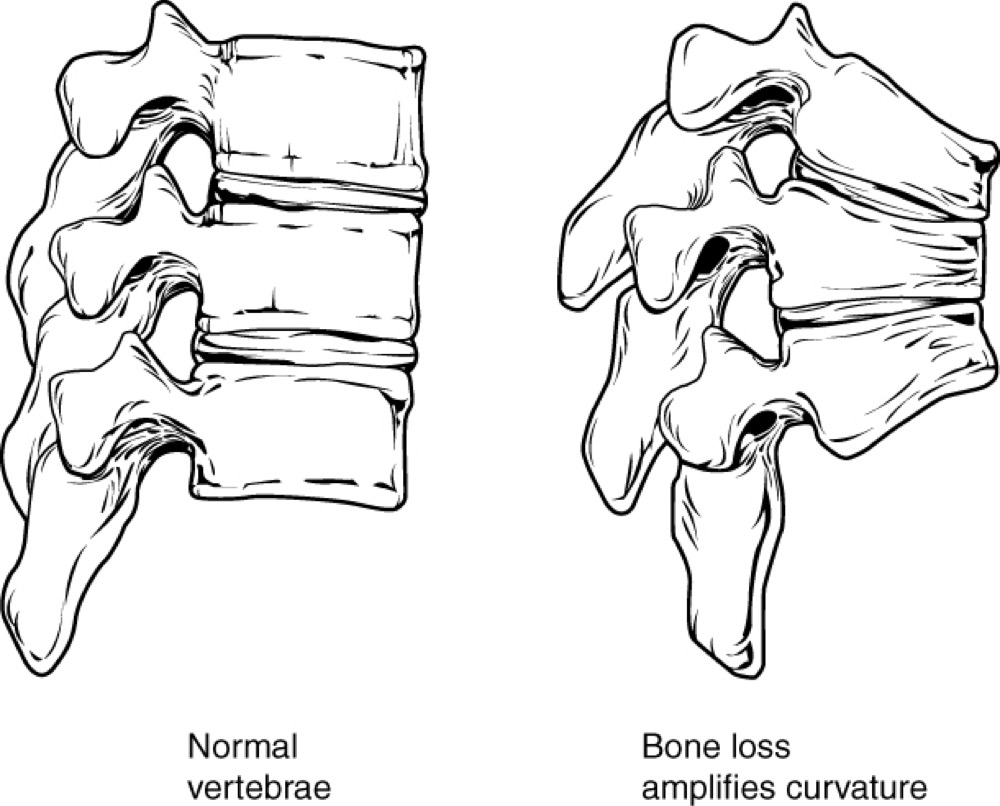
Photo: OpenStax Anatomy and Physiology, CC BY 3.0
PART 2 · QUESTIONS 9 TO 11
Use the idea
QUESTION 9
Model check
SEP 2. What does each part of Tab 2 stand for?
QUESTION 10
Limits
Name one thing the model leaves out.
QUESTION 11
Height
Where does the lost height go?
TAB 3 · QUESTIONS 12 TO 15
Part 3. Bank it early
How much bone did she bank by age 30?
Photo: NASA, public domain
PART 3 · QUESTIONS 12 AND 13
Three peaks, then space
1
Pick a peak. Press Record.
2
Do all three peaks.
3
Slide the months in space.
4
Answer Questions 12 and 13.
PART 3 · LEARN IT · 1 OF 2
Build it before 30
A higher peak bone mass is like starting with more money in the bank. You saw it: 10% more bone at the peak kept her over the line about 11 years longer. The teen years build the most bone of any time in life.
Drawing: Ryan Sajdak
PART 3 · LEARN IT · 2 OF 2
Use it or lose it
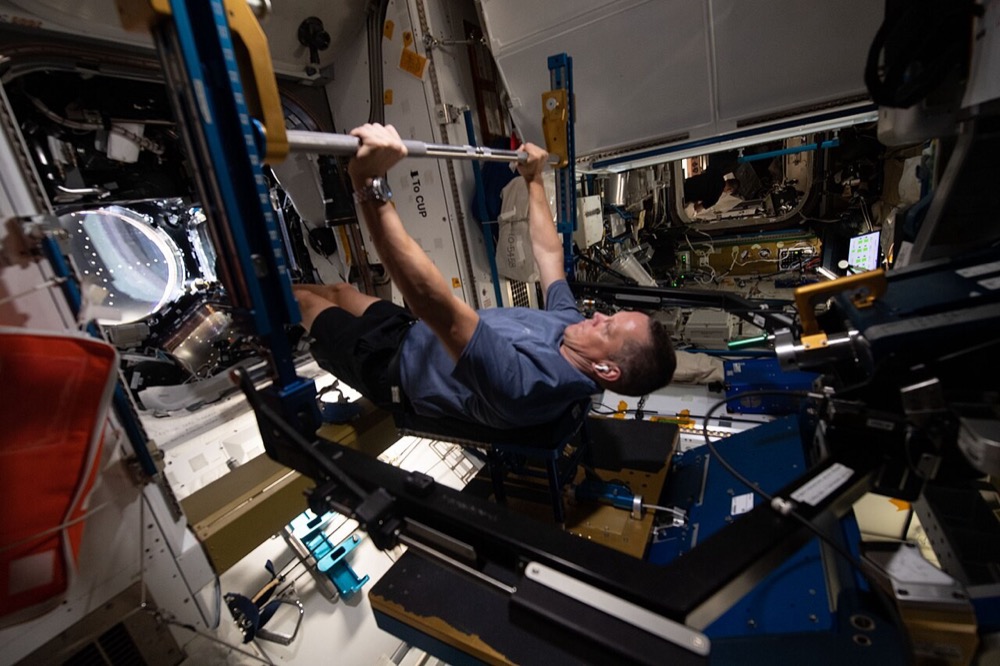
Bone answers to load. Running, jumping and lifting tell osteoblasts to build. No load, like in space or a long time in bed, and osteoclasts win. Bones also need calcium to build with, and vitamin D to absorb that calcium from food.
Photo: NASA, public domain
PART 3 · QUESTION 14
A real test: lifting at 65
THE TEST
101 women, about 65
All had low bone density.
For 8 months, half did heavy lifting and jumping twice a week. Half did light home exercise.
THE DATA
In the lab
The study card opens in Tab 3 after the Learn It.
Which group gained spine bone?
Watson and others, 2018 (the LIFTMOR trial)
EXPLAIN IT · QUESTION 15
Why do strong teen bones last?
Evidence
A number from Tab 3 or the lifting study.
Science idea
What bone answers to, and when the bank is built.
Explains it
Say how that keeps bones strong at 70.
WRAP IT UP · BACK TO THE START
Revisiting the Phenomenon
Many people get shorter as they get older. Where does the height go, and can a teen do anything about it now?
EVIDENCEWhat did the hip scans show after age 50?
EVIDENCEWhat happened to strength in the load test?
EVIDENCEWhat can a teen do now?
Hand in your worksheet.
Next: the muscular system.