ANATOMY & PHYSIOLOGY · SECTION 7.4
Bone Cells Lab
Follow along with your worksheet, one question at a time.
mrsajdak.com/bonecells
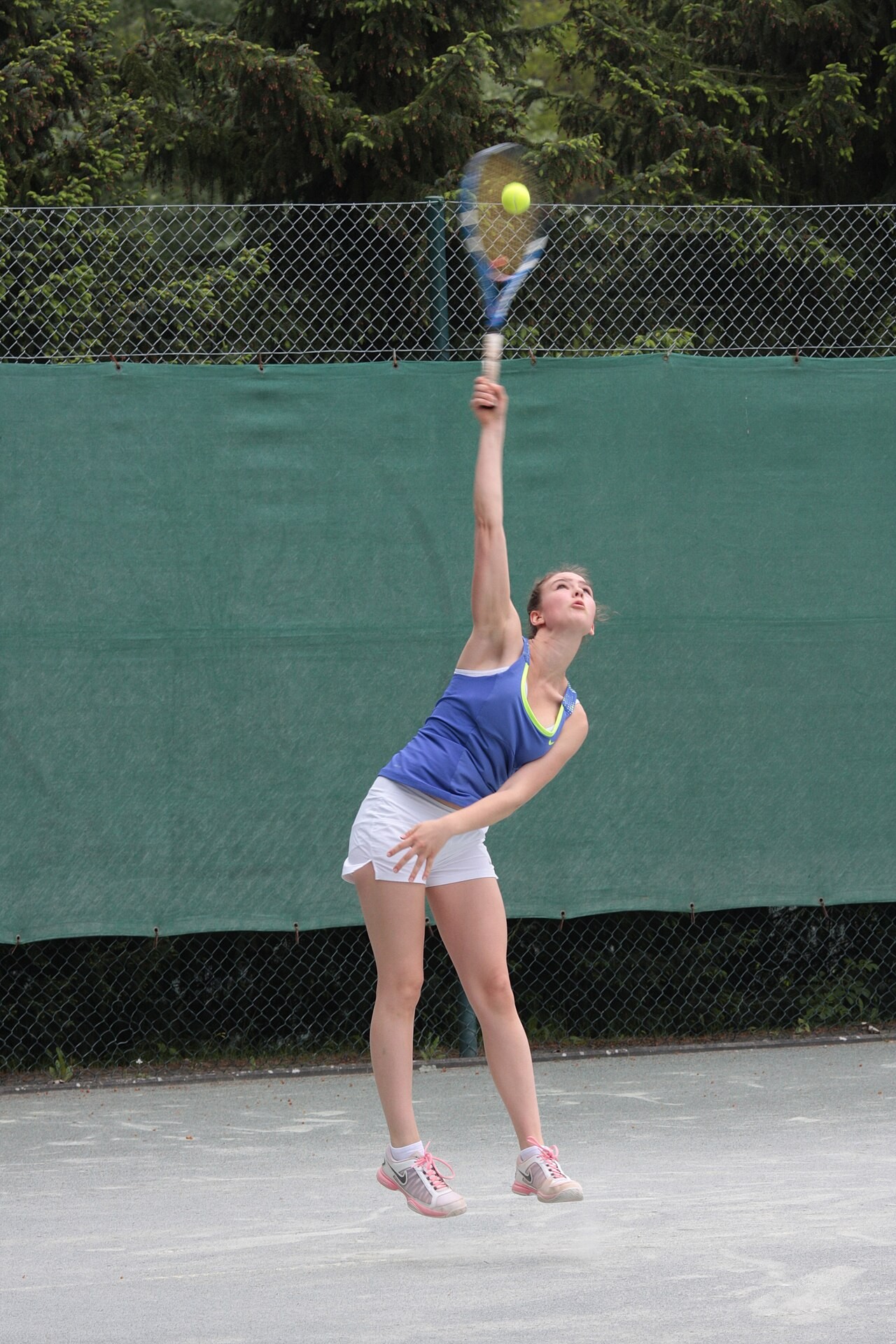
Photo: MAKY.OREL, CC BY-SA 3.0
START HERE · PICK AN OPENER
Choose how to open the lesson
Click a card to jump to it. Every option ends at the same Observe, Wonder, Predict slide and the same driving question.
OPTION A · VIDEO
Braces at Work
Clip 1 is a time-lapse from an orthodontist that shows wires shifting teeth on a model. Clip 2 is a short explainer from a dental channel.
Watch for
Which way do the teeth move?
What is holding each tooth in place?
What would have to happen to the bone in a real jaw?
Videos on YouTube: The Crazy Orthodontist; Braces Guide.
OPTION B · TRY IT · 3 MINUTES
Both Wrists
1
Wrap a strip of paper around your wrist, just above the bump.
2
Mark where the paper overlaps. Lay it on a ruler. Write the mm.
3
Do the same on your other wrist.
4
Which wrist is bigger? Why might that be?
You need
A paper strip
A ruler with mm
A pencil
Watch for
Many people find the writing side a little bigger, but not everyone.
Bone and muscle both count in this number.
Could use change a bone?
OPTION C · PHOTOS
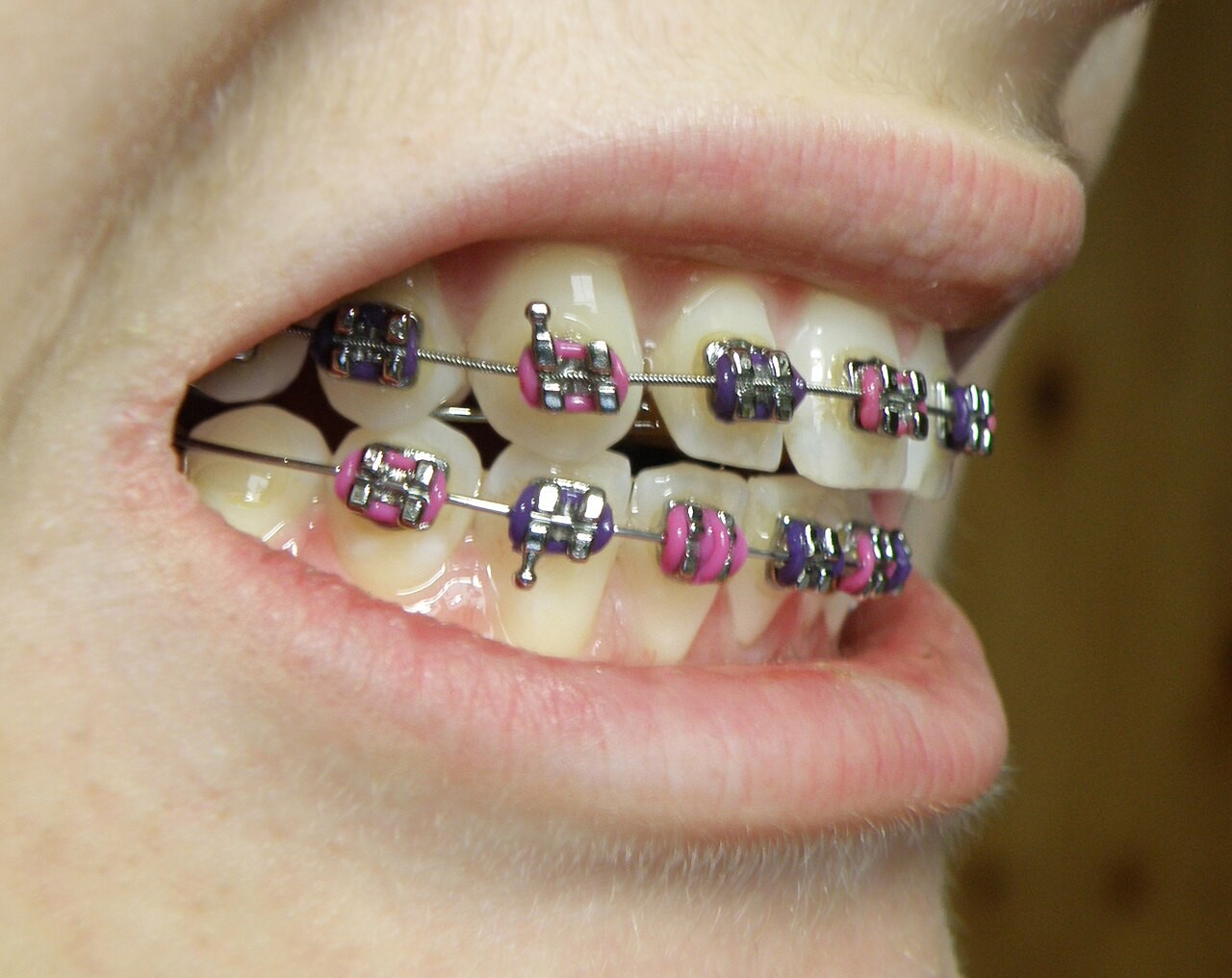
Phenomenon: A Tooth in Bone
Photo: MAKY.OREL, CC BY-SA 3.0 · X-ray: Coronation Dental Specialty Group, CC BY 3.0
START HERE
Observe, wonder, predict
Braces move a tooth through solid jaw bone, about 1 mm a month. No drill. No cut.
OBSERVEWhat surrounds the root of a tooth?
WONDERWhat do you wonder about bone?
PREDICTWhat must happen to the bone in front of a moving tooth?
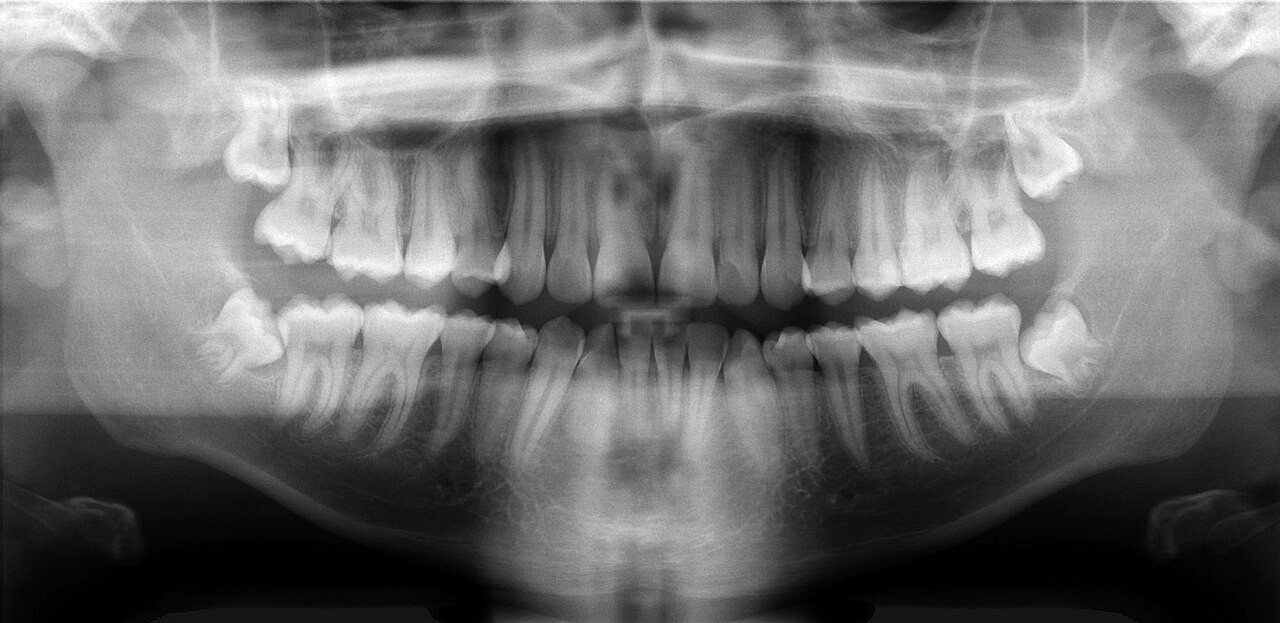
Roots set in the bone of the jaw.
X-ray: Coronation Dental Specialty Group, CC BY 3.0
DRIVING QUESTION
How can a tooth move through solid bone?
START HERE
What Happened Here?
Finished observing? Click here to find out.
This is called orthodontic tooth movement. The tooth does not plow through the bone. Living cells take bone apart and put it back.
Today, you will meet three bone cells. You will switch them on and off to move a tooth. Then you will run one patch of bone from start to finish.
BEFORE YOU START
What you will learn
I can compare osteoblasts, osteocytes and osteoclasts.
I can explain the steps of bone remodeling.
I can use the three cells to explain how braces move a tooth.
BEFORE YOU START
Get set up
1
Open mrsajdak.com/bonecells on your device.
2
Write your name, the date and your period on the worksheet.
3
Find the three tabs at the top of the lab. Each tab goes with one part of your sheet.

| Tab in the lab | Worksheet | Questions |
|---|---|---|
| 1. Meet the cells | Part 1 | 1 to 5 |
| 2. Move the tooth | Part 2 | 6 to 10 |
| 3. Run a site | Part 3 and Explain it | 11 to 17 |
Screenshot: mrsajdak.com/bonecells
TAB 1 · QUESTIONS 1 TO 5
Part 1. Meet the cells
Real micrographs of bone.
Bone is full of living cells. What do they look like?
Photo: vom Scheidt and others, CC BY 4.0
PART 1 · QUESTIONS 1 AND 2
Look at each cell
1
Pick a cell, or click a picture.
2
Look inside the yellow ring.
3
Pick where it sits and how it looks.
4
Do all three cells. Tick your sheet.
PART 1 · LEARN IT · 1 OF 4
The word ending tells the job
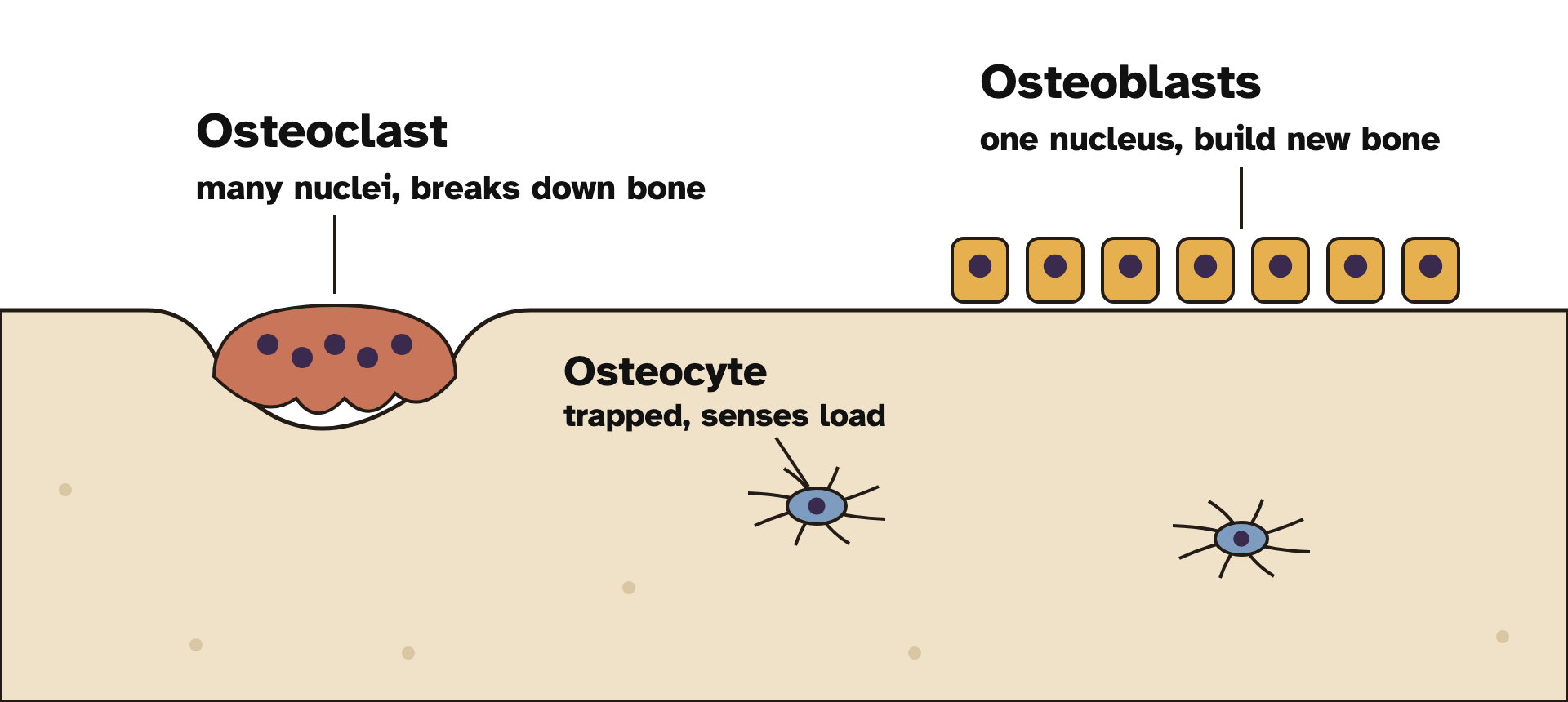
Osteo means bone. -clast means break. -blast means bud: an osteoblast builds new bone. -cyte means cell: an osteocyte is a settled bone cell.
Drawing: Ryan Sajdak
PART 1 · LEARN IT · 2 OF 4
Cell A is an osteoclast
It sits in a pit it dug in the bone. It is huge, with many nuclei. It lets out acid that dissolves the hard mineral and frees calcium. Enzymes break down the protein.
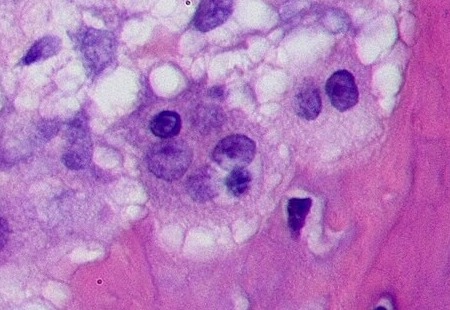
Photo: Patho, CC BY-SA 3.0
PART 1 · LEARN IT · 3 OF 4
Cell B is an osteoblast
They work in a row on the bone surface. Each one has one nucleus. They lay down new bone: first protein, then hard mineral settles on it.
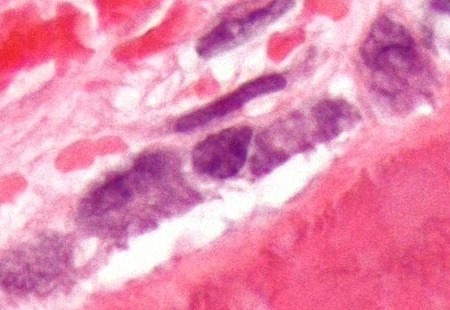
Photo: Nephron, CC BY-SA 3.0
PART 1 · LEARN IT · 4 OF 4
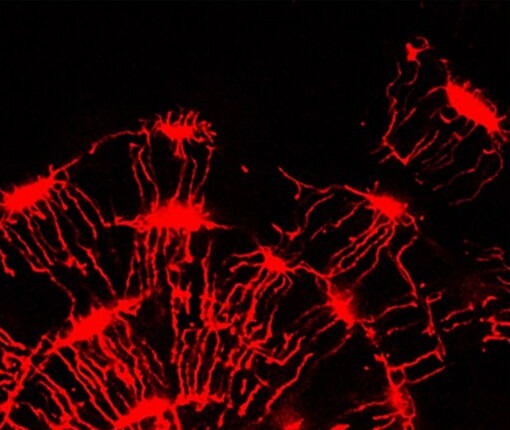
Cell C is an osteocyte
An osteoblast walled in by the bone it made becomes an osteocyte. Thin arms reach out to other cells. Osteocytes sense load and damage, and they signal the other cells.
Photo: vom Scheidt and others, CC BY 4.0
PART 1 · QUESTIONS 3 TO 5
Use the names
QUESTION 3
Jobs
Name each cell
A job says what it does, not how it looks.
QUESTION 4
Endings
Three word endings
What does each ending mean?
QUESTION 5
Clues
Which cell?
Do the five clues in the lab.
TAB 2 · QUESTIONS 6 TO 10
Part 2. Move the tooth
Two cell types. Two switches.
What happens when one is off?
Photo: MAKY.OREL, CC BY-SA 3.0
PART 2 · QUESTIONS 6 AND 7
Switch the cells
1
Set the two buttons.
2
Move the slider to 6 months.
3
Press Record.
4
Do all three settings. Copy your records.
PART 2 · LEARN IT · 1 OF 3
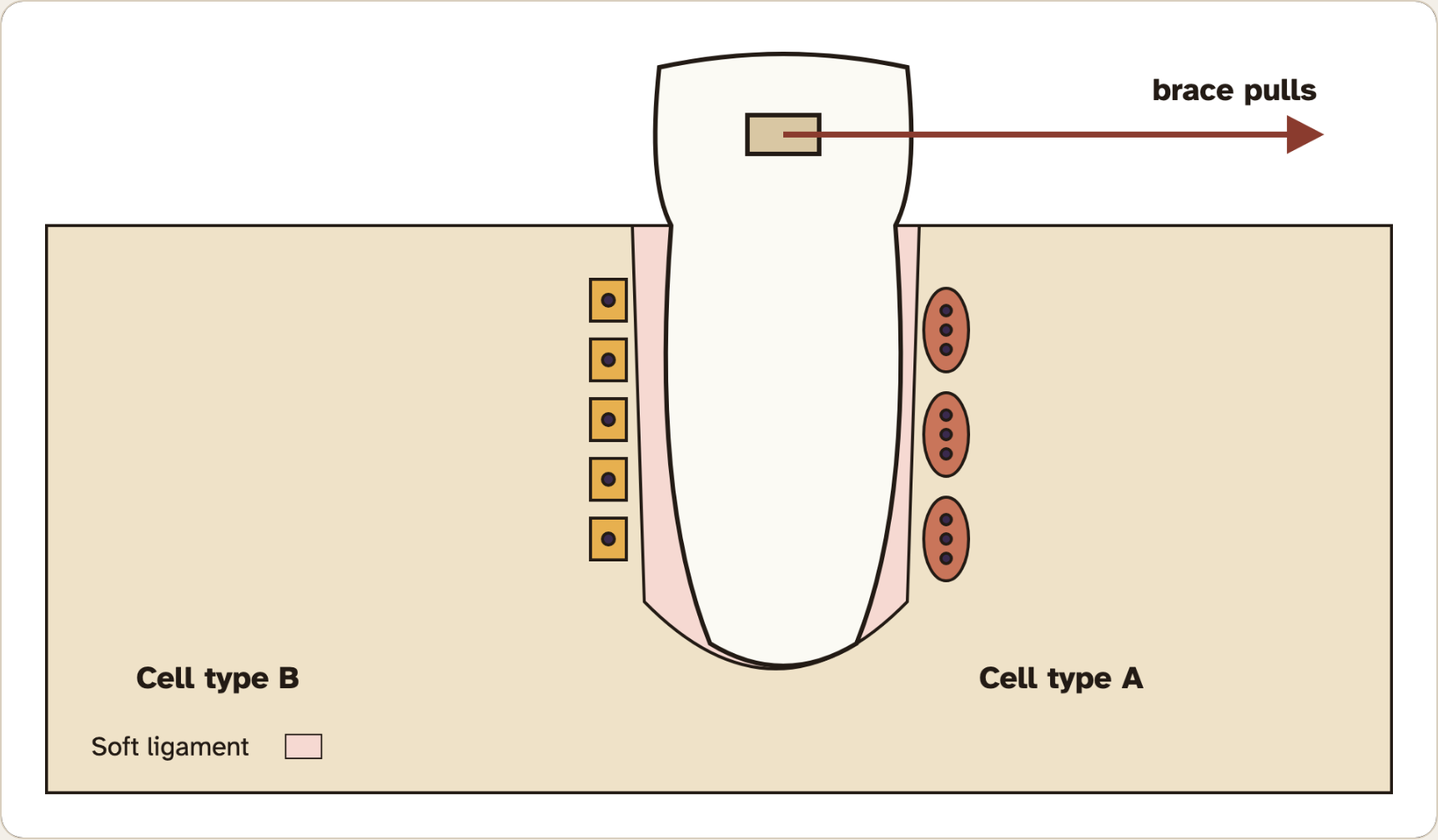
Cell type A was the osteoclast
With osteoclasts off, the tooth did not move. Solid bone blocked the way. Something has to clear it first.
Drawing: Ryan Sajdak
PART 2 · LEARN IT · 2 OF 3
Cell type B was the osteoblast
With osteoblasts off, the tooth moved, but a gap grew behind it. Nothing filled the space, so the tooth was left loose.
Drawing: Ryan Sajdak
PART 2 · LEARN IT · 3 OF 3
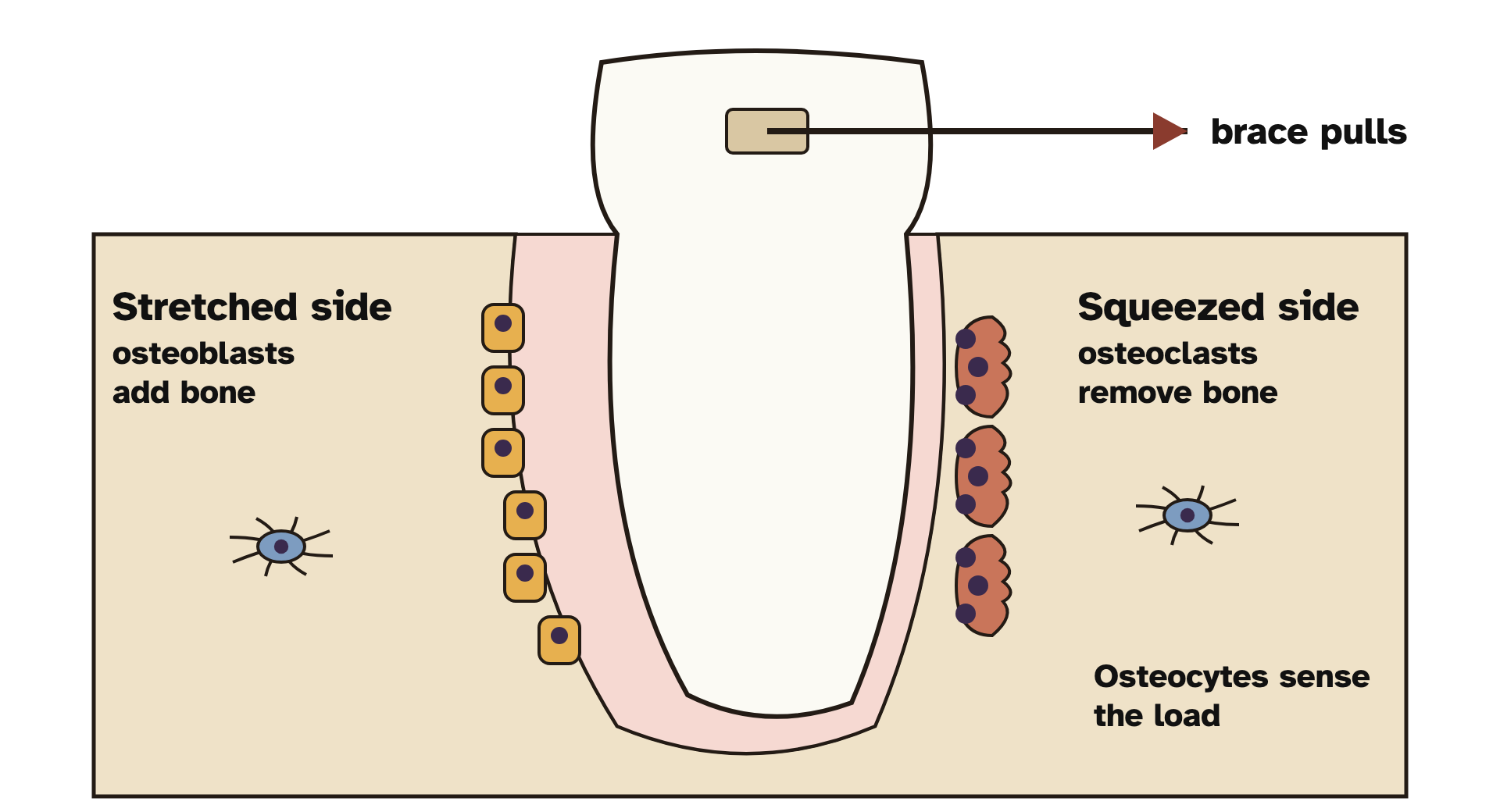
Two sides, two cells
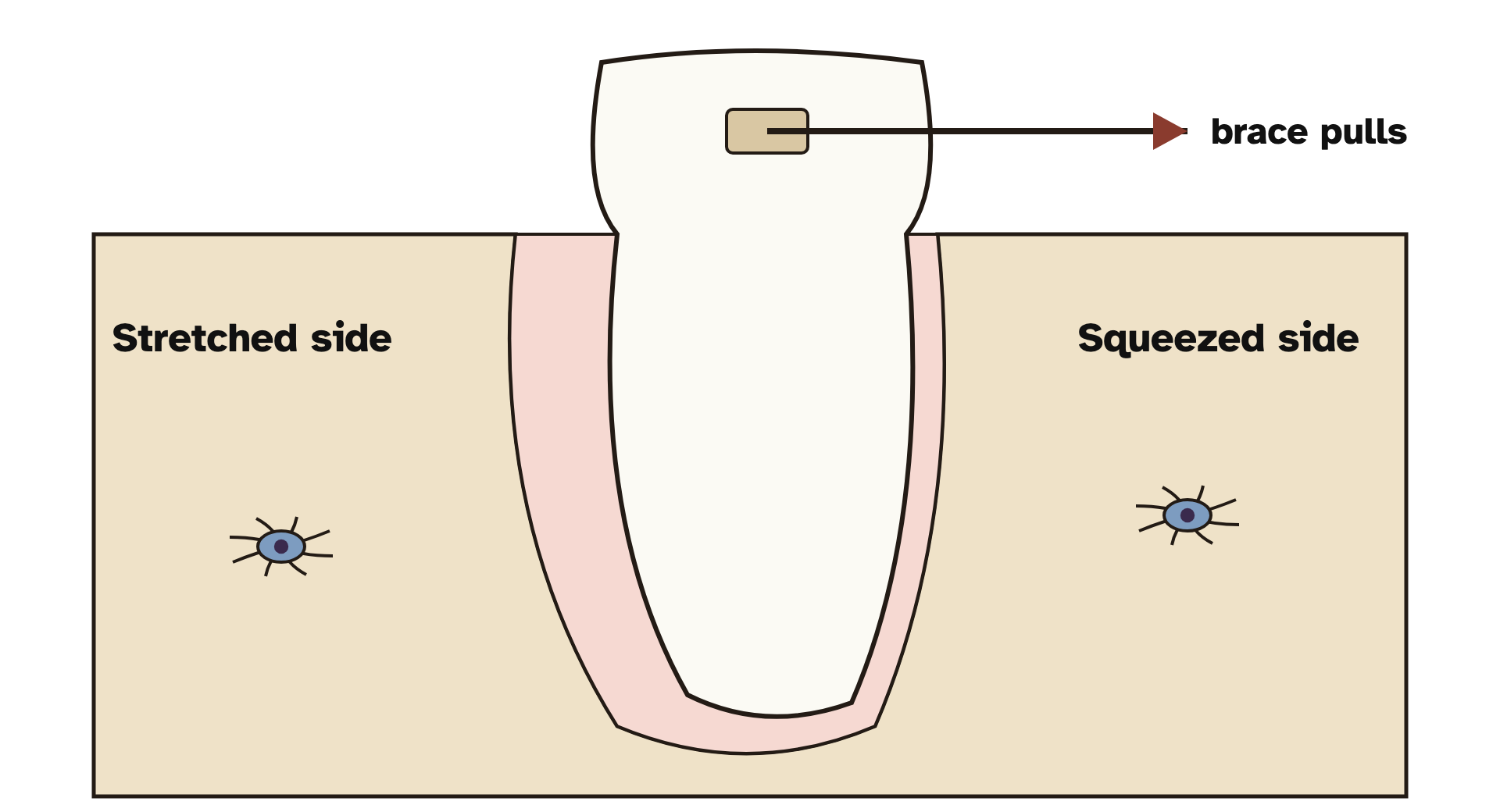
A soft ligament holds the root in its socket. The brace squeezes it on the front side: osteoclasts remove bone there. It stretches on the back side: osteoblasts add bone there.
Drawing: Ryan Sajdak
PART 2 · QUESTION 10
Model check
The model
The tooth moves exactly 1 mm each month.
Real life
Name one thing about a real tooth that the model leaves out.
Screenshot: mrsajdak.com/bonecells, Tab 2
TAB 3 · QUESTIONS 11 TO 17
Part 3. Run a site
One small patch of bone.
What happens to it, day by day?
Photo: Jeuwre, CC BY-SA 4.0
PART 3 · QUESTION 11
Run the days
1
Pick Site 1.
2
Move the slider slowly to day 180.
3
Do Site 2 and Site 3.
4
Copy Your results.
PART 3 · QUESTIONS 12 AND 13
Find a rate
QUESTIONS 12 AND 13
Rate = amount ÷ days
Use your own numbers from Site 1.
Then compare the two rates.
Example
A worker digs 40 cm of trench in 8 days.
40 ÷ 8 = 5 cm a day
These are not your numbers. Use your own.
PART 3 · LEARN IT · 1 OF 3
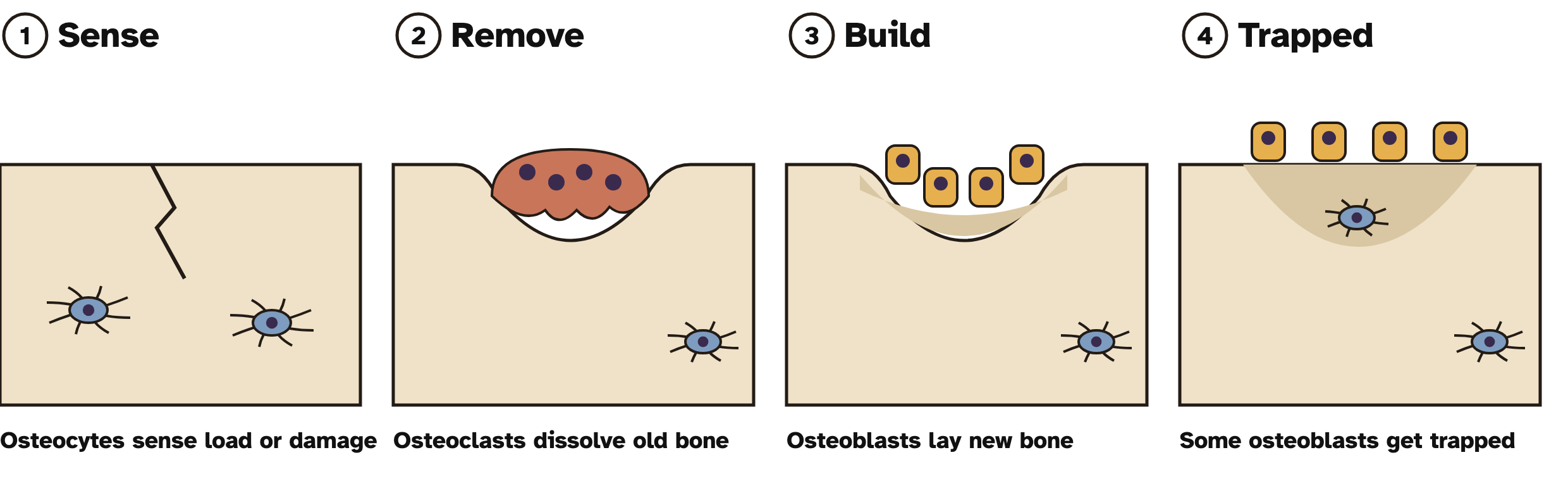
Remodeling has four steps
1. Sense. Osteocytes sense load or damage. 2. Remove. Osteoclasts dig a pit. 3. Build. Osteoblasts fill the pit. 4. Trapped. Some osteoblasts are walled in and become osteocytes.
Drawing: Ryan Sajdak
PART 3 · LEARN IT · 2 OF 3
Digging is fast. Filling is slow.
Removing old bone takes about 2 to 4 weeks. Laying new bone takes about 4 to 6 months (Clarke, 2008). Osteoclasts are not the enemy: clearing old bone is how bone stays strong.
Drawing: Ryan Sajdak
PART 3 · LEARN IT · 3 OF 3
The balance decides
If new bone fills the pit exactly, nothing changes. Less fill than dig: a little bone is lost. More fill than dig: a little bone is gained. Bone keeps changing for your whole life.
Photo: Jeuwre, CC BY-SA 4.0
PART 3 · QUESTIONS 14 TO 16
Use the idea
QUESTION 14
1 to 4
Order the steps
Sense comes first.
QUESTION 15
Cases
Which site fits?
Do the three cases in the lab.
QUESTION 16
× 10
Ten cycles
Then a model check.
EXPLAIN IT · QUESTION 17
How can a tooth move through solid bone?
What I saw
What happened in Tab 2, with a number.
The science idea
Which cell works on each side, and what it does.
So
How that lets the tooth move.
Every root is set in bone.
X-ray: Coronation Dental Specialty Group, CC BY 3.0
WRAP IT UP · BACK TO THE START
Revisiting the Phenomenon
How can a tooth move through solid bone?
1Using evidence from today, is bone finished once you stop growing?
2Are osteoclasts bad for bone? How do you know?
3Which cell senses the load? Where does it live?
4Which number from your worksheet best supports your answer?
Drawing: Ryan Sajdak
LAST CHECK
Before you hand it in
Name, date and period are on top.
All three cells are named.
Every table is full.
Explain it has all three parts.
Micrograph: Patho, CC BY-SA 3.0