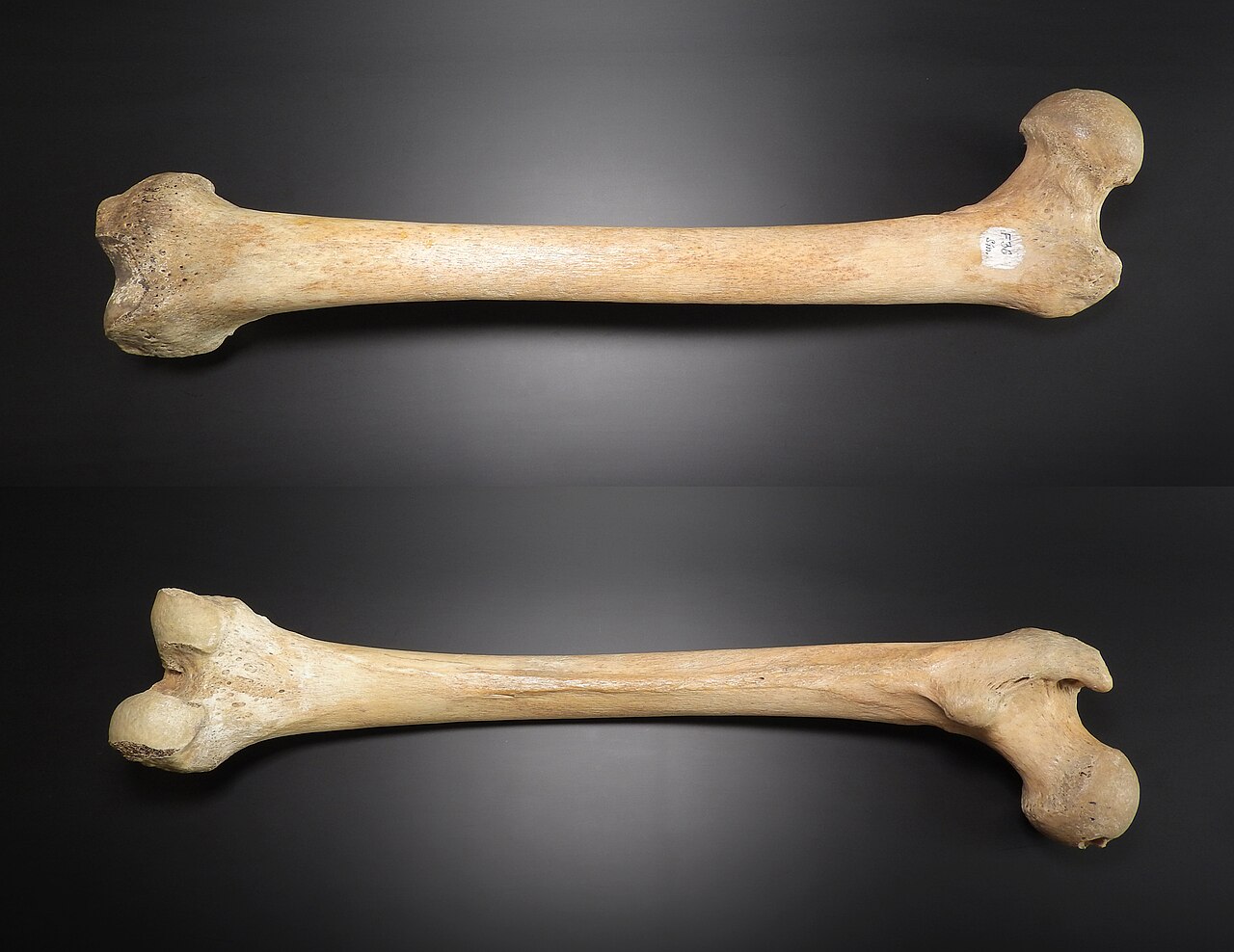
ANATOMY AND PHYSIOLOGY · CHAPTER 7 · SHAPES OF BONES
Shapes of Bones Lab
Follow along with your worksheet, one question at a time.
mrsajdak.com/boneshapes
Photo: MAKY.OREL, CC0
START HERE · PICK AN OPENER
Choose how to open the lesson
Click a card to jump to it. Every option ends at the same Observe, Wonder, Predict slide and the same driving question.
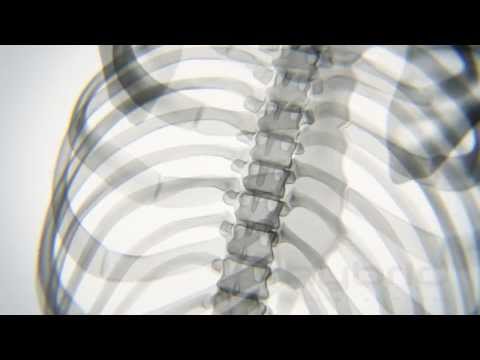
OPTION A · VIDEO
Bones in Motion
Clip 1 is an X-ray style animation of a person doing yoga: only the bones show. Clip 2 is real X-ray video (fluoroscopy) of a hand while the fingers bend. Clip 3 is the same for a wrist.
Watch for
Which bones swing like long rods?
Find the kneecap. Does it move with the thigh bone or on its own?
Which bones look like plates? Which look like little blocks?
Videos on YouTube: HybridMedical; Pat McKee.
OPTION B · TRY IT · 3 MINUTES
A Pipe and a Plate
1
Put a cooked, cleaned chicken leg bone under the document camera.
2
Put a cooked, cleaned piece of pork rib beside it.
3
Turn each one slowly. Look down the end of each one.
4
Ask: both are bone. What is different about their shapes?
You need
One chicken drumstick bone, cooked, scrubbed and dry
One pork spare rib piece, about 8 cm, cooked and clean
Gloves and a paper towel
A document camera
Watch for
One is a hollow pipe. One is a flat, curved plate.
Which one would make a better lever?
Which one would make a better shield?
OPTION C · PHOTOS
Phenomenon: Two Bones, Two Shapes
Photos: A and B, MAKY.OREL, CC0, via Wikimedia Commons
START HERE
Observe, wonder, predict
All bones are made of the same living tissue. But they do not all look alike.
OBSERVEHow is the thigh bone different from the top of the skull? Look at length, width and thickness.
WONDERWhy would the body build bone in more than one shape?
PREDICTYour fingertip bone is tiny. Is it short, or long like the thigh bone? Why?
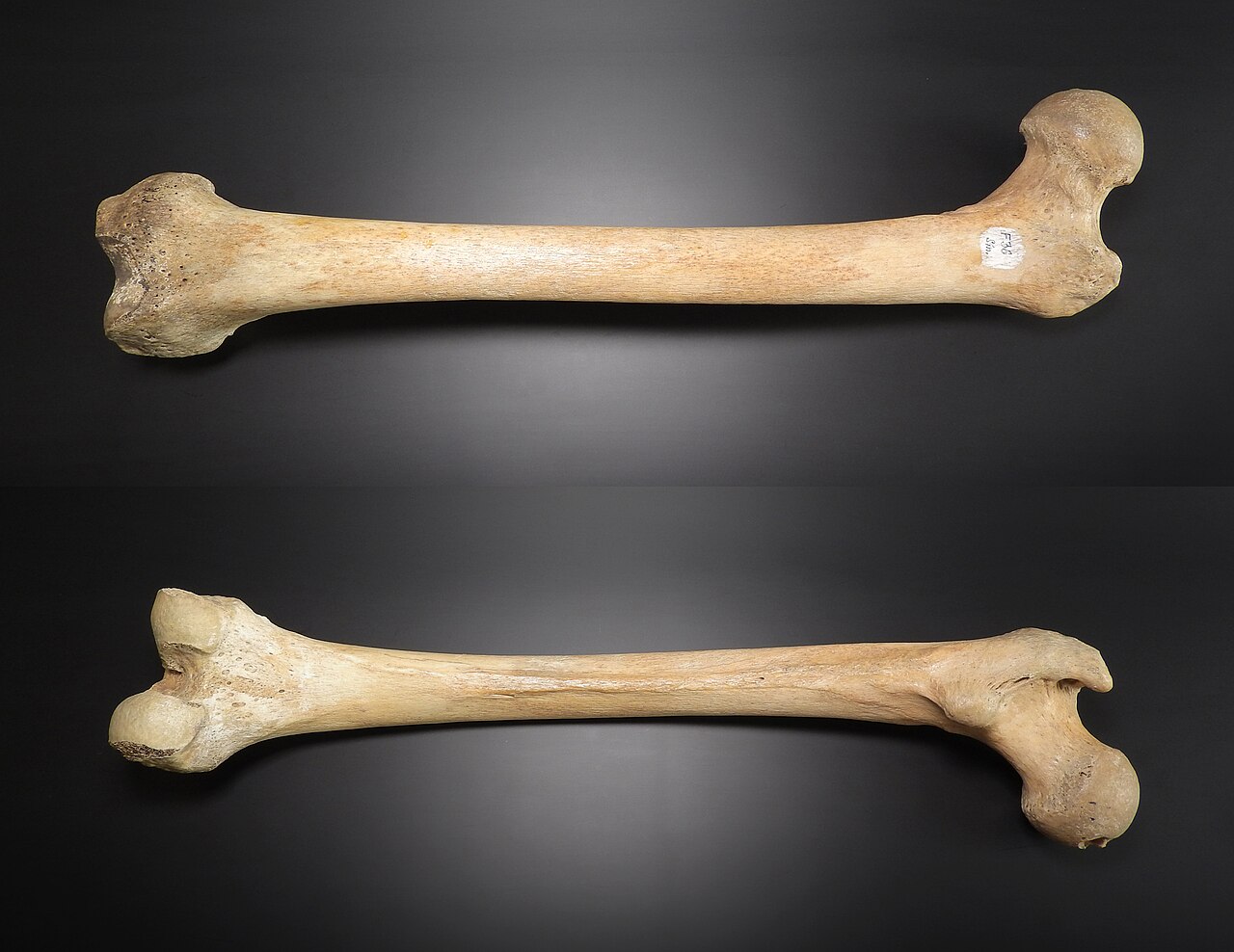
Photo A.
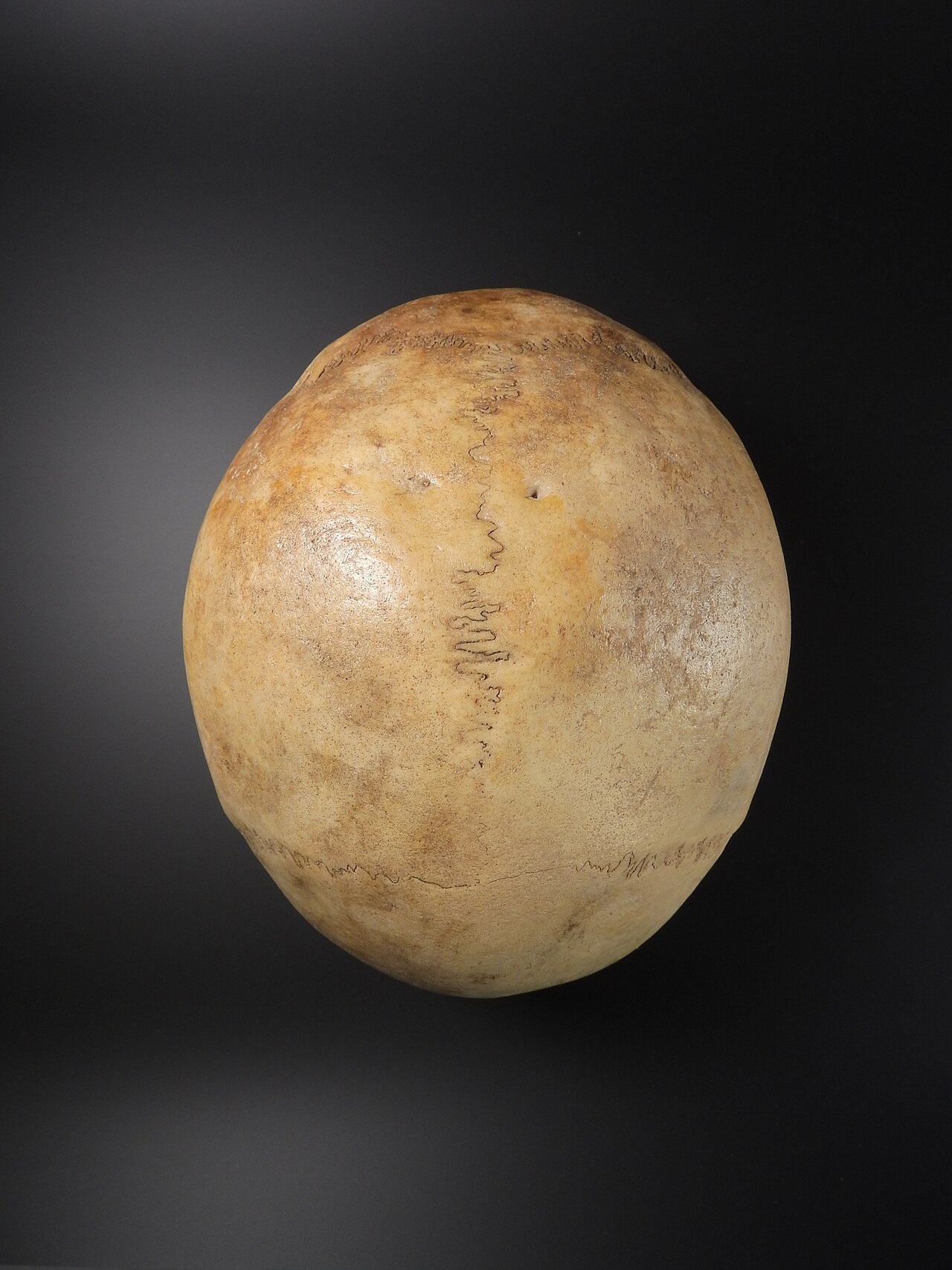
Photo B.
Photos: A and B, MAKY.OREL, CC0, via Wikimedia Commons
DRIVING QUESTION
Every bone is made of the same tissue. Why does the body build bones in so many different shapes?
START HERE
What Happened Here?
Finished observing? Click here to find out.
Both photos are real, healthy human bones. The thigh bone and the skull top are made of the same bone tissue. One grew as a long pipe, the other as a curved plate. Nothing is wrong with either one.
Watched the video or tried it? Click here.
The video shows bones moving inside a body. The chicken leg bone and the pork rib are the same tissue too. Some bones swing, some stay still, and some slide on each other. Why they have the shapes they do is what the lab finds out.
Today, you will measure real scanned bones with a caliper, turn the numbers into two ratios, sort each bone by its shape, test your rule on new bones, and color all 206 bones by shape. At the end, you will come back to the driving question.
BEFORE YOU START
What you will learn
I can sort a bone as long, short, flat, irregular or sesamoid from its measurements and its look.
I can explain how a bone's shape fits its job, with an example of each shape.
BEFORE YOU START
Get set up
1
Open mrsajdak.com/boneshapes on your device.
2
Write your name, the date and your period on the worksheet.
3
Find the tabs at the top of the lab. Each tab goes with one part of the worksheet.
4
Start on Tab 1. Do not skip ahead.

| Tab in the lab | Worksheet | Questions |
|---|---|---|
| 1. Measure | Part 1 | 1 to 6 |
| 2. Test the rule | Part 2 | 7 to 11 |
| 3. Shape fits the job | Part 3 | 12 to 16 |
Screenshot: mrsajdak.com/boneshapes
TAB 1 · QUESTIONS 1 TO 6
Part 1. Measure four bones
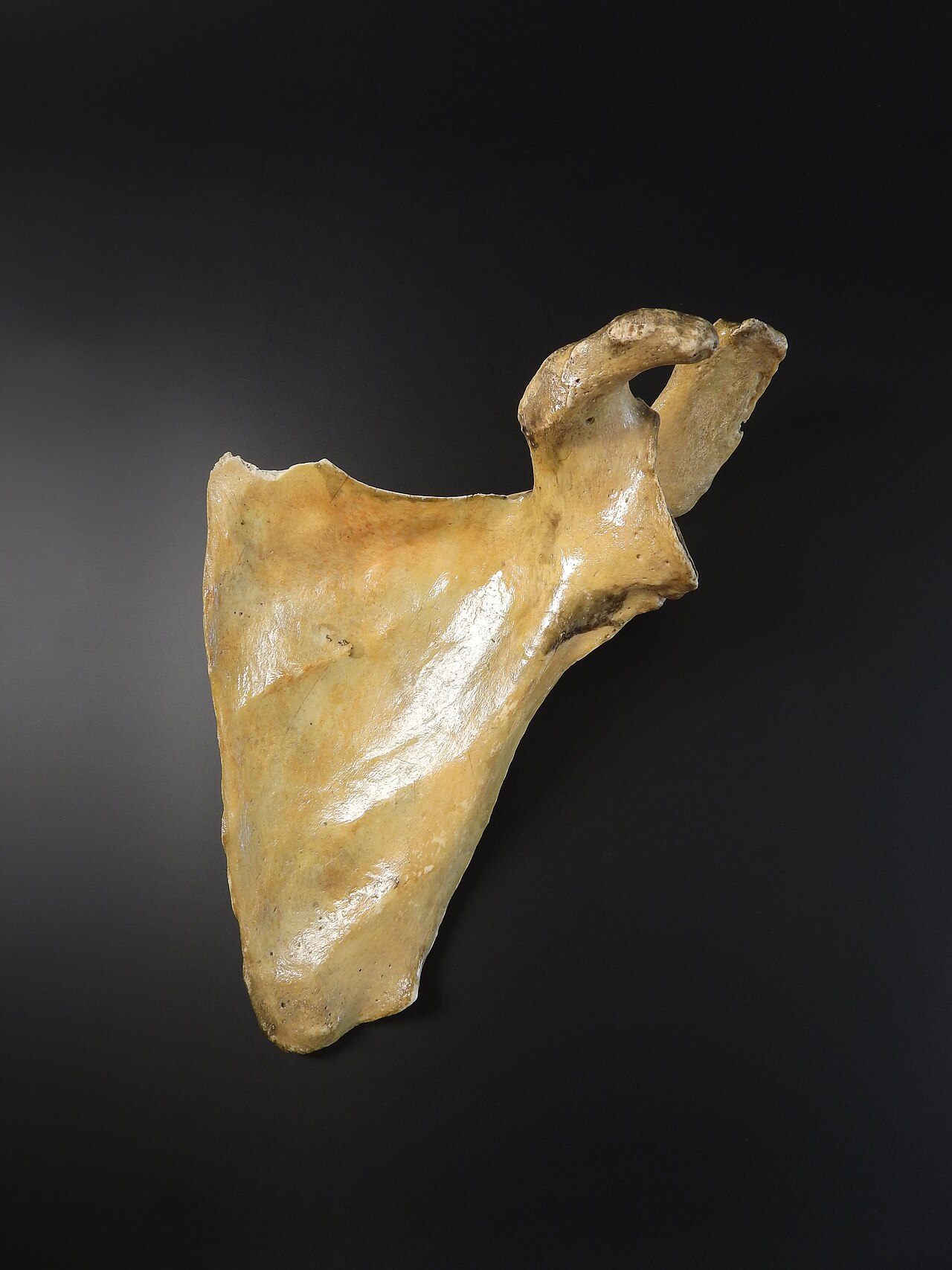
A thigh bone, a shoulder blade, a wrist bone and a back bone.
You will measure each one three ways.
Then you will turn the numbers into two ratios.
Photo: MAKY.OREL, CC0
PART 1 · QUESTIONS 1 AND 2
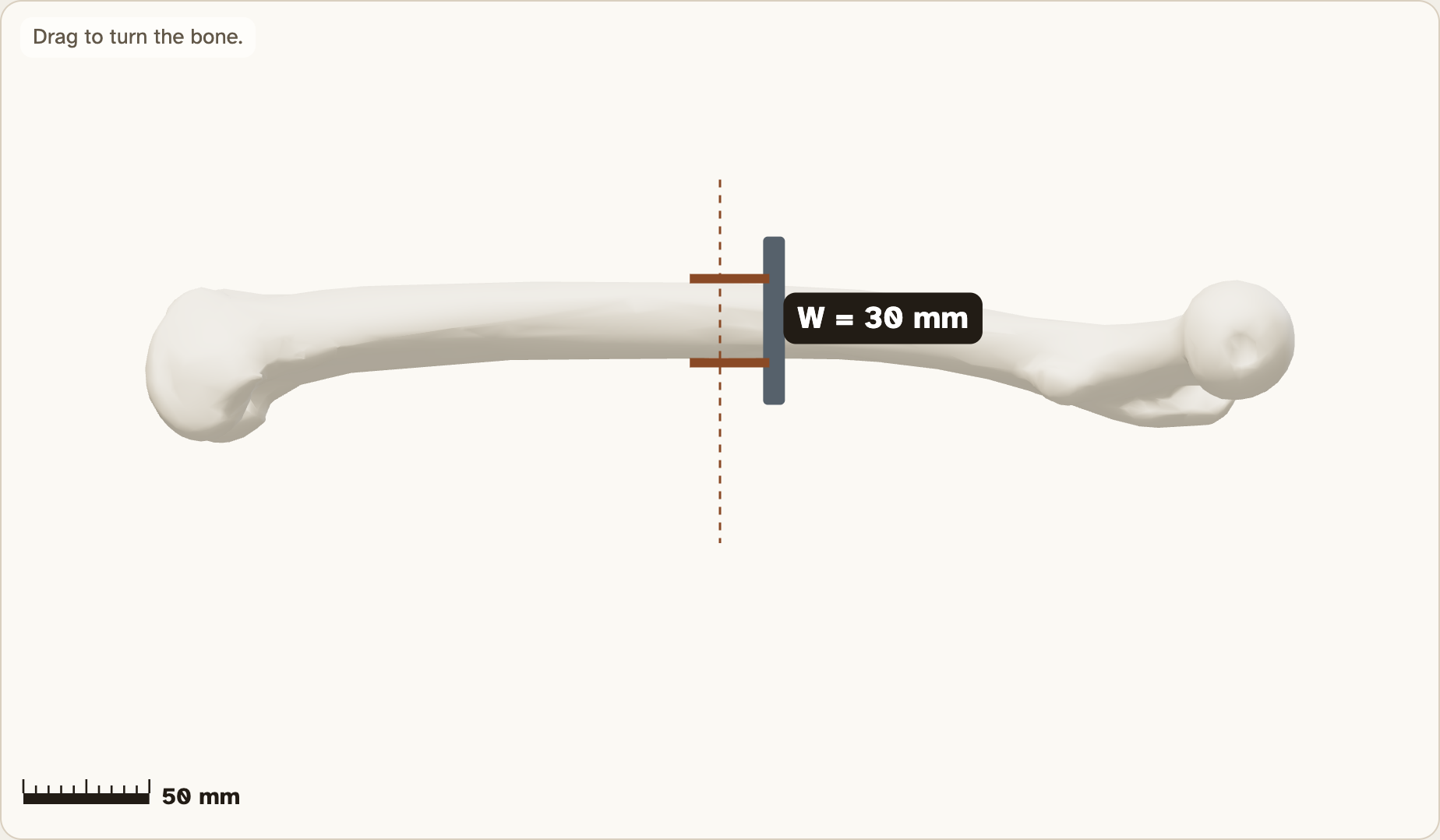
Close the caliper
1
Pick a bone. Drag it to turn it and look.
2
Pick Length L, Width W or Thickness T.
3
Press Close the caliper. The jaws close on the bone.
4
Copy the reading in mm from Your measurements.
5
Femur only: measure W Near an end too.
PART 1 · QUESTIONS 1 TO 3
Three readings, two ratios
QUESTIONS 1 AND 2
Measure and divide
L ÷ W: how many times longer than wide.
W ÷ T: how many times wider than thick.
Round to one decimal.
Example
120 ÷ 40 = 3.0
A bone 120 mm long and 40 mm wide is 3 times longer than it is wide. Not your numbers.
QUESTION 3
Find the biggest
Which bone has the biggest L ÷ W? The biggest W ÷ T?
Which two have L ÷ W under 2?
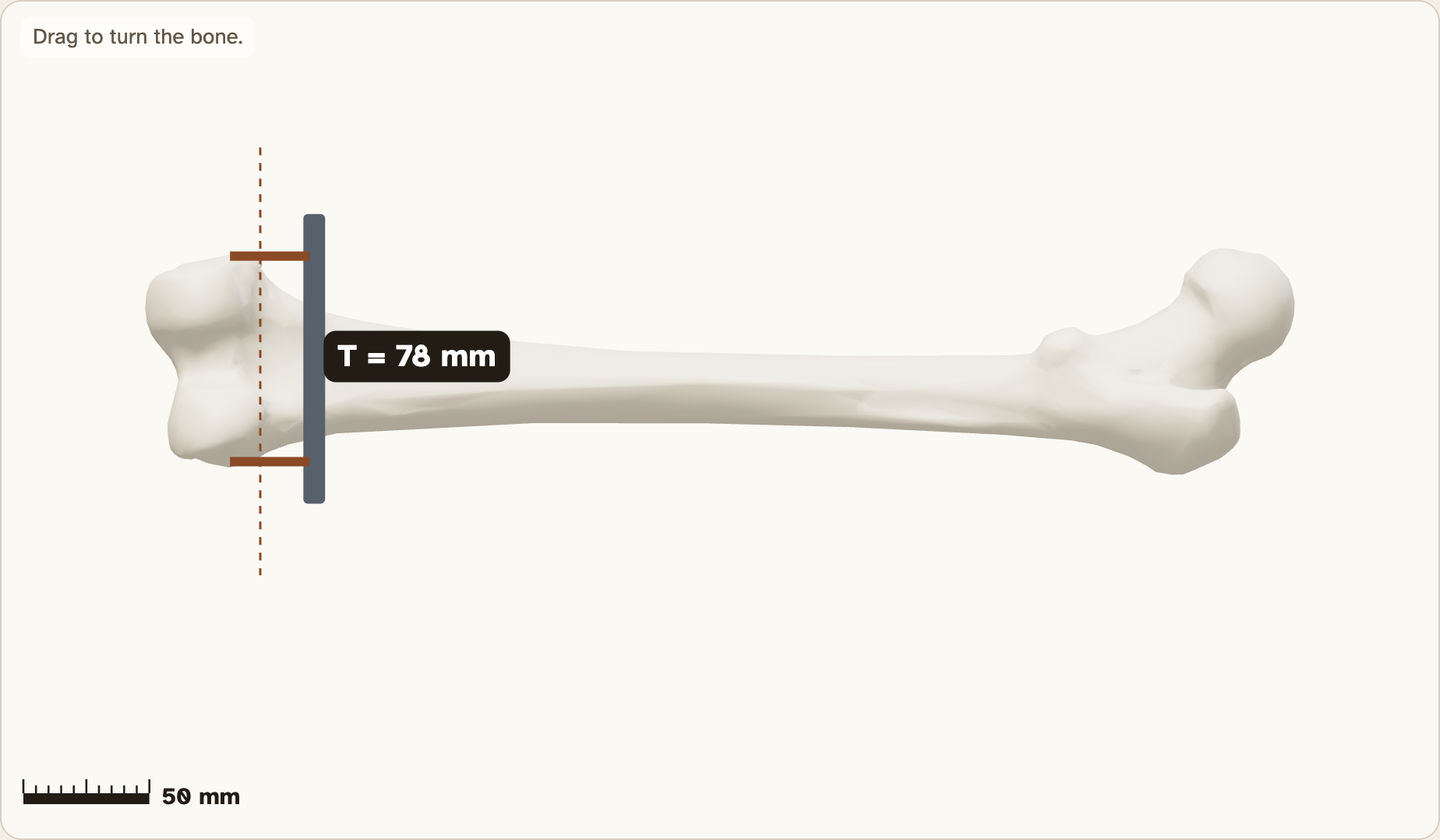
Thickness near an end. This reading is not on your worksheet.
Screenshot: mrsajdak.com/boneshapes, Tab 1
PART 1 · LEARN IT · 1 OF 5
Long bones
A long bone is much longer than it is wide. It has a shaft, the long middle part, and a knob at each end. So L ÷ W is big.
Photo: MAKY.OREL, CC0
PART 1 · LEARN IT · 2 OF 5
Short bones
A short bone is about as long as it is wide, like a cube. L ÷ W is under 2. The wrist and ankle are full of them.
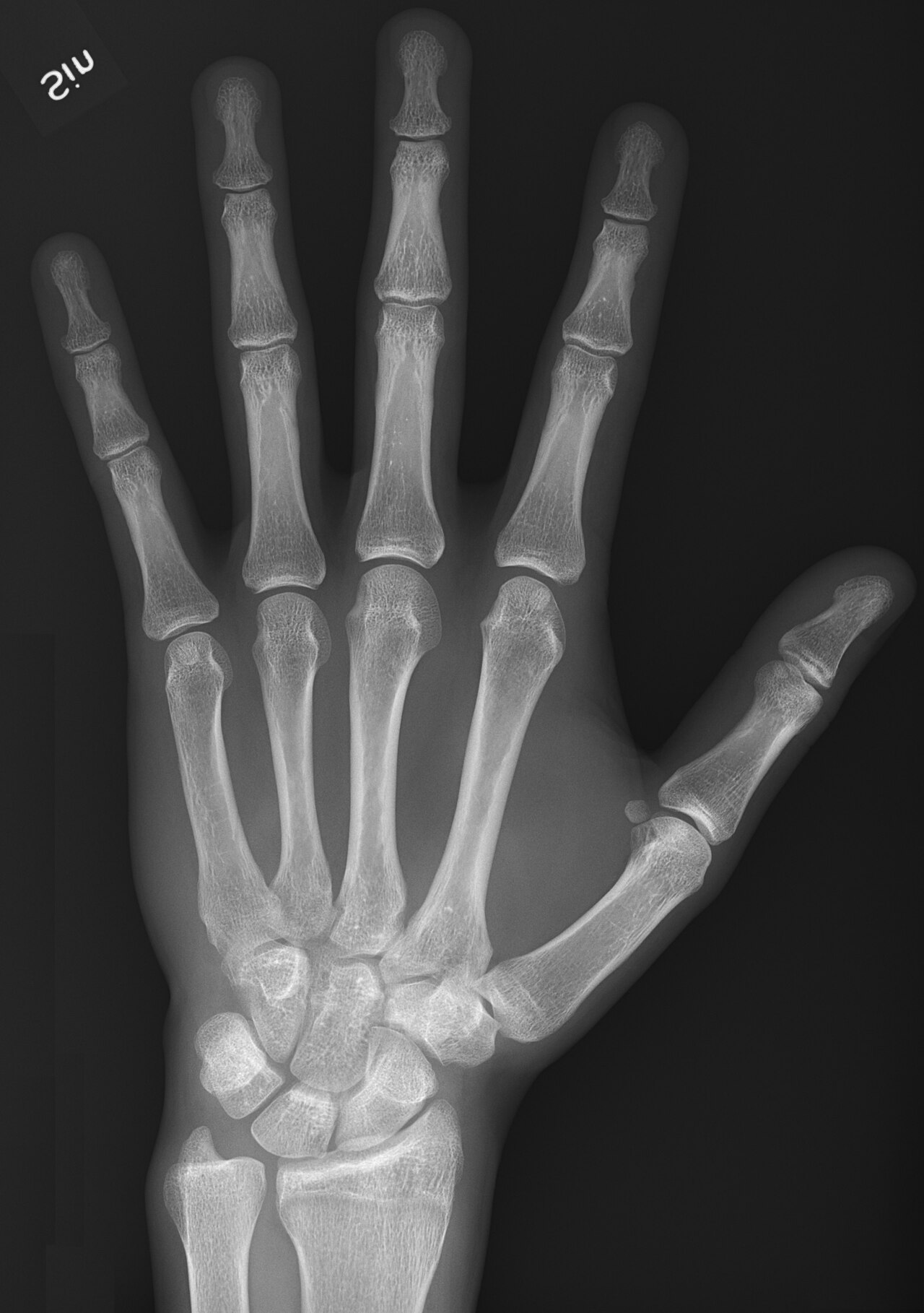
Photo: Mikael Häggström, CC0
PART 1 · LEARN IT · 3 OF 5
Flat bones
A flat bone is a thin plate, often curved. It is much wider than it is thick, so W ÷ T is 2 or more.
Photo: MAKY.OREL, CC0
PART 1 · LEARN IT · 4 OF 5
Irregular bones
An irregular bone has an odd shape: a ring, knobs and wings. The numbers can fool you. Look first, then divide.
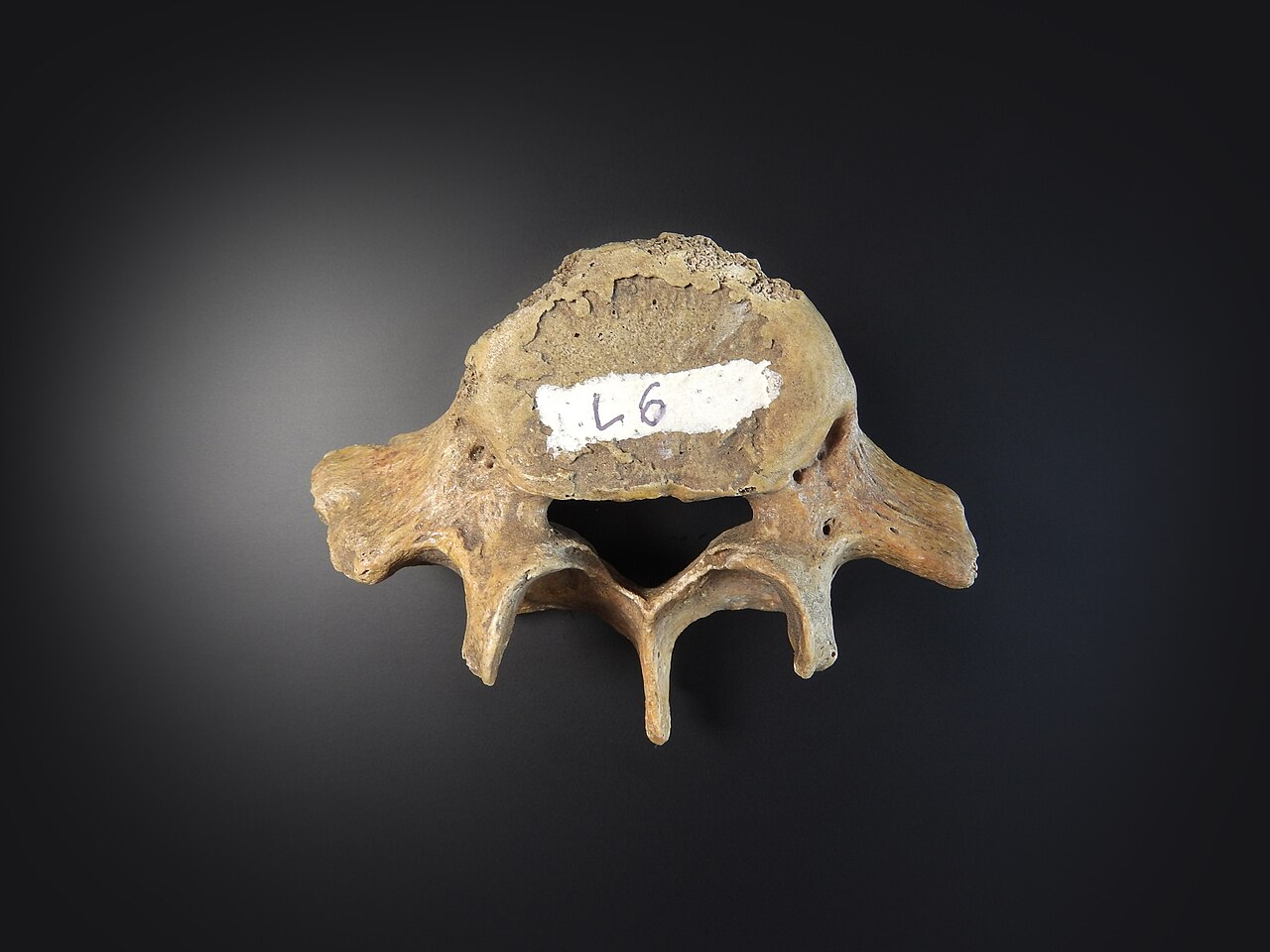
Photo: MAKY.OREL, CC0
PART 1 · LEARN IT · 5 OF 5
The rule, in order
1. Odd shape? Irregular. 2. W ÷ T is 2 or more? Flat. 3. L ÷ W is 3 or more? Long. 4. L ÷ W under 2? Short. And measure every bone at the middle, the same way.
Screenshot: mrsajdak.com/boneshapes, Tab 1
PART 1 · QUESTIONS 4 TO 6
Sort them, then check your plan
QUESTION 4
Sort the four bones
Use the rule in order.
In the lab, the Sort it with the rule card checks you.
QUESTION 5
The vertebra
Its W ÷ T is more than 2.
Why is it irregular, not flat?
QUESTION 6
Plan check (SEP 3)
Why measure every bone at the middle, not near an end?
Use your femur numbers from Question 1.
PART 1 · THE BIG IDEA
Bones are sorted by shape: long, short, flat or irregular. Two ratios sort three of them. An odd shape you sort by looking.
IN YOUR WORDSWhy can the numbers not sort an irregular bone?
TAB 2 · QUESTIONS 7 TO 11
Part 2. Test the rule
Three new bones: a fingertip, an ankle bone and a kneecap.
Does your rule still work?
Look at each one in the body too.
X-ray: Mikael Häggström, CC0
PART 2 · QUESTIONS 7 TO 9
Measure, then look in the body
1
Pick a bone. Measure L, W and T at the middle.
2
Copy them. Divide, like in Part 1.
3
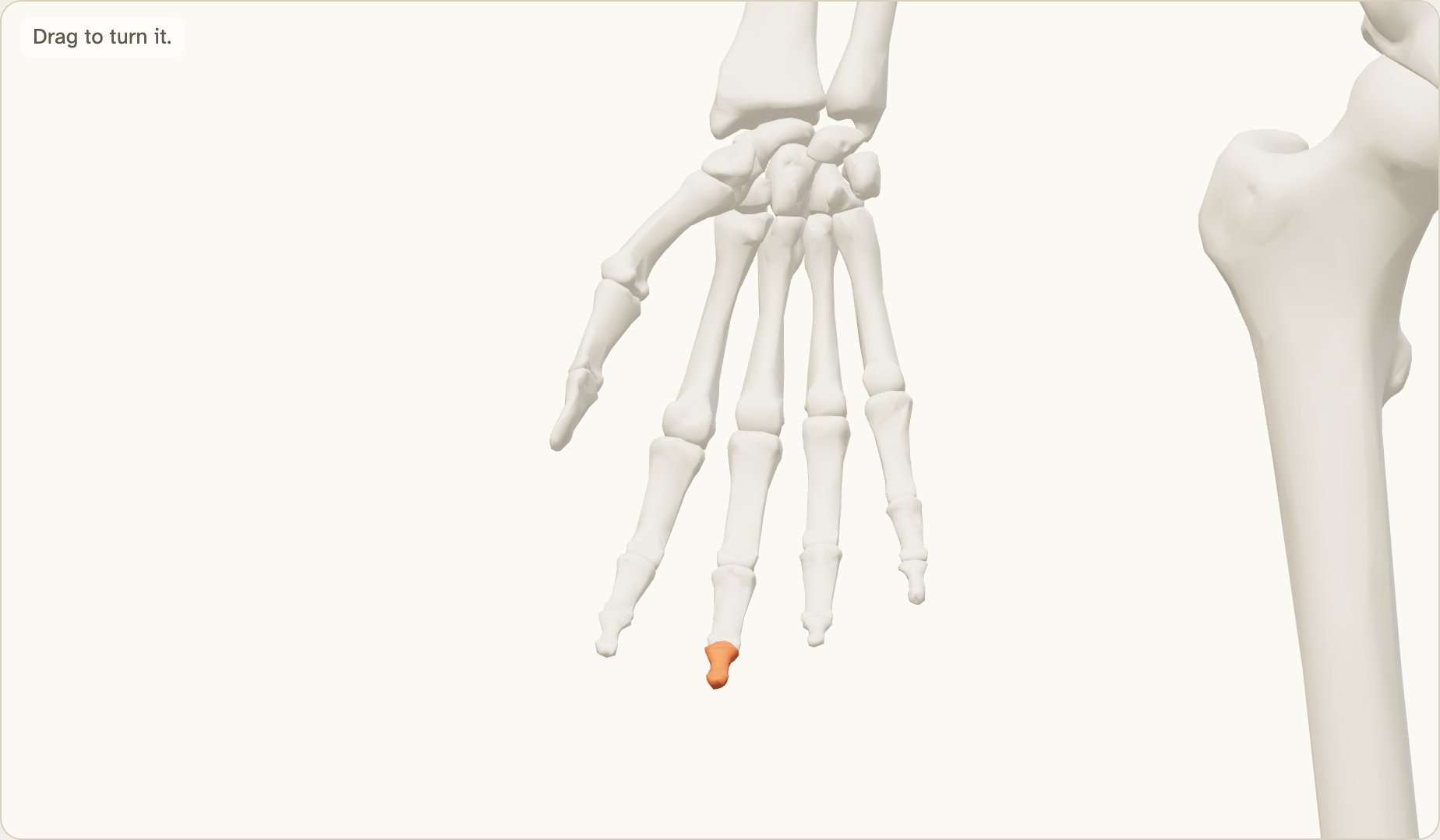
Pick In the body to see where the bone sits.
4
Do all three bones.
PART 2 · QUESTIONS 7 TO 9
Size, and where it sits
QUESTION 8
Compare sizes
How long is the fingertip bone? The capitate? The talus?
Which is the smallest?
QUESTION 9
The kneecap, in the body
Where does it sit?
Is it joined end to end with another bone?
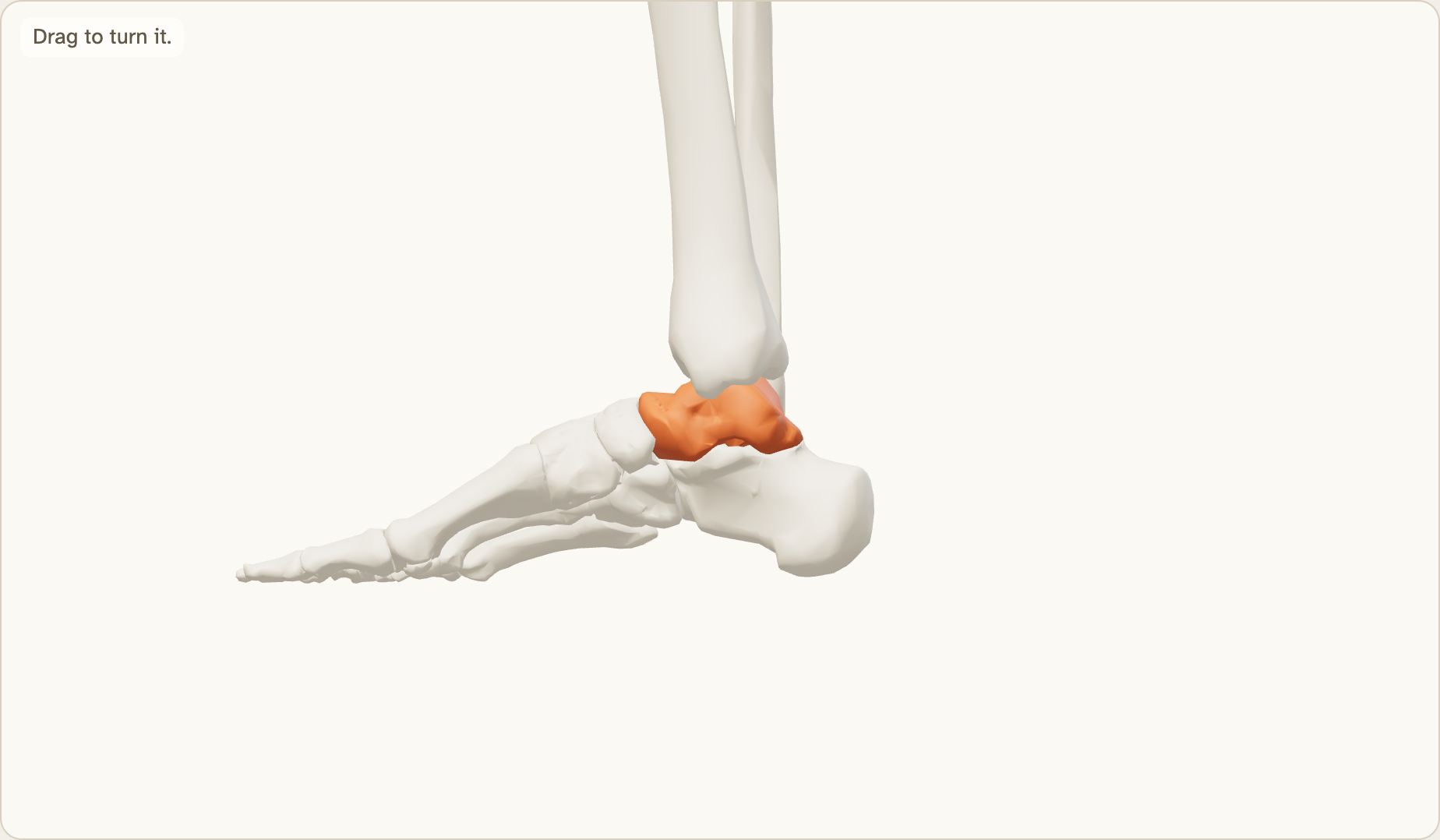
The ankle bone, in the body.
Screenshot: mrsajdak.com/boneshapes, Tab 2
PART 2 · LEARN IT · 1 OF 4
Shape, not size
Bones are sorted by shape, not size. The fingertip bone is smaller than a wrist bone. But it has a shaft and two ends, so it is a long bone.
Screenshot: mrsajdak.com/boneshapes, Tab 2
PART 2 · LEARN IT · 2 OF 4
A big short bone
The ankle bone (talus) is bigger than the fingertip. But it is about as long as it is wide. It is a short bone.
Photo: Mikael Häggström, CC0
PART 2 · LEARN IT · 3 OF 4
A bone in a tendon
A tendon joins a muscle to a bone. A sesamoid bone grows inside a tendon. The kneecap (patella) sits in the tendon of the big thigh muscle, in front of the knee.
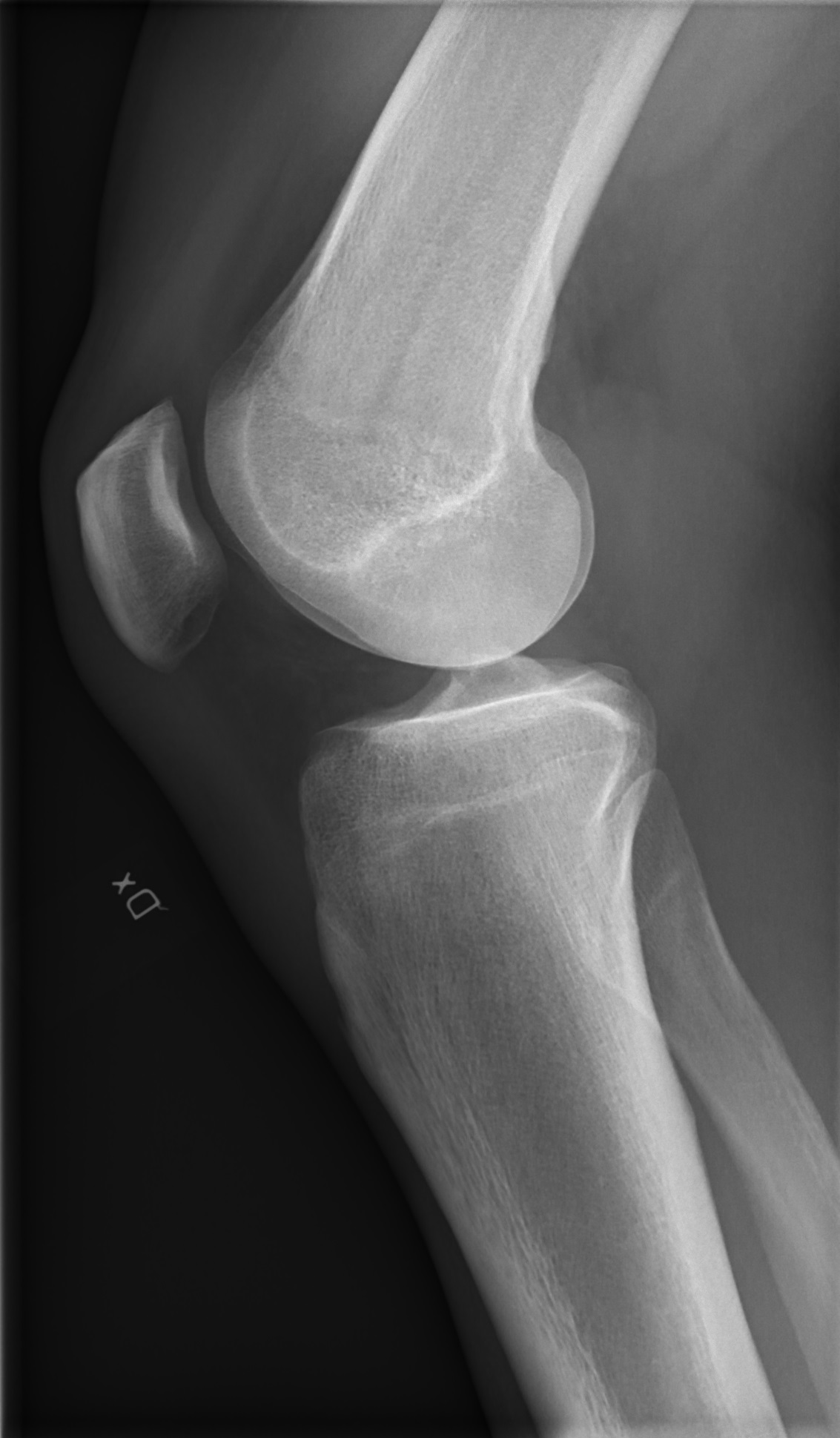
Photo: Mikael Häggström, CC0
PART 2 · LEARN IT · 4 OF 4
The full rule
1. Inside a tendon? Sesamoid. 2. Odd shape? Irregular. 3. W ÷ T 2 or more? Flat. 4. L ÷ W 3 or more? Long. 5. L ÷ W under 2? Short.
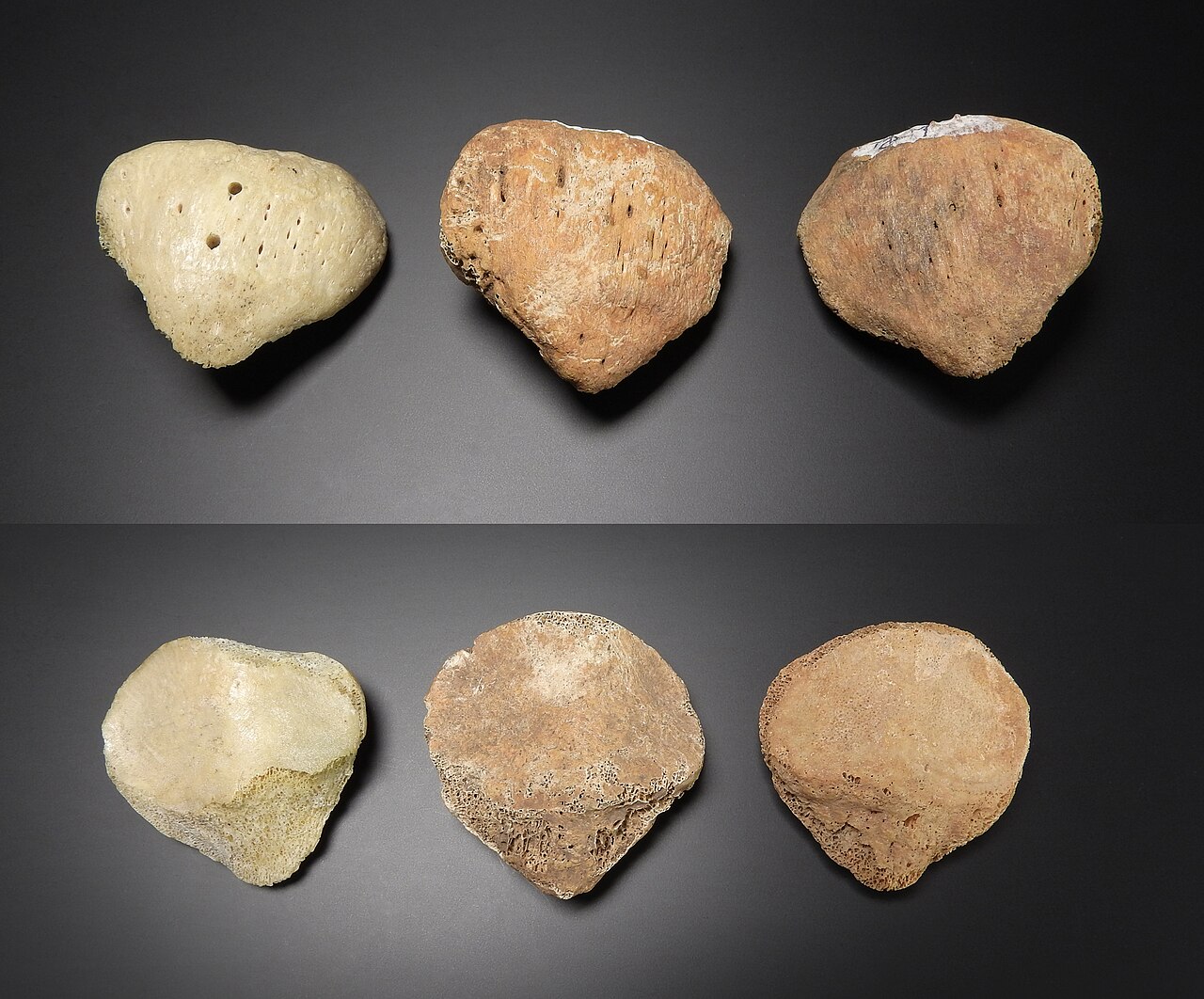
Photo: MAKY.OREL, CC0
PART 2 · QUESTIONS 10 AND 11
Sort them, and fix it
QUESTION 10
Sort the three bones
Use the full rule, in order.
Step 1 first: inside a tendon?
QUESTION 11
Fix it
“Short bones are the small ones.”
Use the fingertip and the talus, and one number for each.
PART 2 · THE BIG IDEA
Shape decides, not size. A tiny bone can be long, and a big bone can be short. A bone that grows inside a tendon is sesamoid.
IN YOUR WORDSWhy is the kneecap not a flat bone, even though its W ÷ T is over 2?
TAB 3 · QUESTIONS 12 TO 16
Part 3. Shape fits the job
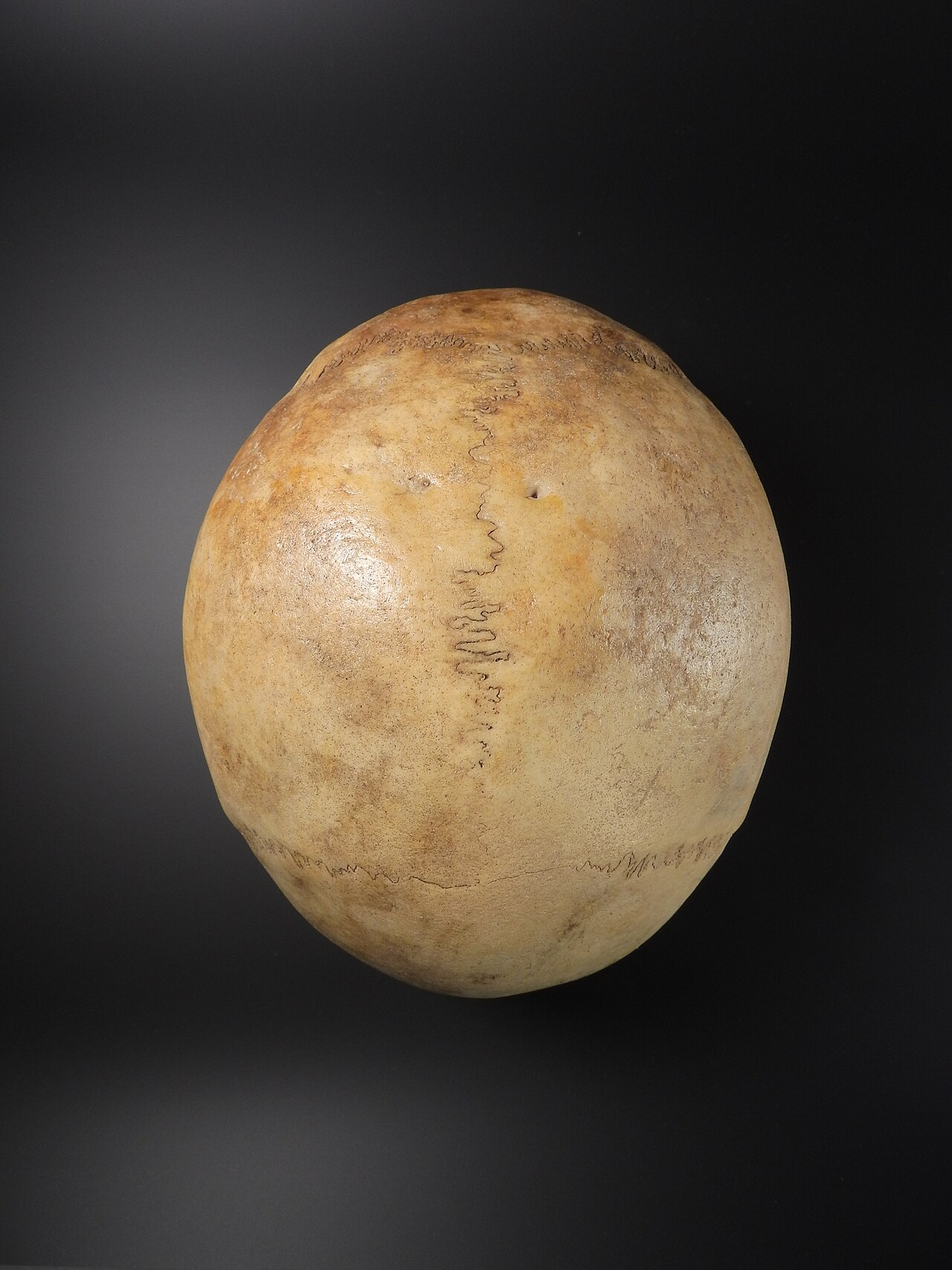
All 206 bones, colored by shape.
Where does each shape gather?
What job could each shape be good at?
Photo: MAKY.OREL, CC0
PART 3 · QUESTIONS 12 AND 13
Count and find
1
Read the count for each shape in the key.
2
Press one shape to light up only those bones.
3
Drag to turn the skeleton. Use + to zoom in.
4
Where are most of those bones? Then press the next shape.
PART 3 · QUESTIONS 12 AND 13
One system, five shapes
QUESTION 12
Systems (CCC 4)
Copy the count for each shape.
Do they add up to all the bones?
QUESTION 13
Where do they gather?
Light up one shape at a time.
Arms and legs? Wrists and ankles? Skull and chest? Spine, face and hips?
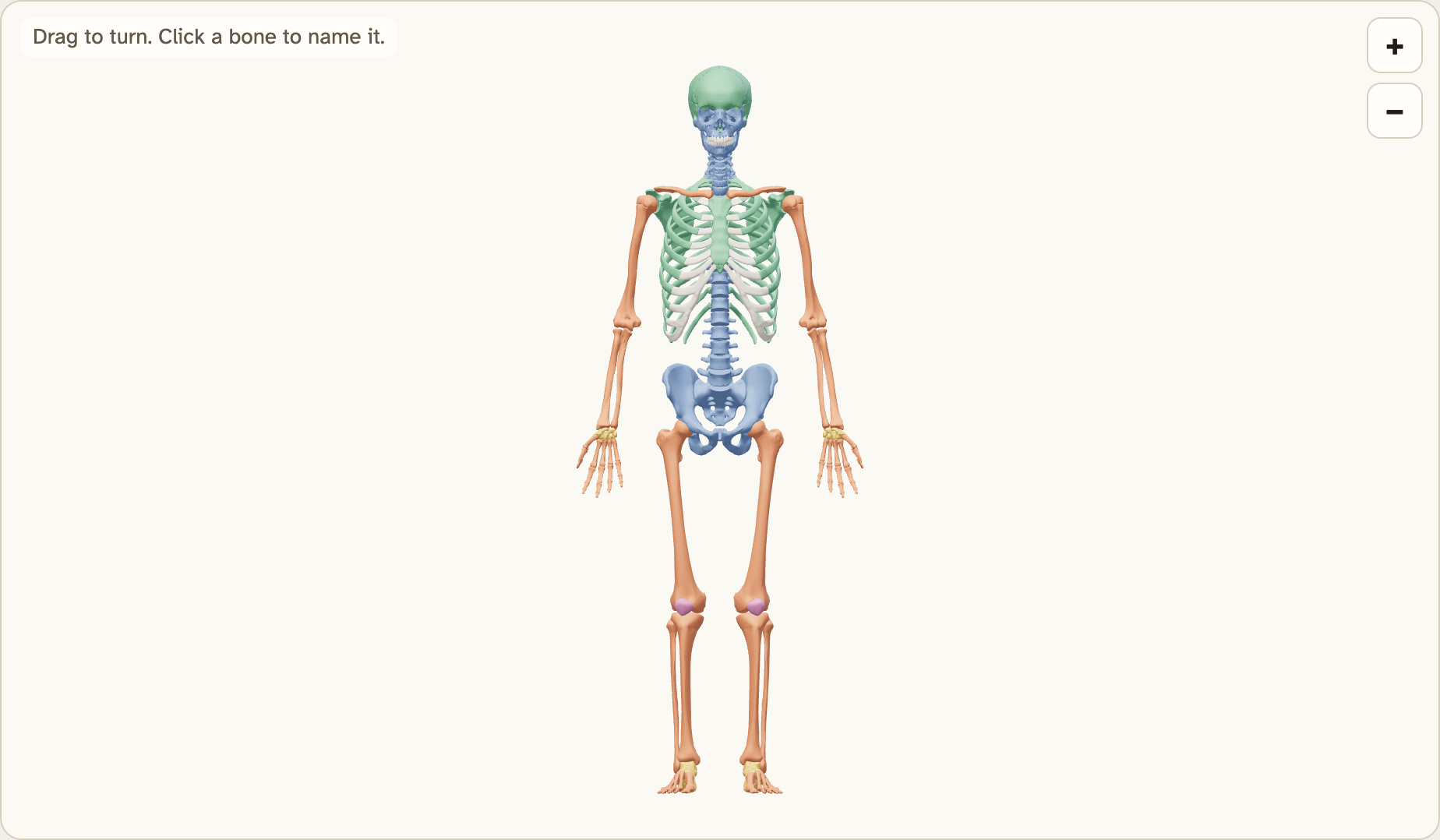
All 206, colored by shape.
Screenshot: mrsajdak.com/boneshapes, Tab 3
PART 3 · LEARN IT · 1 OF 5
Long bones: levers
Muscles pull on the shaft. The bone turns at a joint, so the far end moves a long way. Your arms, legs and fingers move like this.
Photo: MAKY.OREL, CC0
PART 3 · LEARN IT · 2 OF 5
Short bones: pack and glide
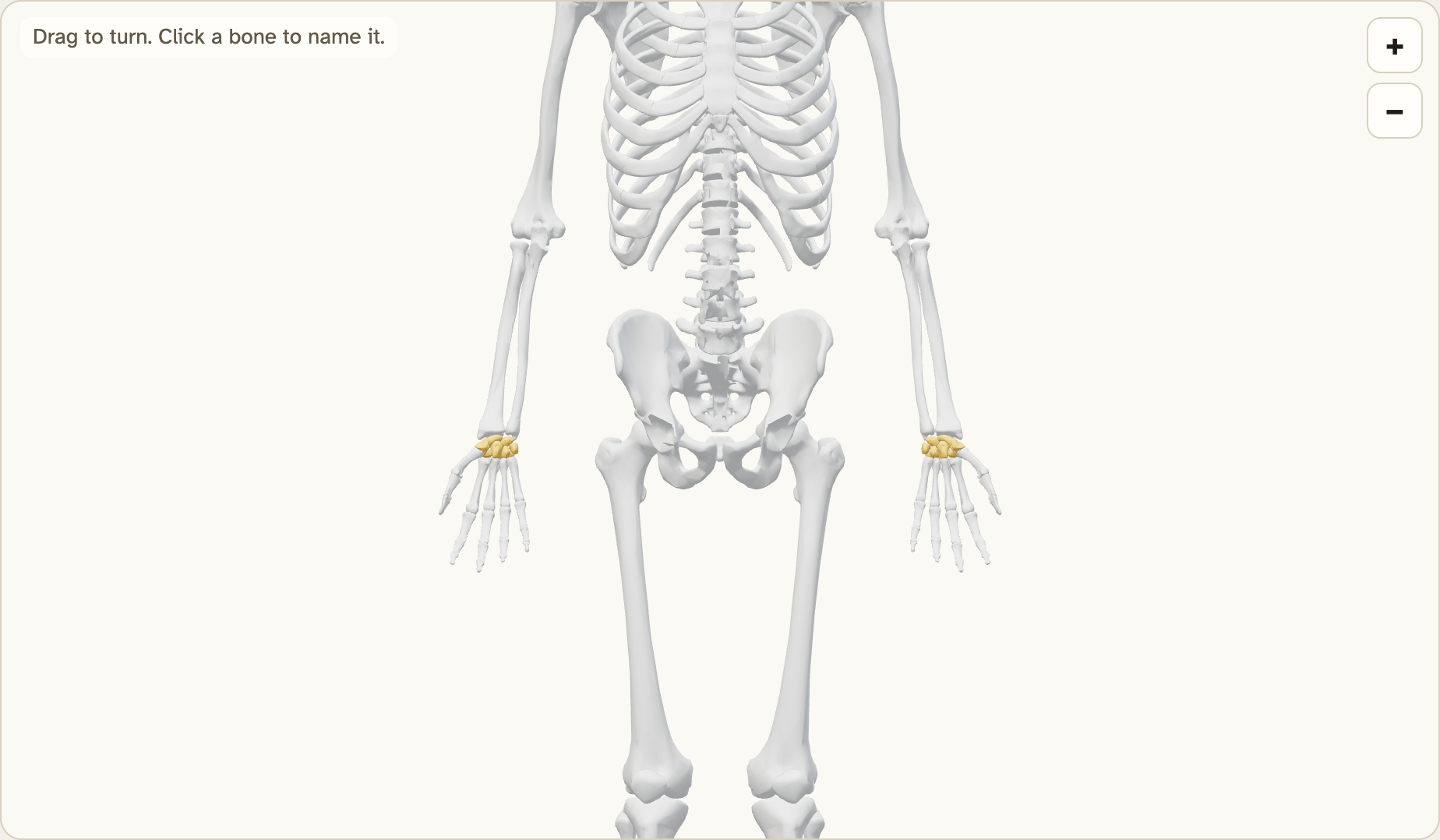
Eight short bones pack into each wrist, and seven into each ankle. They slide a little on each other. The wrist bends many ways and stays strong.
Screenshot: mrsajdak.com/boneshapes, Tab 3
PART 3 · LEARN IT · 3 OF 5
Flat bones: protect and anchor
Curved plates wrap soft organs. The skull covers the brain. The ribs and sternum cover the heart and lungs. Wide flat bones give big muscles room to attach.
Photo: MAKY.OREL, CC0
PART 3 · LEARN IT · 4 OF 5
Irregular bones: special jobs
A vertebra’s ring guards the spinal cord. Its knobs anchor back muscles. Each irregular bone is shaped for its own job.
Photo: MAKY.OREL, CC0
PART 3 · LEARN IT · 5 OF 5
Sesamoid bones: help a tendon
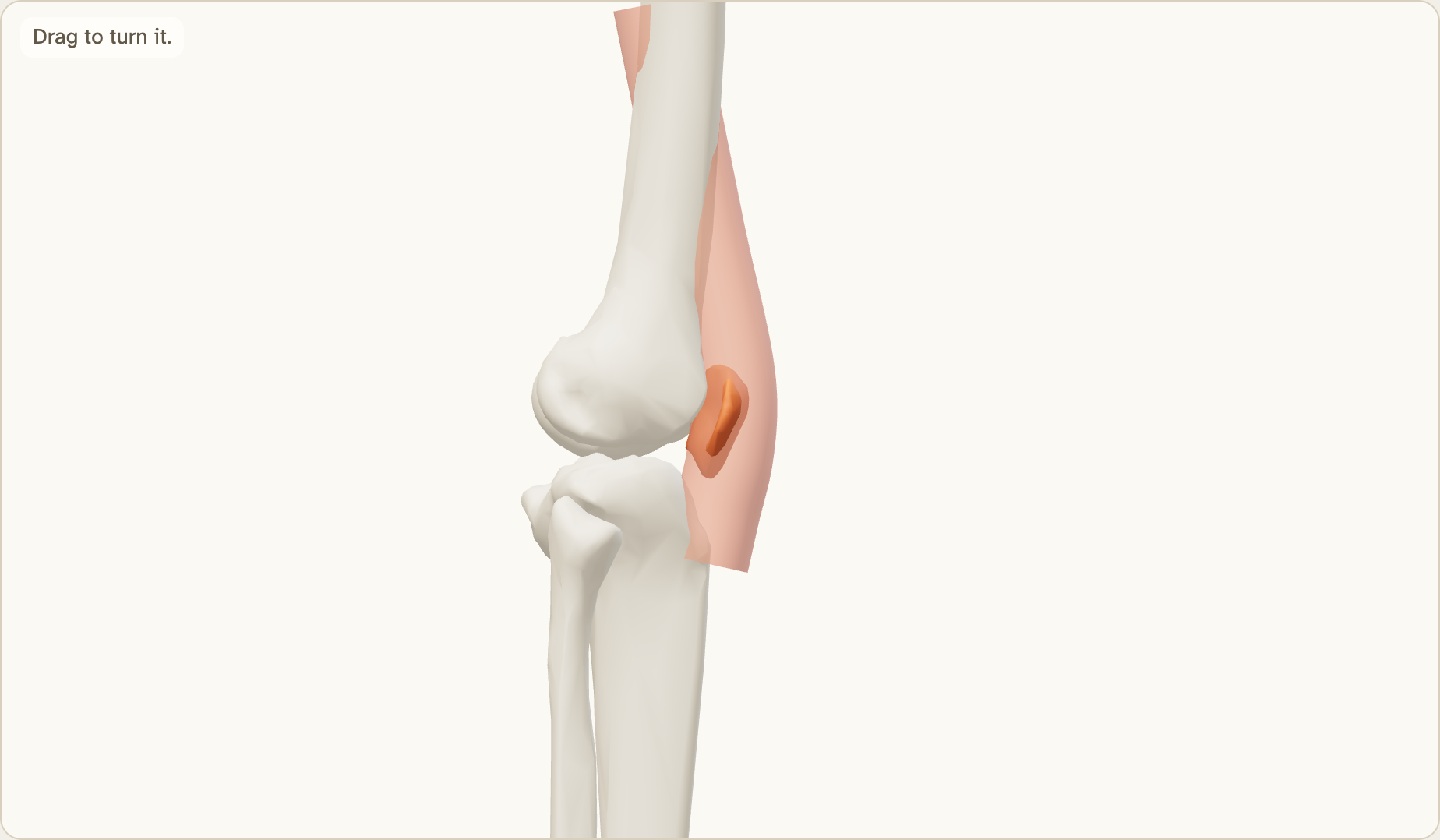
The kneecap keeps the tendon from rubbing on the femur. It lifts the tendon away from the joint, so the thigh muscle straightens the knee with more leverage.
Screenshot: mrsajdak.com/boneshapes, Tab 2
PART 3 · QUESTIONS 14 TO 16
Match it, check it, explain it
QUESTION 14
Match the job
Tick the job each shape does best.
QUESTION 15
Model check (SEP 2)
One thing the lab shows well.
One thing it leaves out.
Question 16
Why are skull bones flat plates, but finger bones long?
What happened
Two bones, one number each.
The idea
Shape fits the job.
How the data shows it
Connect the numbers to the job.
PART 3 · THE BIG IDEA
A bone’s shape fits its job: long bones are levers, short bones glide, flat bones protect, irregular bones do special jobs, and sesamoid bones help a tendon.
IN YOUR WORDSWhy would a long, thin skull be a bad idea?
WRAP IT UP · BACK TO THE START
Revisiting the Phenomenon
Every bone is made of the same tissue. Why does the body build bones in so many different shapes?
1Name the shape of the thigh bone and the skull top. Give one number from your tables as evidence.
2What job does each one do? How does its shape help?
3Your PREDICT answer: is the fingertip bone short or long? Were you right?
4Why not build every bone the same shape?
Photos: A and B, MAKY.OREL, CC0, via Wikimedia Commons
LAST CHECK
Before you hand it in
Name, date and period are on top.
Both sides are done.
Every table is full.
Your explanation uses numbers from your own tables.
Next lesson: finding and naming the major bones.
Photo: MAKY.OREL, CC0