ANATOMY & PHYSIOLOGY · SECTION 8.3
The Contraction Cycle
Follow along with your worksheet, one question at a time.
mrsajdak.com/contraction-cycle
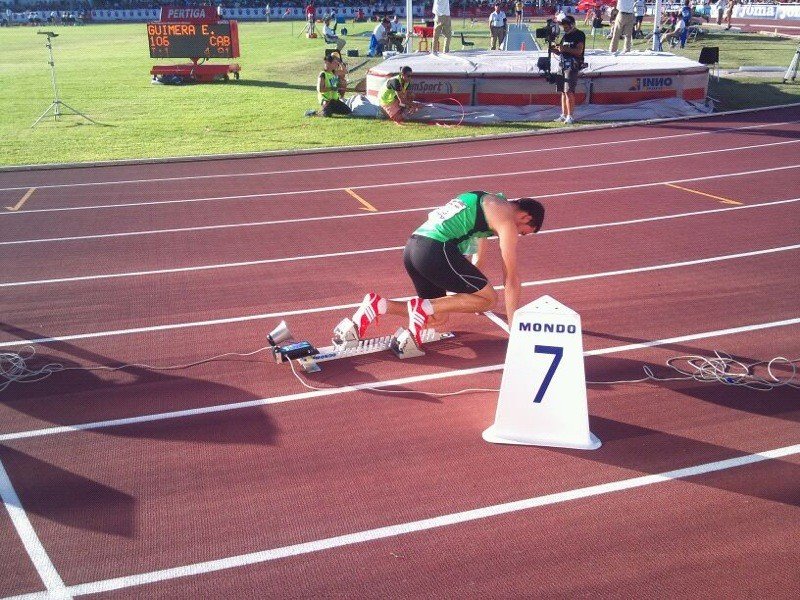
Photo: LexSprinter, CC BY-SA 3.0
START HERE · PICK AN OPENER
Choose how to open the lesson
Click a card to jump to it. Every option ends at the same Observe, Wonder, Predict slide and the same driving question.
OPTION A · VIDEO
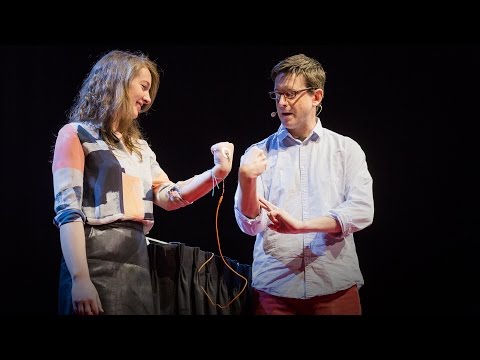
One Brain, Two Arms
Clip 1 is Greg Gage's TED talk (2015): one student moves her arm, and a second student's arm moves too. Clip 2 is a short Backyard Brains demo of the same kit.
Watch for
What made the second person's arm move?
Did the second person decide to move?
What do you think travels from a nerve into a muscle?
Videos on YouTube: Greg Gage, TED; Sarah Schwettmann.
OPTION B · TRY IT · 3 MINUTES
Catch the Ruler
1
Partner A holds a 30 cm ruler by the top, the zero end at the bottom.
2
Partner B holds a thumb and finger open at the zero mark, not touching.
3
Partner A drops the ruler with no warning. Partner B catches it.
4
Read the cm mark at the top of your fingers. Try three times, then switch.
You need
One 30 cm ruler for each pair
Watch for
Where did you catch it? Did it get better with practice?
What had to happen between seeing the drop and pinching?
Which part do you think took the longest?
OPTION C · PHOTOS
Phenomenon: A Dead Frog Kicks
Photos: Luigi Galvani, 1791, public domain · LexSprinter, CC BY-SA 3.0
START HERE
Observe, wonder, predict
A nerve signal reaches a muscle. A moment later, the muscle pulls.
OBSERVEWhat did you see move, and what started it?
WONDERWhat do you wonder about how a signal becomes a pull?
PREDICTDoes a muscle need energy to relax, or only to pull?
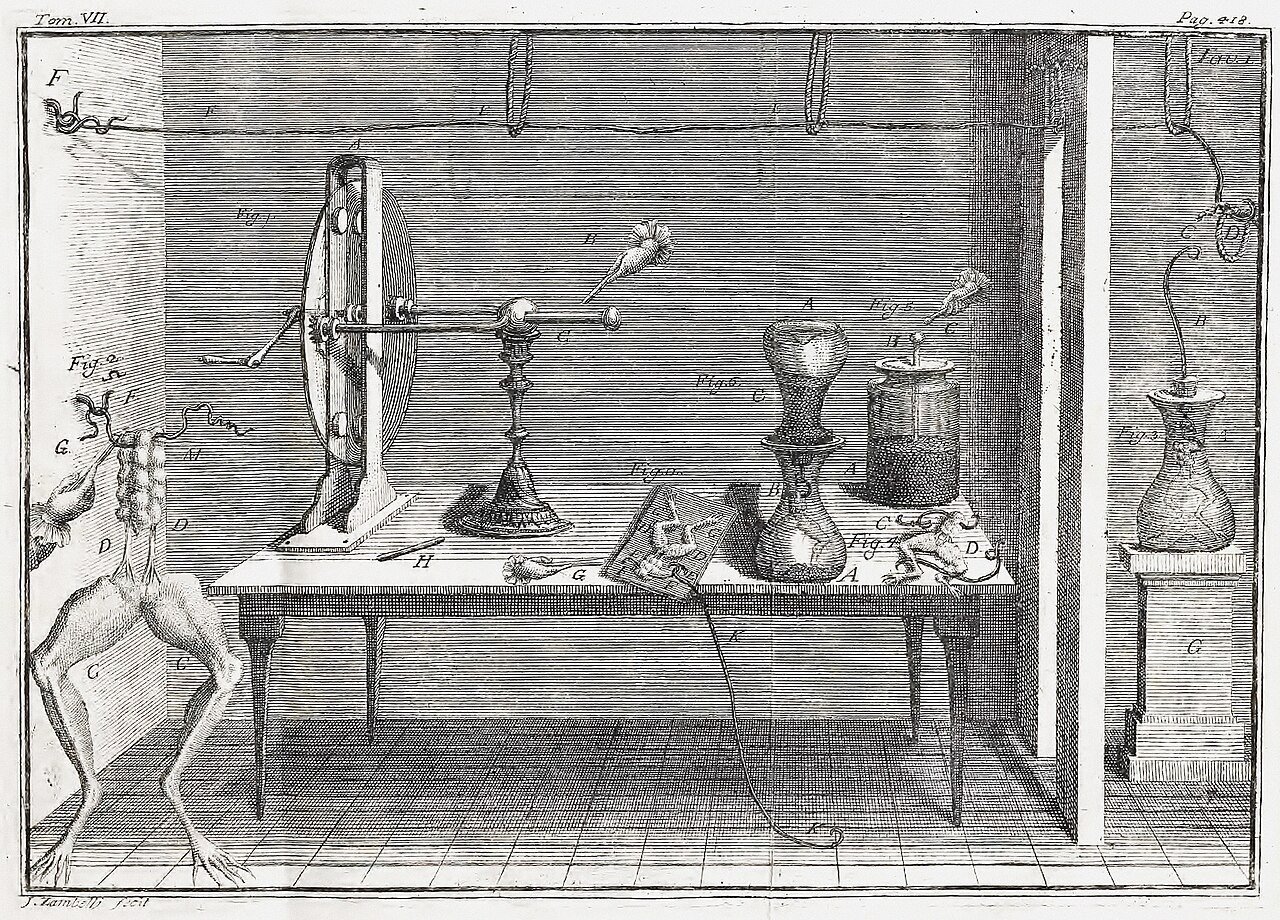
Galvani, 1791. The frog was dead, but its leg still kicked.
Photo: Luigi Galvani, 1791, public domain
DRIVING QUESTION
How does one nerve signal make a muscle pull, and what lets it let go?
START HERE
What Happened Here?
Finished observing? Click here to find out.
A nerve signal does not reach inside the muscle by itself. It starts a chain of steps, one after another, and the last step is the pull. Breaking any one step changes what the muscle does.
Today, you will watch every step from the nerve to the pull, in order. You will run the cross-bridge cycle one step at a time. Then you will break one step and see what goes wrong.
TAB 1 · QUESTIONS 1 TO 6
Part 1. Signal to pull
One signal. Thirteen events. Watch them in order.
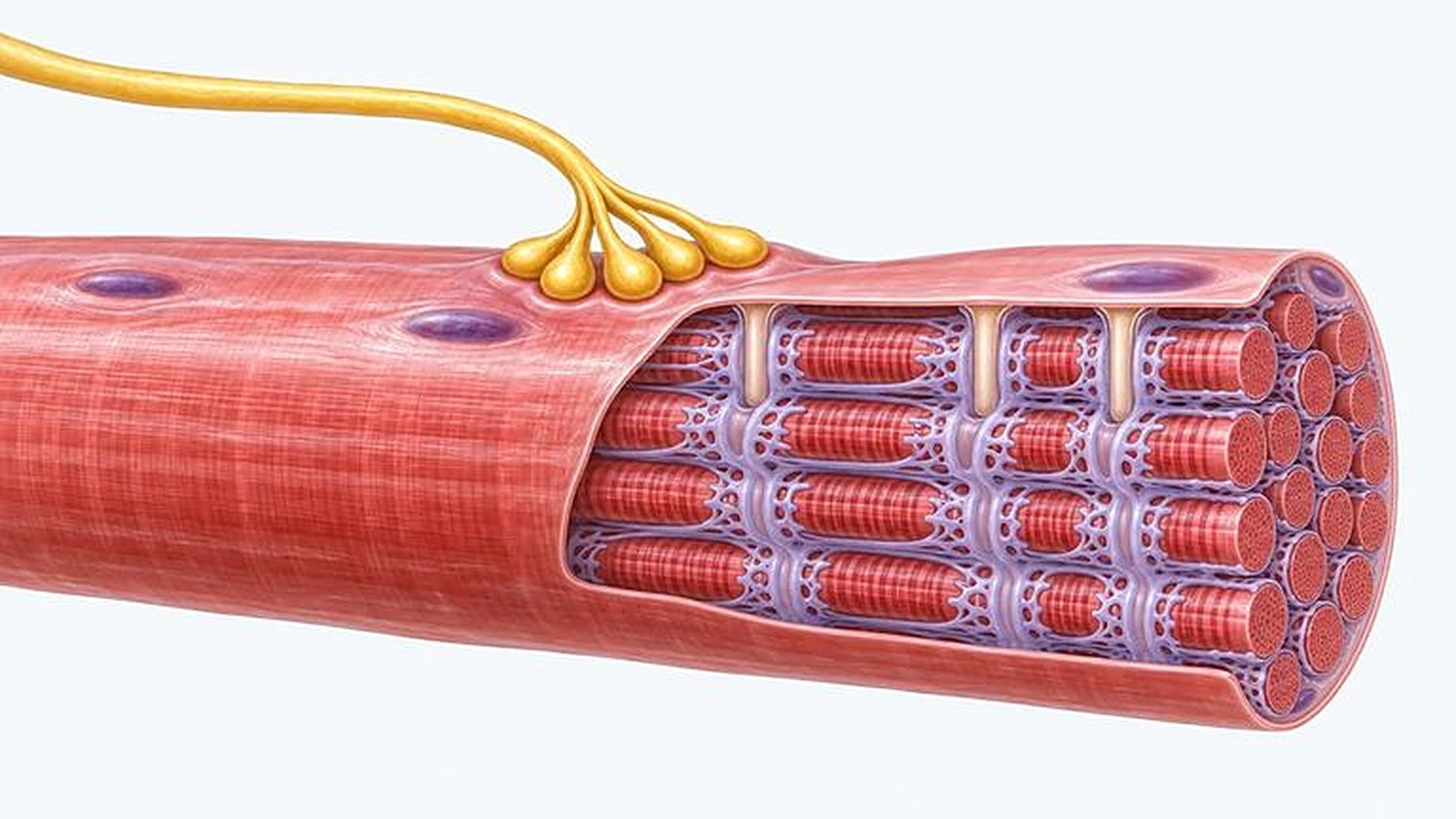
Photo: AI-generated for this lab, checked by Ryan Sajdak. Not to scale
PART 1 · QUESTIONS 1 TO 3
Send the signal
1
Press Send signals. Watch the whole run.
2
Read the event log.
3
Click the part that released the calcium.
4
Answer Questions 1 to 3.
PART 1 · LEARN IT · 1 OF 3
The signal crosses a gap
The signal reaches the axon terminal. It releases acetylcholine (ACh) into a tiny gap. ACh binds to the muscle fiber and starts a muscle impulse.
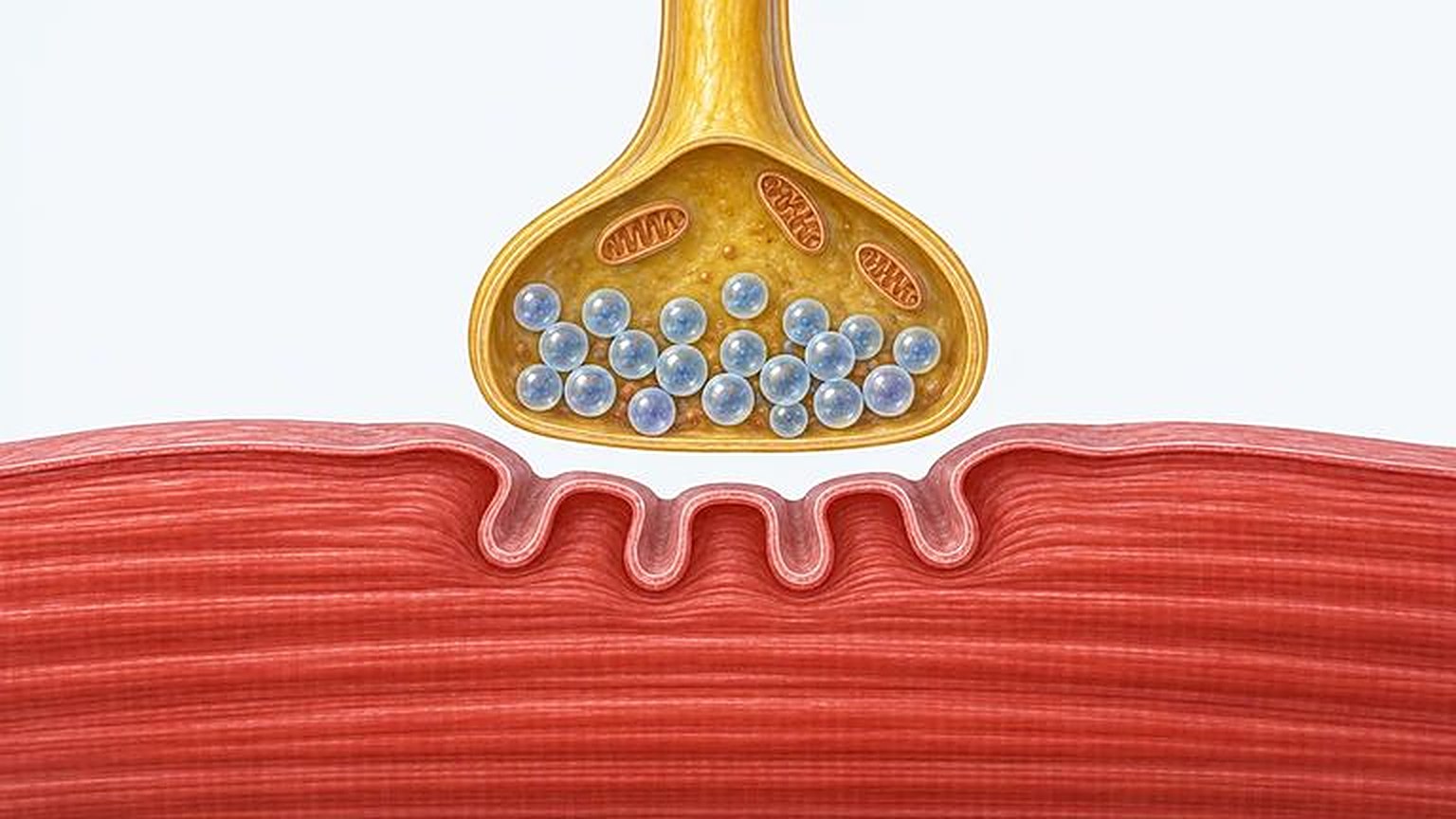
Illustration: AI-generated for this lab, checked by Ryan Sajdak. Not to scale
PART 1 · LEARN IT · 2 OF 3
The impulse goes deep, and calcium comes out
The impulse spreads over the sarcolemma and runs down the T-tubules. The sarcoplasmic reticulum (SR) releases its calcium. Calcium is the trigger.
Illustration: AI-generated for this lab, checked by Ryan Sajdak. Not to scale
PART 1 · LEARN IT · 3 OF 3
Relaxing has steps too
When the nerve stops, an enzyme breaks down the ACh. The SR pumps calcium back in. That pump uses ATP. Without calcium, myosin lets go.
Illustration: AI-generated for this lab, checked by Ryan Sajdak. Not to scale
PART 1 · QUESTIONS 4 TO 6
Use the idea
QUESTION 4
What does each part do?
ACh, T-tubules, SR.
Tick one job for each.
QUESTION 5
Model check
What do the lavender net and the blue dots stand for?
Name one way the model is not real.
QUESTION 6
Why T-tubules?
A fiber is wide.
How does every myofibril get the message?
TAB 2 · QUESTIONS 7 TO 11
Part 2. The cross-bridge cycle
One myosin head. One actin thread. Count every ATP.
Photo: Ryan Sajdak
PART 2 · QUESTIONS 7 AND 8
Run it one step at a time
1
Press Start over before each run.
2
Run A: 3 power strokes with calcium.
3
Run B: calcium None, Next step 2 times.
4
Run C: keep going until it is stuck.
PART 2 · QUESTION 8
A rate: distance for each ATP
THE MATH
Divide
Total distance ÷ ATP used.
That is the distance for each ATP.
Example
A car goes 300 km on 20 L of gas.
300 ÷ 20
= 15 km for each liter
These are not your numbers. Use your own.
PART 2 · LEARN IT · 1 OF 3
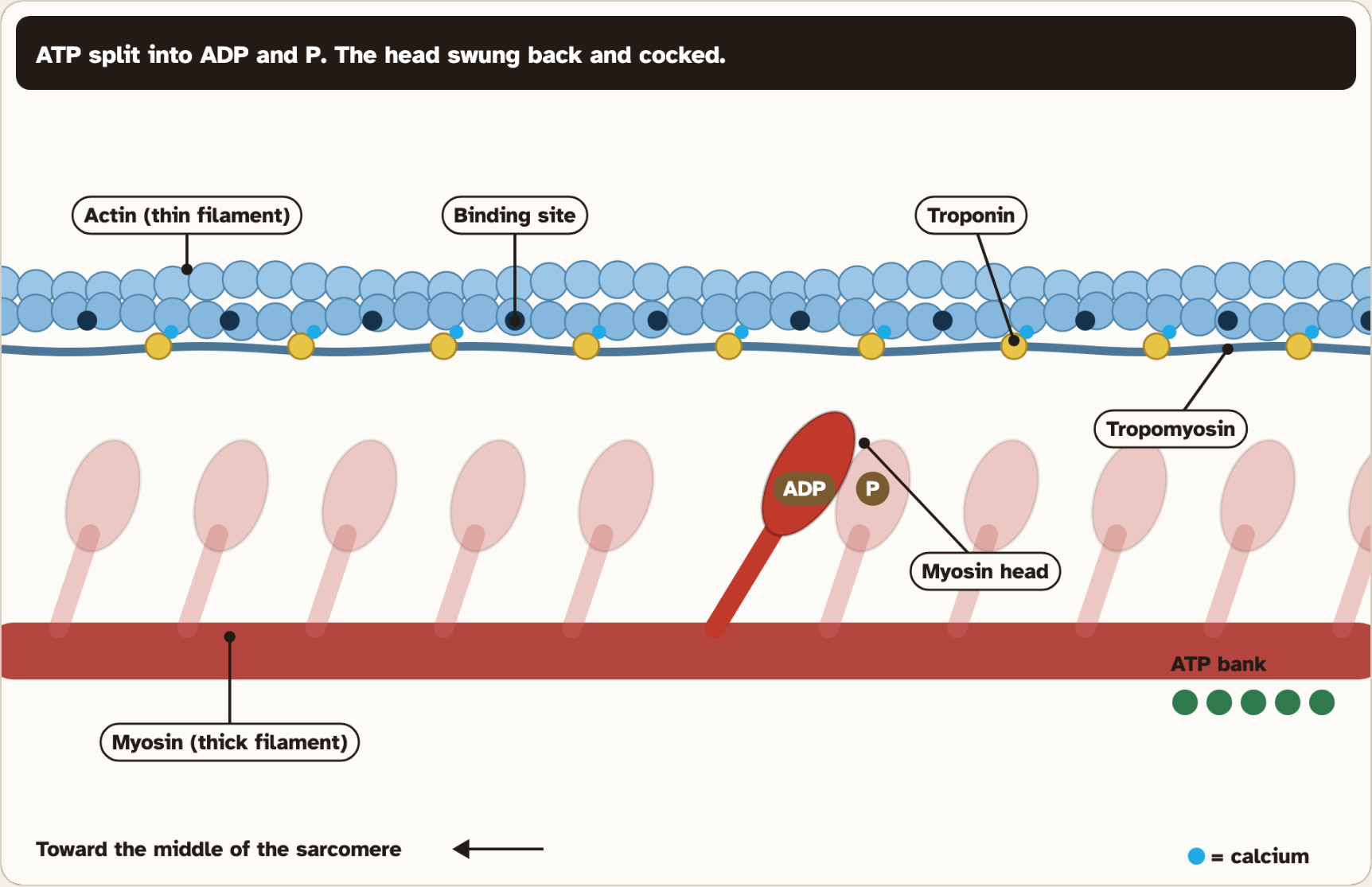
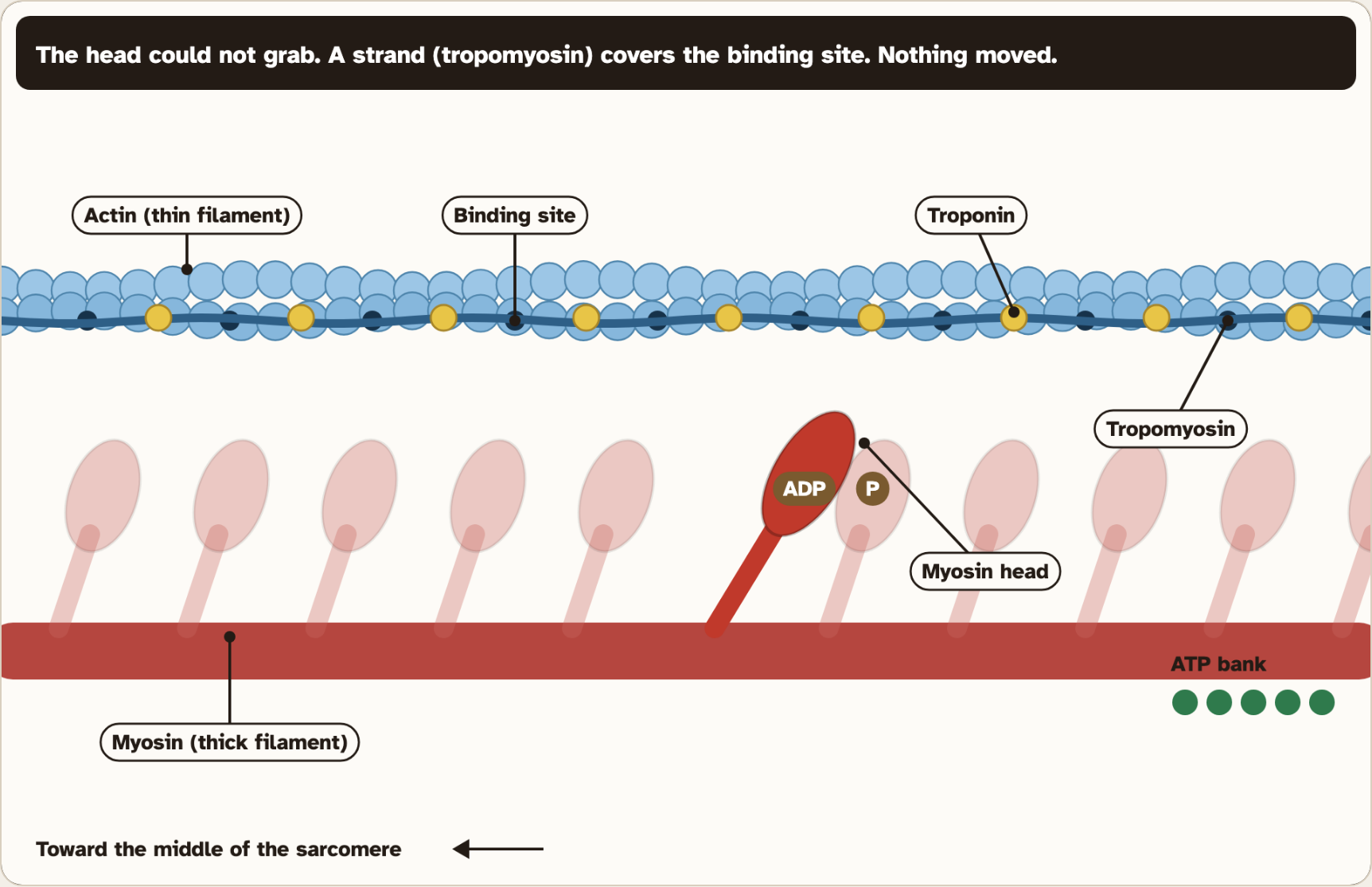
Calcium unlocks actin
With no calcium, tropomyosin covers the binding sites. Calcium binds to troponin, which pulls tropomyosin out of the way.
Drawing: Ryan Sajdak
PART 2 · LEARN IT · 2 OF 3
The four steps of the cycle
1. ATP splits; the head cocks.
2. The head grabs actin (a cross-bridge).
3. Power stroke: actin moves about 10 nm.
4. A new ATP binds; the head lets go.
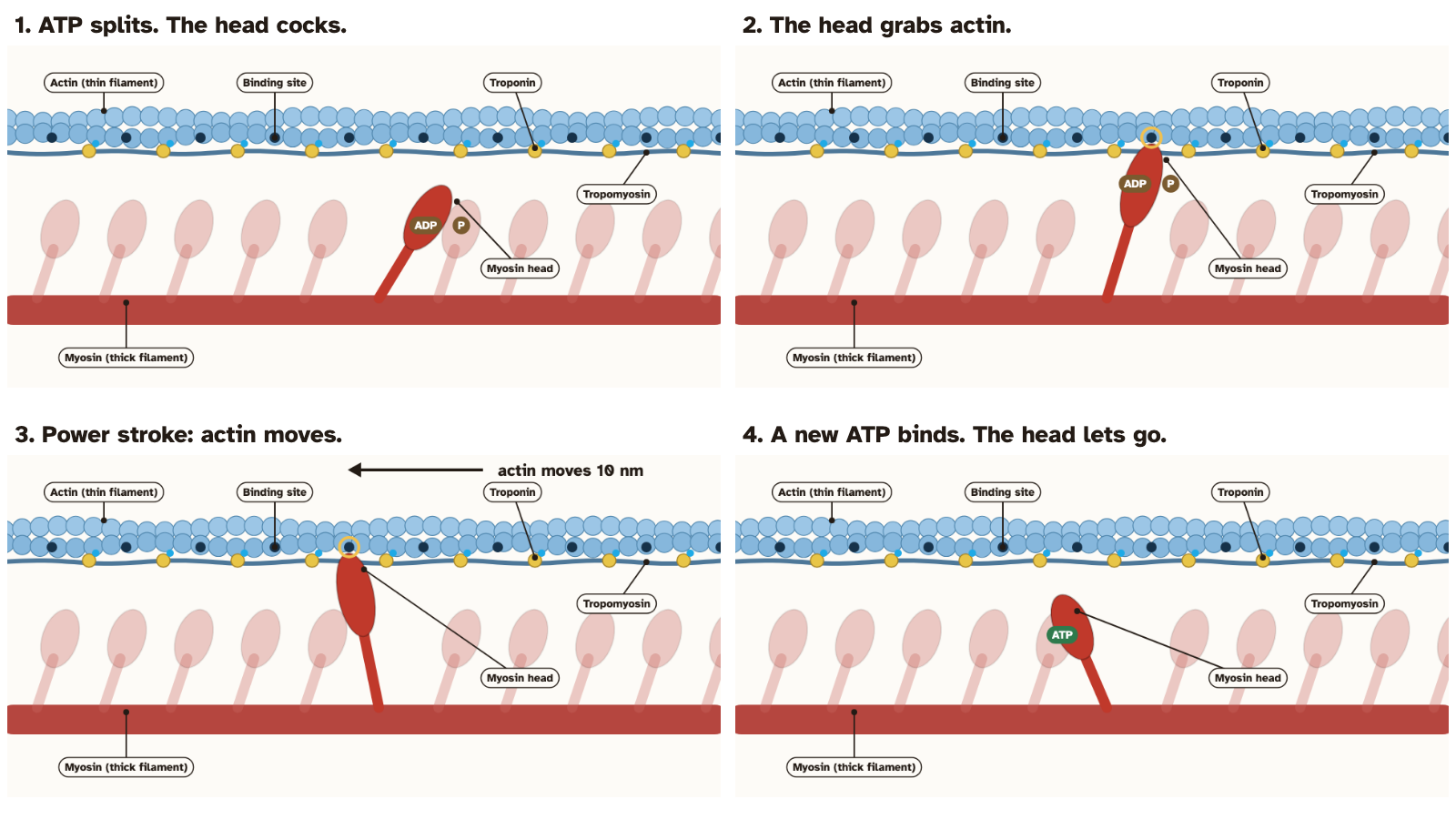
Drawing: Ryan Sajdak
PART 2 · LEARN IT · 3 OF 3
ATP has two jobs
When ATP splits, it cocks the head. When a new ATP binds, the head lets go. With no ATP, the head stays stuck.
Drawing: Ryan Sajdak
PART 2 · LEARN IT
The cross-bridge cycle, step by step
PART 2 · QUESTIONS 9 TO 11
Use the idea
QUESTION 9
Put the steps in order
Start with the head holding a fresh ATP.
QUESTION 10
Two jobs of ATP
Tick two.
QUESTION 11
Why no grab in run B?
Use the words troponin and tropomyosin.
TAB 3 · QUESTIONS 12 TO 16
Part 3. Break one step
Each step causes the next. What if one breaks?
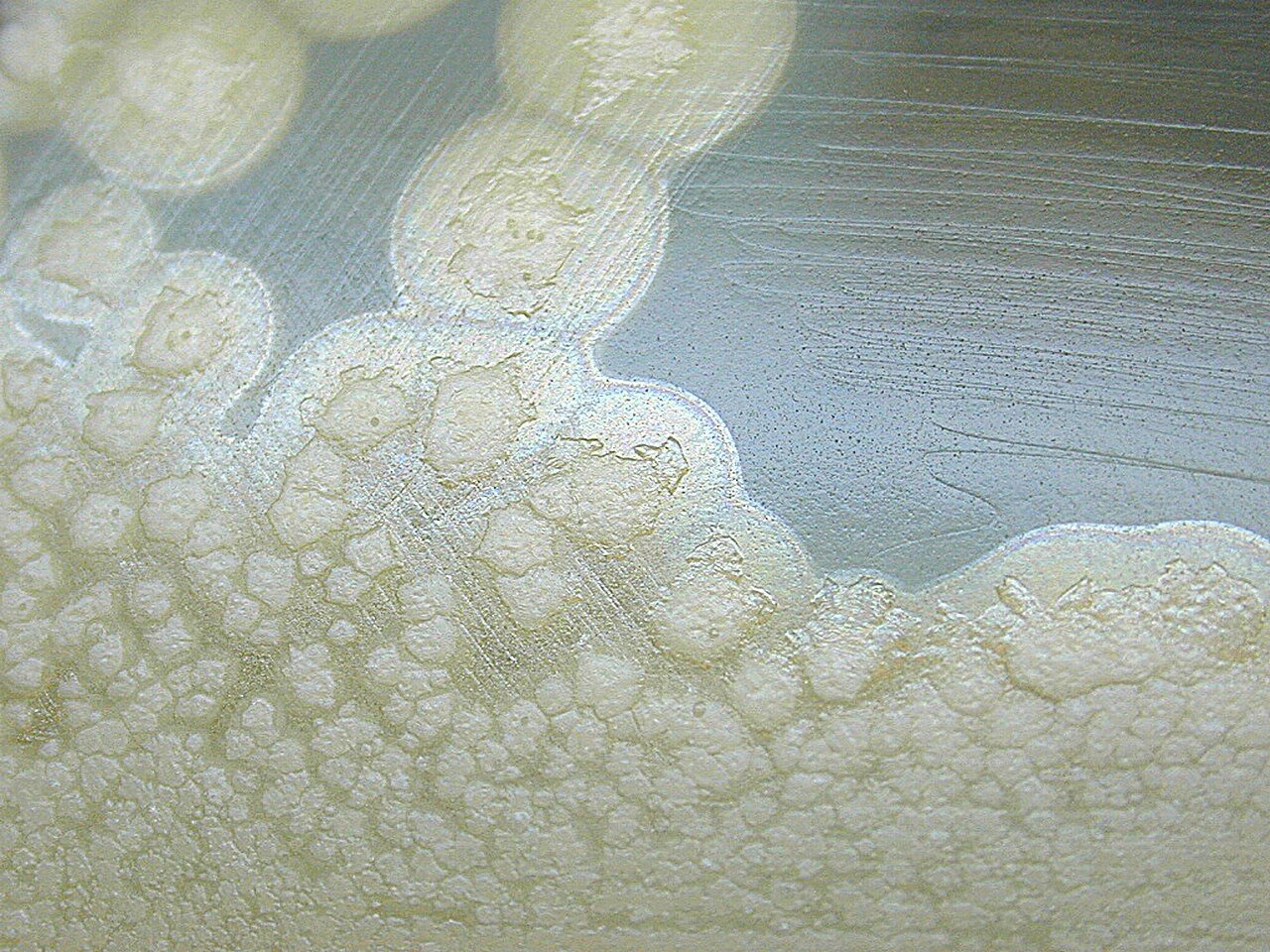
Photo: CDC, Larry Stauffer, public domain
PART 3 · QUESTIONS 12 AND 13
Run all six
1
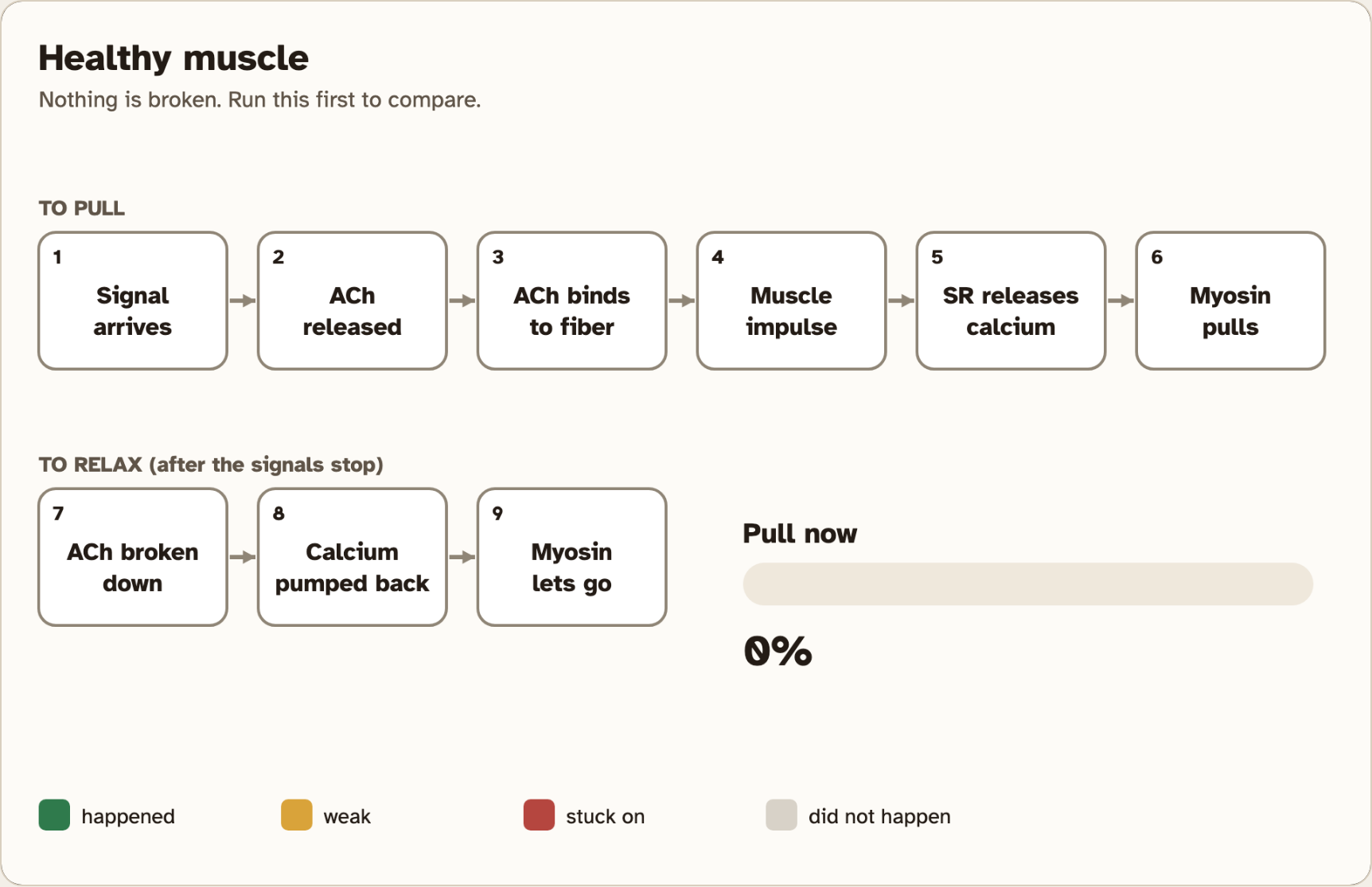
Run the healthy muscle first.
2
Run all five cases.
3
Read Your runs and the graph.
4
Answer Questions 12 and 13.
PART 3 · LEARN IT · 1 OF 3
Each step causes the next
Break one step and nothing after it can happen. Botulinum toxin stops ACh release: no pull. In myasthenia gravis, ACh receptors are blocked: a weak pull.
Photo: CDC, Larry Stauffer, public domain
PART 3 · LEARN IT · 2 OF 3
Breaking a relax step
Some nerve agents stop the enzyme that breaks down ACh. The fiber keeps firing and cannot relax. Dantrolene keeps calcium in the SR: a very weak pull.
Drawing: Ryan Sajdak
PART 3 · LEARN IT · 3 OF 3
Why a body stiffens after death
Dead cells run out of ATP. Calcium leaks out, so heads grab actin. With no ATP, they cannot let go. This is rigor mortis.
Drawing: Ryan Sajdak
PART 3 · QUESTIONS 14 AND 15
Use the idea
QUESTION 14
Which step breaks first?
Find where the problem touches the chain first.
QUESTION 15
"Relaxing is free."
Agree or disagree?
Use evidence from two tabs.
EXPLAIN IT · QUESTION 16
Why does a body lock stiff after death?
Claim
Answer the question in one sentence.
Evidence
What happened in Tab 2 and Tab 3 with no ATP?
Reasoning
Say what a myosin head needs to let go.
WRAP IT UP · BACK TO THE START
Revisiting the Phenomenon
How does one nerve signal make a muscle pull, and what lets it let go?
EVIDENCEName the steps from the nerve to calcium.
EVIDENCEWhat does calcium do? What does ATP do?
EVIDENCEDoes a muscle need energy to relax? How do you know?
Hand in your worksheet.
Next lesson: the sliding filament model.