ANATOMY & PHYSIOLOGY · SECTION 7.4
Fracture Clinic Lab
Follow along with your worksheet, one question at a time.
mrsajdak.com/fractures
X-rays: Hellerhoff, CC BY-SA 4.0
START HERE · PICK AN OPENER
Choose how to open the lesson
Click a card to jump to it. Every option ends at the same Observe, Wonder, Predict slide and the same driving question.
OPTION A · VIDEO
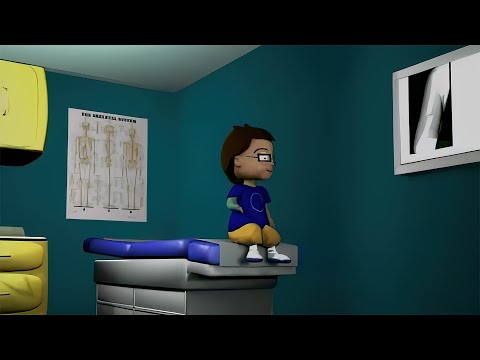
How a Bone Heals
Two short clips. Watch only the opening, then stop. The lesson answers the question.
Watch for
What is a bone doing that a snapped pencil cannot?
Is a bone alive?
What do you think fills the break first?
Videos on YouTube: AskaBiologist; Dr Matt & Dr Mike.
OPTION B · TRY IT · 3 MINUTES
Bend or Twist
1
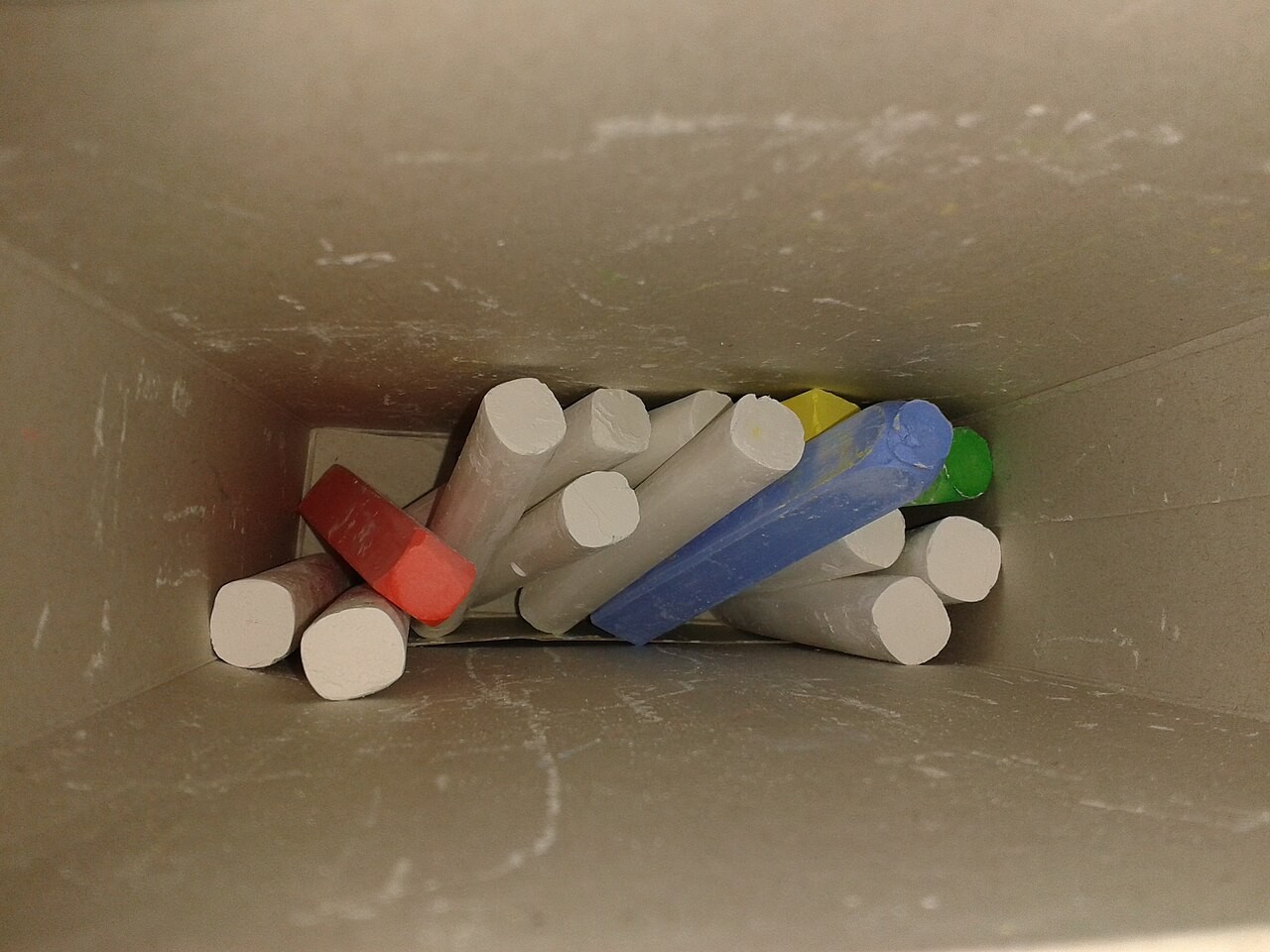
Glasses on. Hold a stick of chalk over the tray.
2
Bend it with your thumbs until it snaps.
3
Twist a second stick until it snaps.
4
Put the ends side by side. What is different?
You need
2 sticks of plain chalk
A tray
Safety glasses
Watch for
The bent stick breaks flat, straight across.
The twisted stick breaks on a slant that winds around.
Why would the same chalk break two ways?
OPTION C · PHOTOS
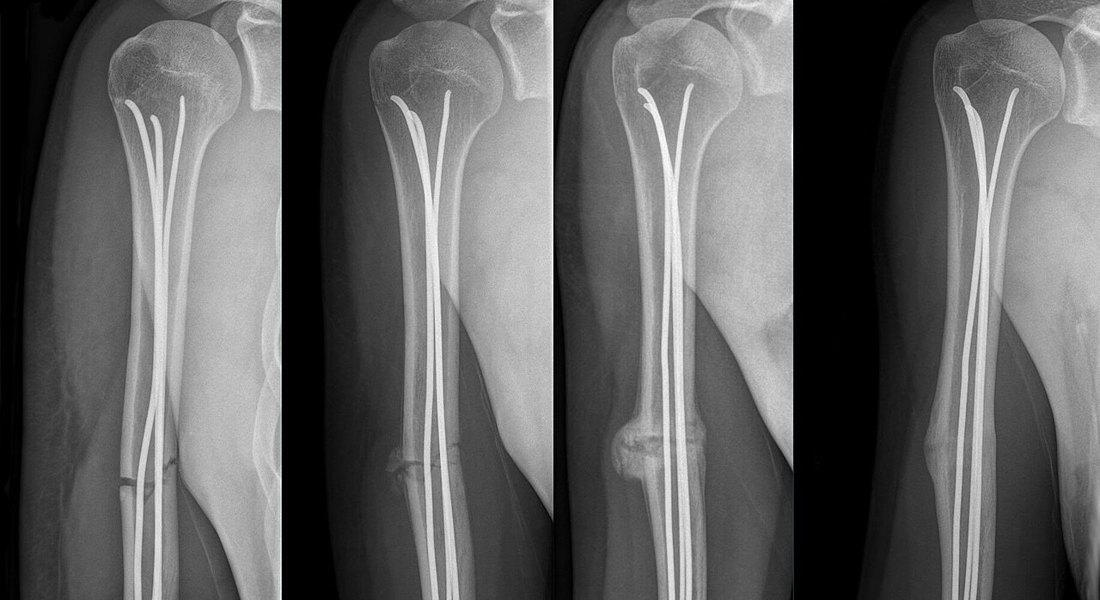
Phenomenon: One Arm, One Year
X-rays: Hellerhoff, CC BY-SA 4.0
START HERE
Observe, wonder, predict
A snapped pencil stays snapped. A broken bone can grow back together.
OBSERVEWhat changes around the break over the year?
WONDERWhat do you wonder about what fills the break?
PREDICTWhat does a bone have that a pencil does not?
One arm: the break, 1 month, 2 months, 1 year.
X-rays: Hellerhoff, CC BY-SA 4.0
DRIVING QUESTION
What does the shape of a break tell us, and how does a living bone repair itself?
START HERE
What Happened Here?
Finished observing? Click here to find out.
The bone was broken, and it rebuilt itself. The rods only held it still. A break in a bone is called a fracture.
Today, you will break a model bone with six forces. You will read real X-rays. Then you will follow one break for a year.
BEFORE YOU START
What you will learn
I can classify a fracture by its shape and by whether the skin is broken.
I can describe the four stages of bone repair in order.
I can explain why a broken bone can heal.
BEFORE YOU START
Get set up
1
Open mrsajdak.com/fractures on your device.
2
Write your name, the date and your period on the worksheet.
3
Find the three tabs. Each tab goes with one part of your sheet.

| Tab in the lab | Worksheet | Questions |
|---|---|---|
| 1. Break it | Part 1 | 1 to 9 |
| 2. Read the X-ray | Part 2 | 10 to 13 |
| 3. Follow the repair | Part 3 | 14 to 20 |
Screenshot: mrsajdak.com/fractures
TAB 1 · QUESTIONS 1 TO 9
Part 1. Break it
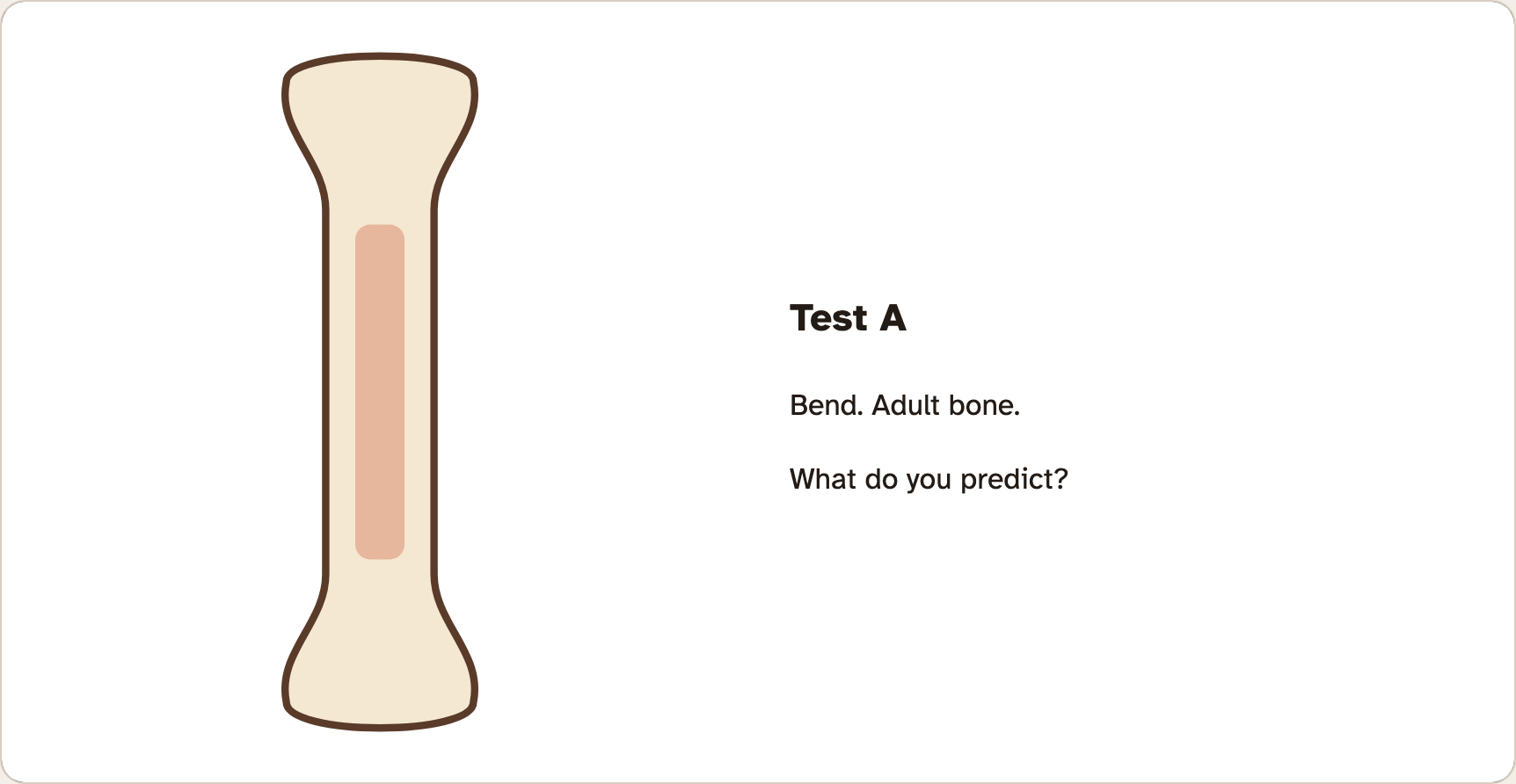
Six tests on a model bone.
Does the force change the break?
Photo: Alexander Blecher, CC BY-SA 4.0
PART 1 · QUESTIONS 1 AND 2
Run all six tests
1
Do the plan check first.
2
Pick a test, A to F.
3
Predict. Press Apply the force.
4
Copy pieces, angle and joined into your table.
PART 1 · QUESTIONS 3 TO 6
Read your table
Q3
Which test made a line straight across?
Q4
How far apart are the twist line and the bend line?
Q5
A and F use the same force. What changed?
Q6
Which test left the most pieces?
Screenshot: mrsajdak.com/fractures, Tab 1
PART 1 · LEARN IT · 1 OF 4
The force sets the shape
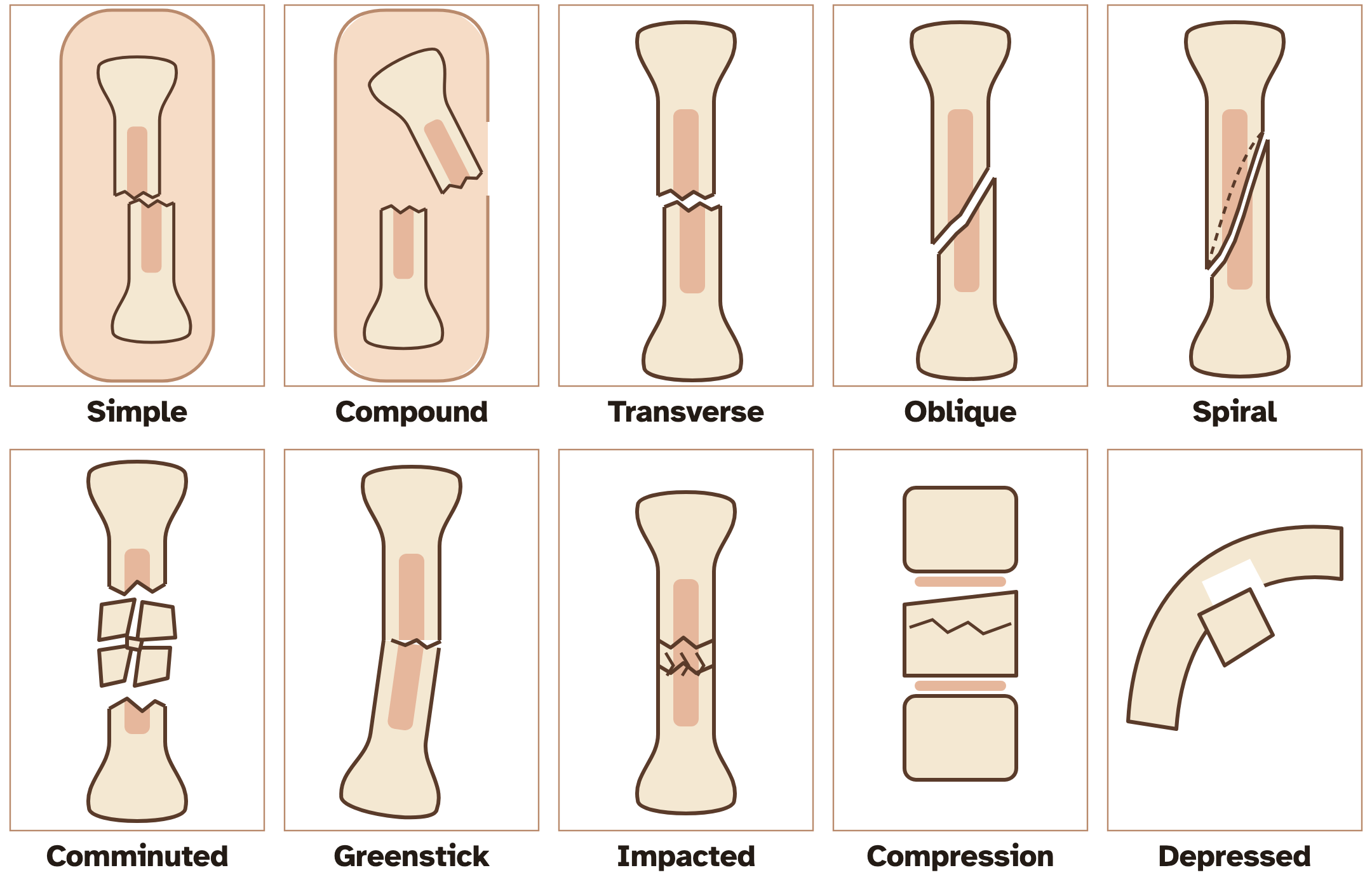
A fracture is any break in a bone. Bending makes a transverse line, straight across. Twisting makes a spiral line that winds around. A bend with a push makes an oblique line, on a slant.
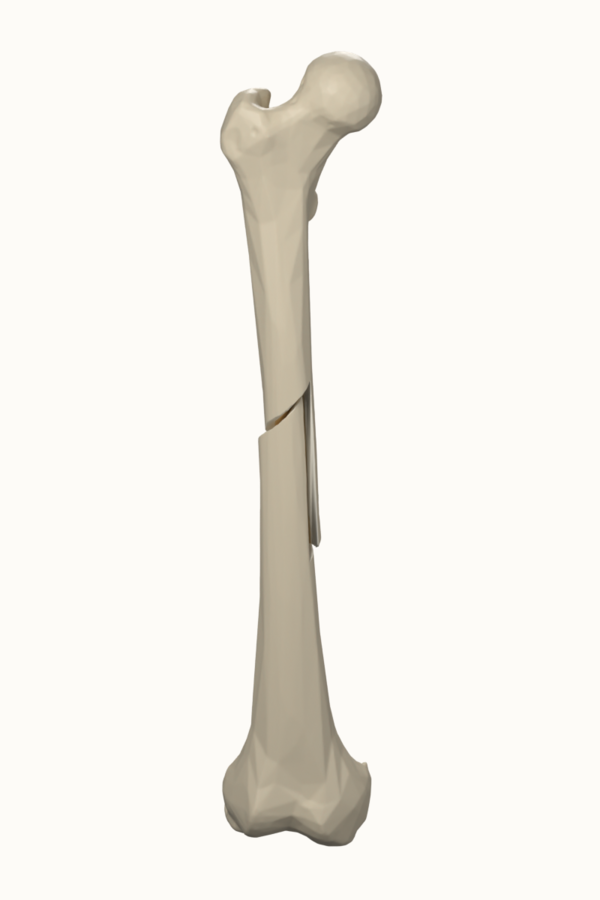
3D model: Z-Anatomy / BodyParts3D, CC BY-SA 4.0
PART 1 · LEARN IT · 2 OF 4
Many pieces, or jammed
A hard crushing blow makes a comminuted break, in many pieces. A push end to end makes an impacted break: one end is driven into the other.
Drawing: Ryan Sajdak
PART 1 · LEARN IT · 3 OF 4
Why a young bone can bend
A young bone has more flexible protein and less hard mineral. It can bend like a green twig. One side cracks and the other holds. That is a greenstick fracture.
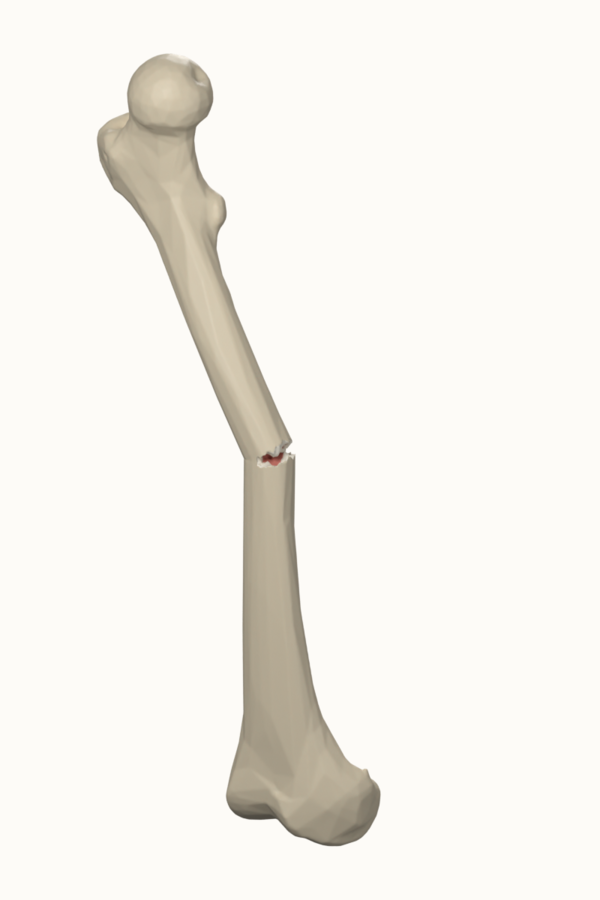
3D model: Z-Anatomy / BodyParts3D, CC BY-SA 4.0
PART 1 · LEARN IT · 4 OF 4
Is the skin broken?
Every fracture gets two labels. Simple (closed): the skin is whole. Compound (open): the bone came through the skin. The other label is the shape.
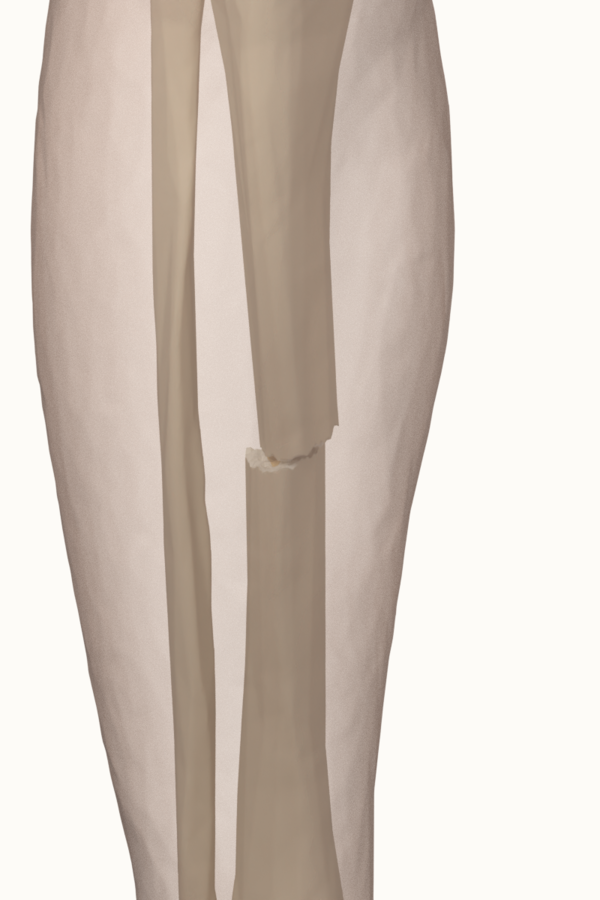
3D model: Z-Anatomy / BodyParts3D, CC BY-SA 4.0
PART 1 · QUESTIONS 7 TO 9
Use the names
Q7
Name the break from each test. The lab checks you.
Q8
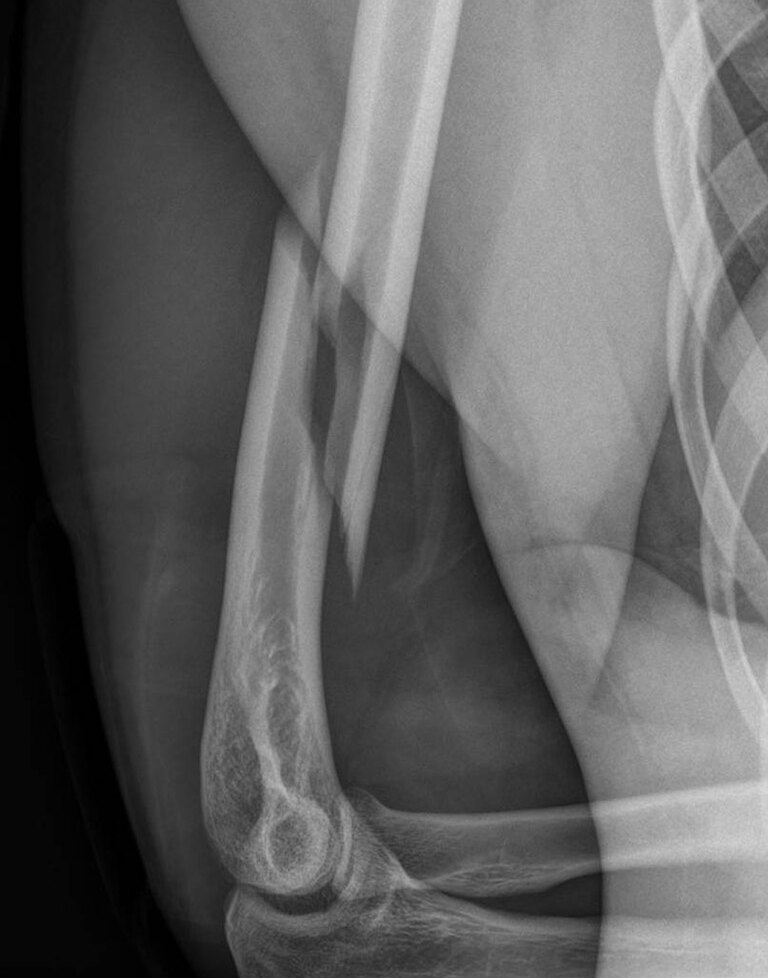
CCC 2 · Cause and effect. Arm wrestling twists the upper arm hard. Which break would you predict? Why?
Q9
CCC 6 · Structure and function. Why can a young bone bend and crack on one side only?
TAB 2 · QUESTIONS 10 TO 13
Part 2. Read the X-ray
Five real X-rays.
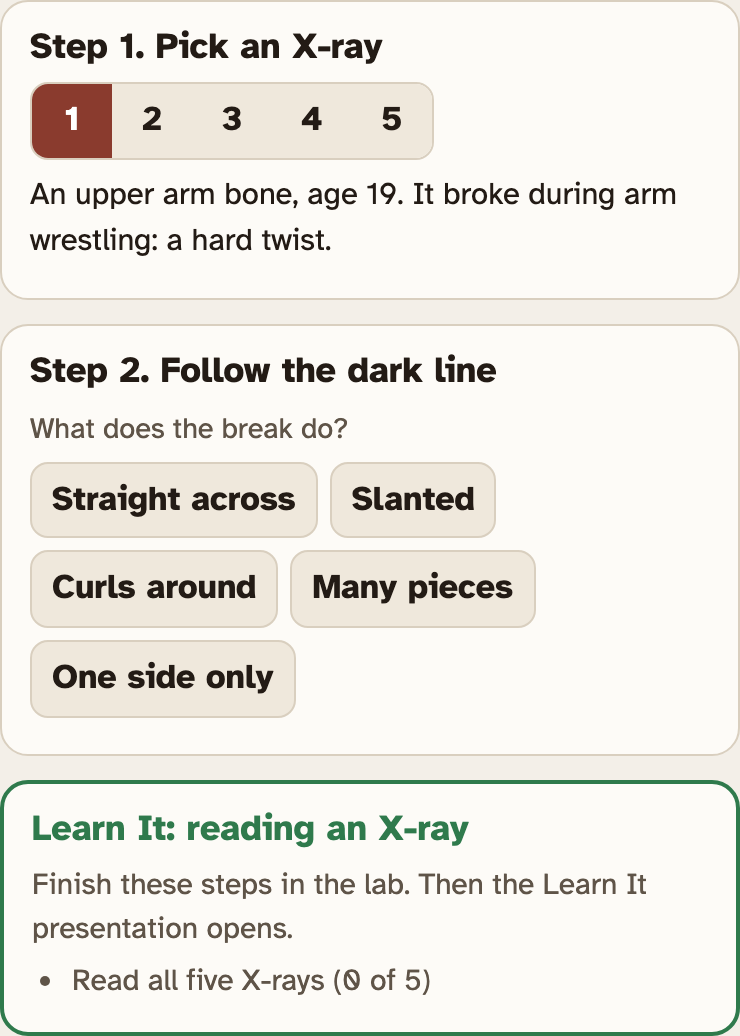
Follow the dark line. What does it do?
Photo: Hellerhoff, CC BY-SA 4.0
PART 2 · QUESTIONS 10 AND 11
Follow the dark line
1
Pick X-ray 1 to 5.
2
Follow the dark line from end to end.
3
Pick what the line does.
4
Write it in Question 10.
PART 2 · LEARN IT · 1 OF 2
How to read an X-ray
Bone blocks X-rays, so it shows white. A break lets more X-rays through, so it shows as a dark line. Soft tissue barely shows, so you need the story to know about the skin.
Photo: Hellerhoff, CC BY-SA 4.0
PART 2 · LEARN IT · 2 OF 2
Two breaks from pressing in
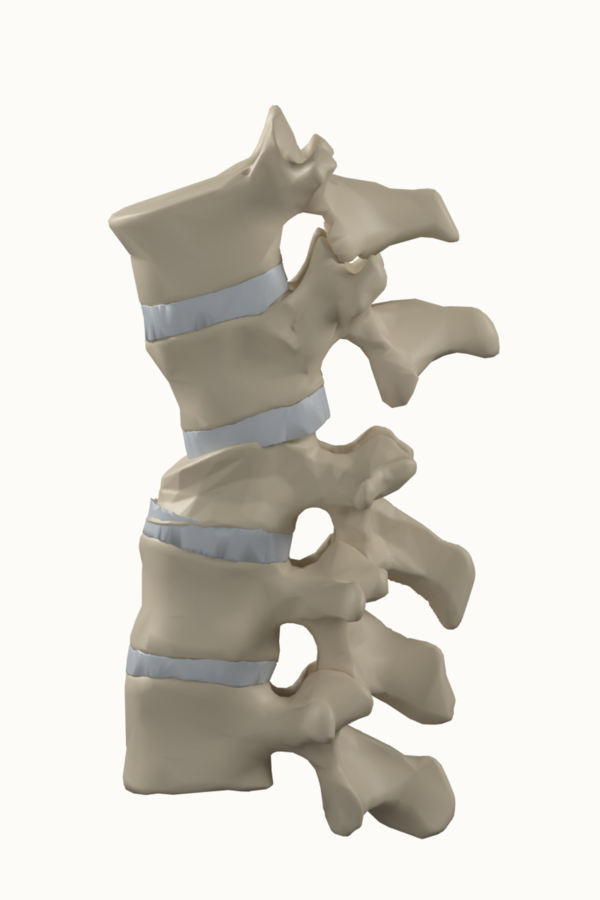
In a compression fracture a spine bone is squashed shorter. In a depressed fracture a piece of skull is pressed in, like a dent in a car door.
3D model: Z-Anatomy / BodyParts3D, CC BY-SA 4.0
PART 2 · QUESTIONS 12 AND 13
Two labels for every break
Q12
Go back to your table. Name each X-ray.
Q13
SEP 6 · Give each case two labels: one for the skin, one for the shape.
Screenshot: mrsajdak.com/fractures, Tab 2
TAB 3 · QUESTIONS 14 TO 20
Part 3. Follow the repair
One break, one year.
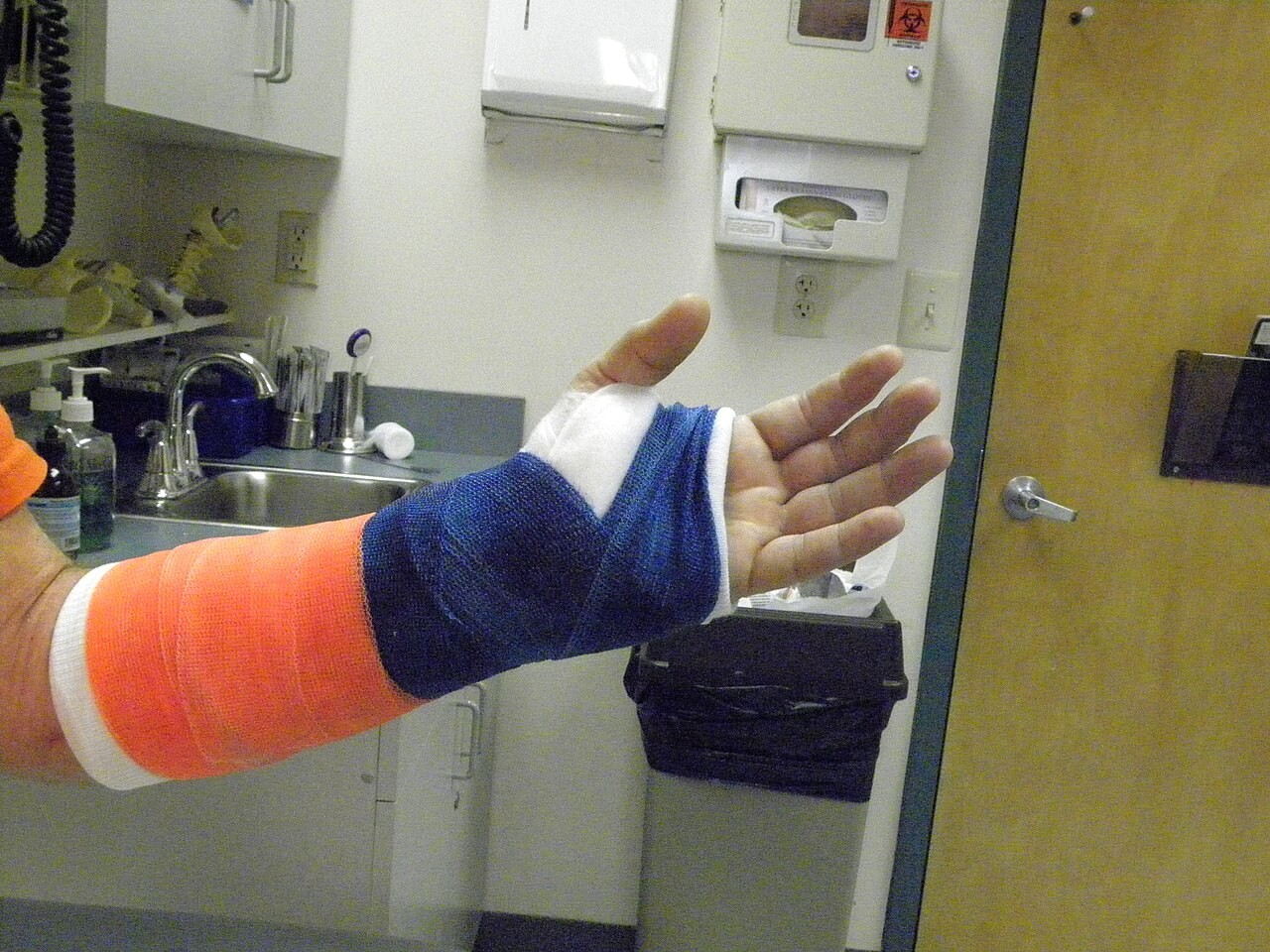
What fills the gap, and when?
Photo: slgckgc, CC BY 2.0
PART 3 · QUESTIONS 14 TO 16
Move through one year
1
Stop at all seven times.
2
Copy how firmly it holds.
3
Write a word or two for what is there.
4
Questions 15 and 16: the rate, then the model check.
PART 3 · LEARN IT · 1 OF 4
Stage 1: hematoma
Blood vessels tear. Blood clots in the gap within hours. This clot is a hematoma. It is the start of repair.
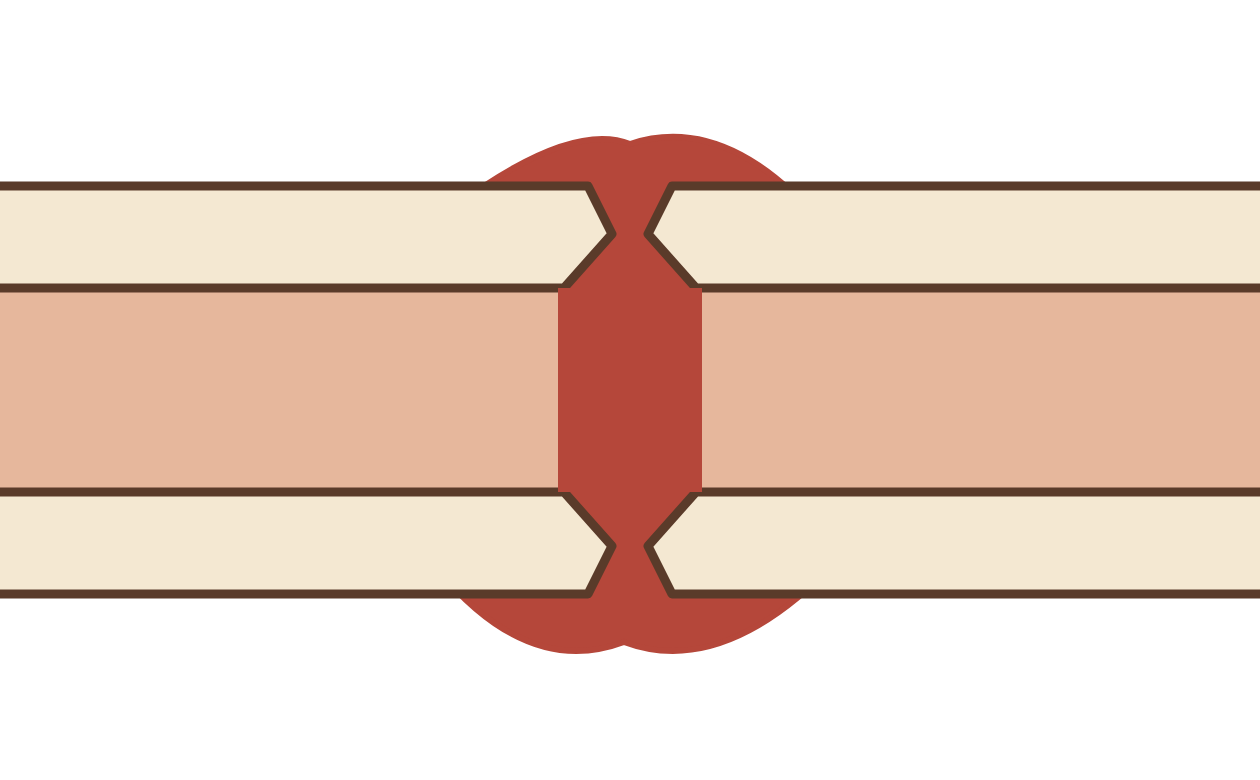
Drawing: Ryan Sajdak
PART 3 · LEARN IT · 2 OF 4
Stage 2: soft callus
New blood vessels grow in. Cells lay down rubbery cartilage. This collar is the soft callus. It joins the ends, but it still bends.
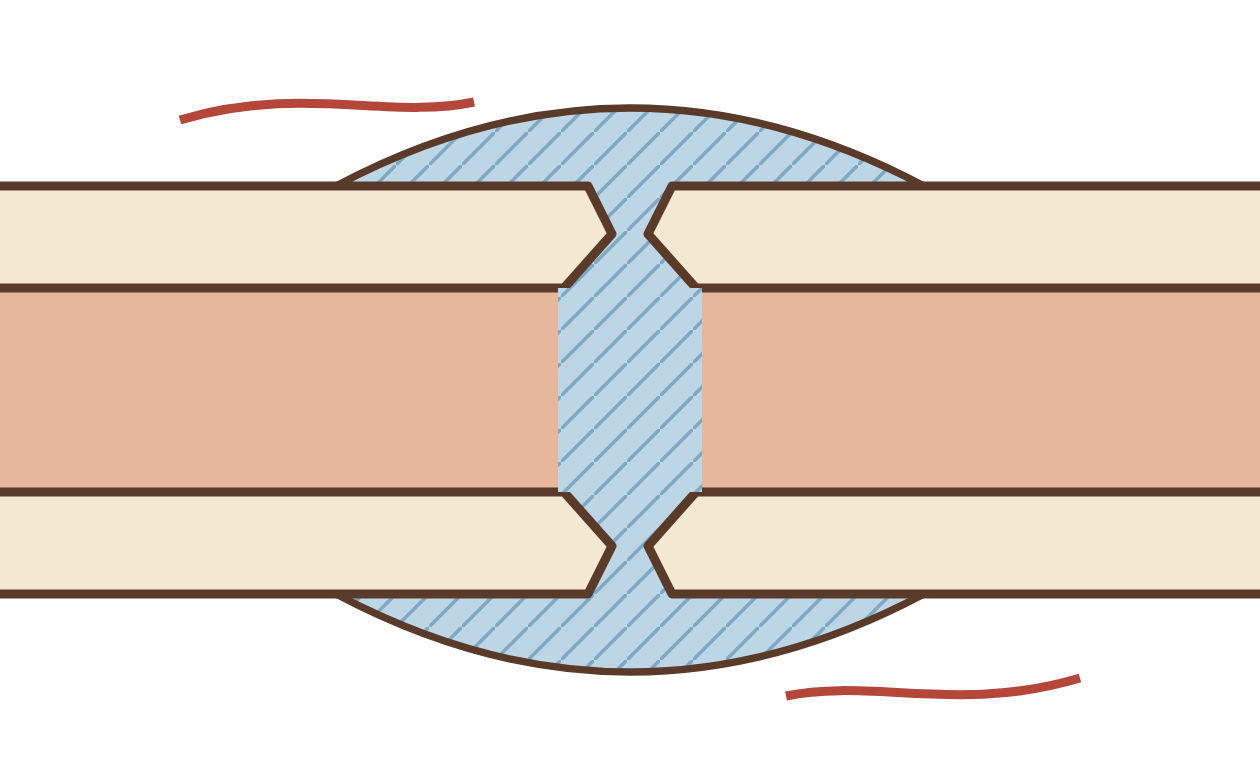
Drawing: Ryan Sajdak
PART 3 · LEARN IT · 3 OF 4
Stage 3: bony callus
Bone-forming cells, called osteoblasts, swap the cartilage for spongy bone. This is the bony callus. It shows on an X-ray as a cloudy bump.
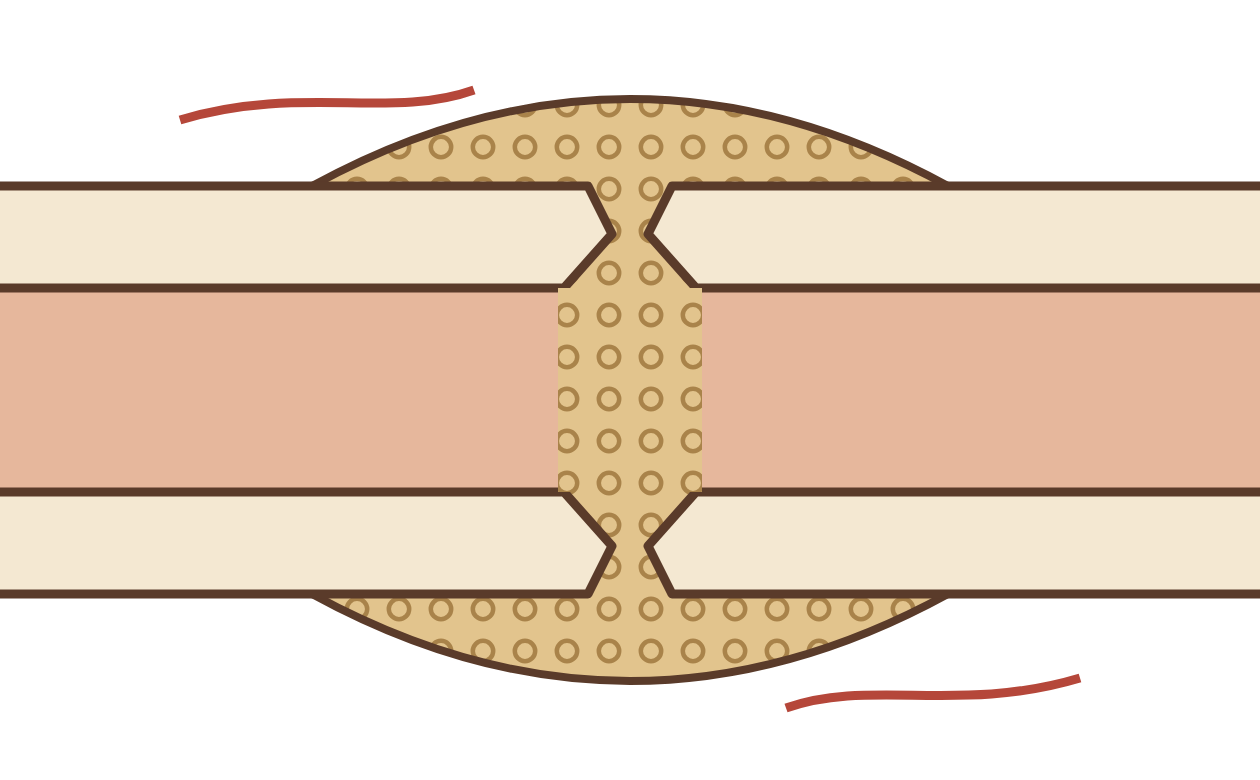
Drawing: Ryan Sajdak
PART 3 · LEARN IT · 4 OF 4
Stage 4: remodeling
Bone-clearing cells, called osteoclasts, remove the extra bump. Compact bone comes back and the channel opens. This is remodeling. It can take many months.
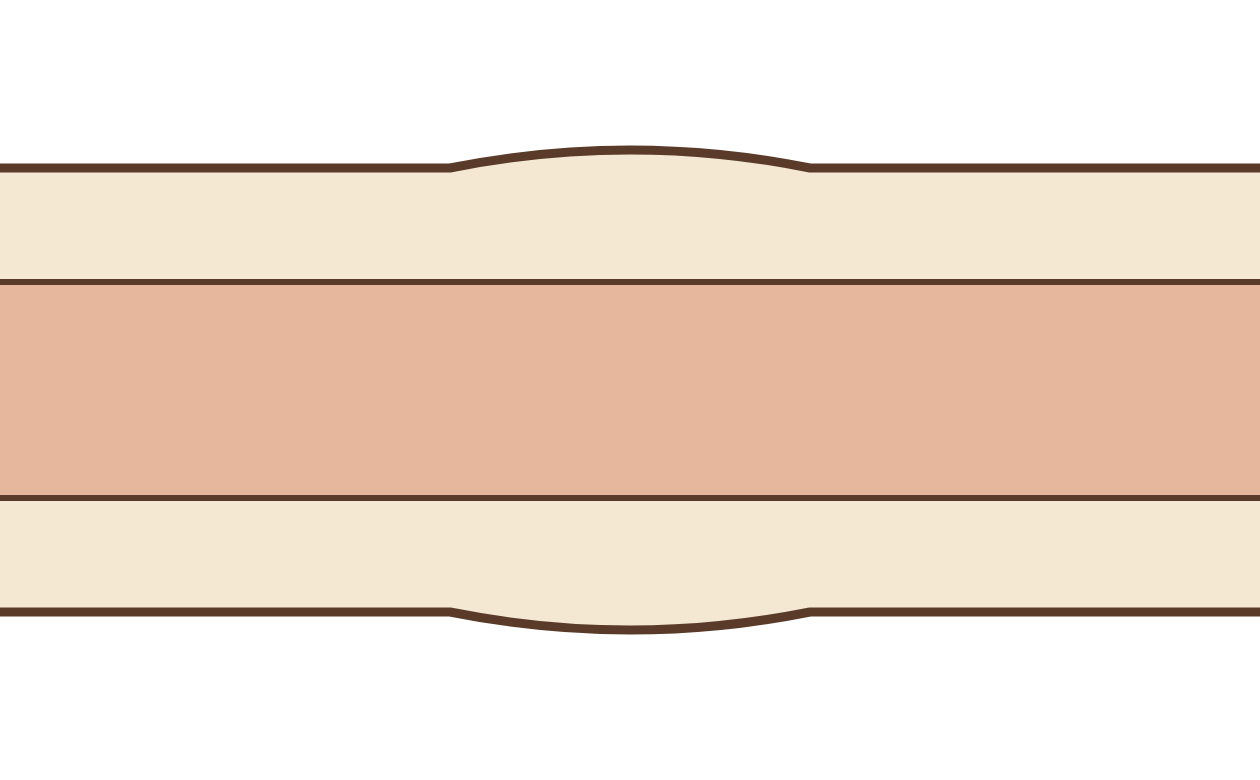
Drawing: Ryan Sajdak
PART 3 · QUESTIONS 17 TO 19
How long does it take?
Q17
Write the stage for each time.
Q18
SEP 5 · Compare times in the table.
Q19
SEP 5 · A runner breaks a tibia straight across. Joined? Solid?
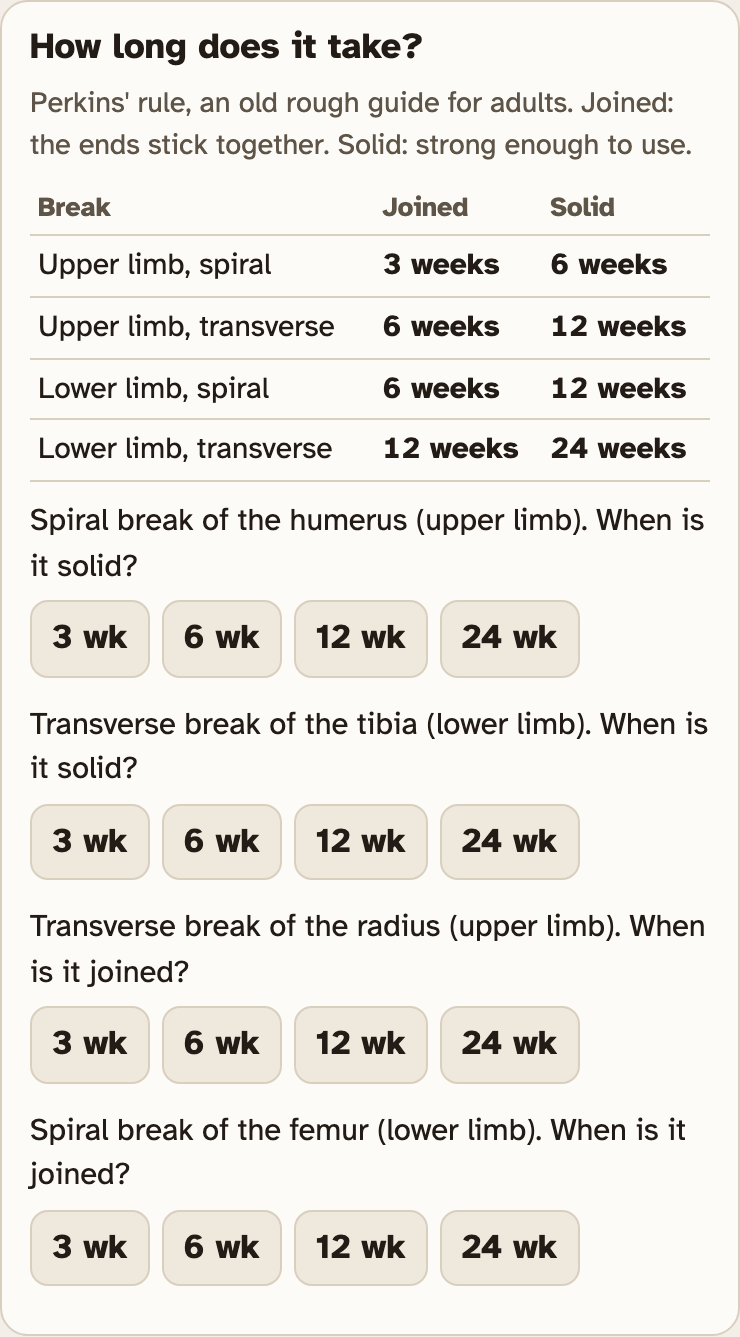
Screenshot: mrsajdak.com/fractures, Tab 3
REVISITING THE PHENOMENON · QUESTION 20
Back to the pencil
Why can a broken bone heal when a snapped pencil cannot?
What I saw. The science idea. How it explains it.
Photo: Hellerhoff, CC BY-SA 4.0
BEFORE YOU GO
Tick what you can do
I can classify a fracture by its shape and by whether the skin is broken.
I can describe the four stages of bone repair in order.
I can explain why a broken bone can heal.