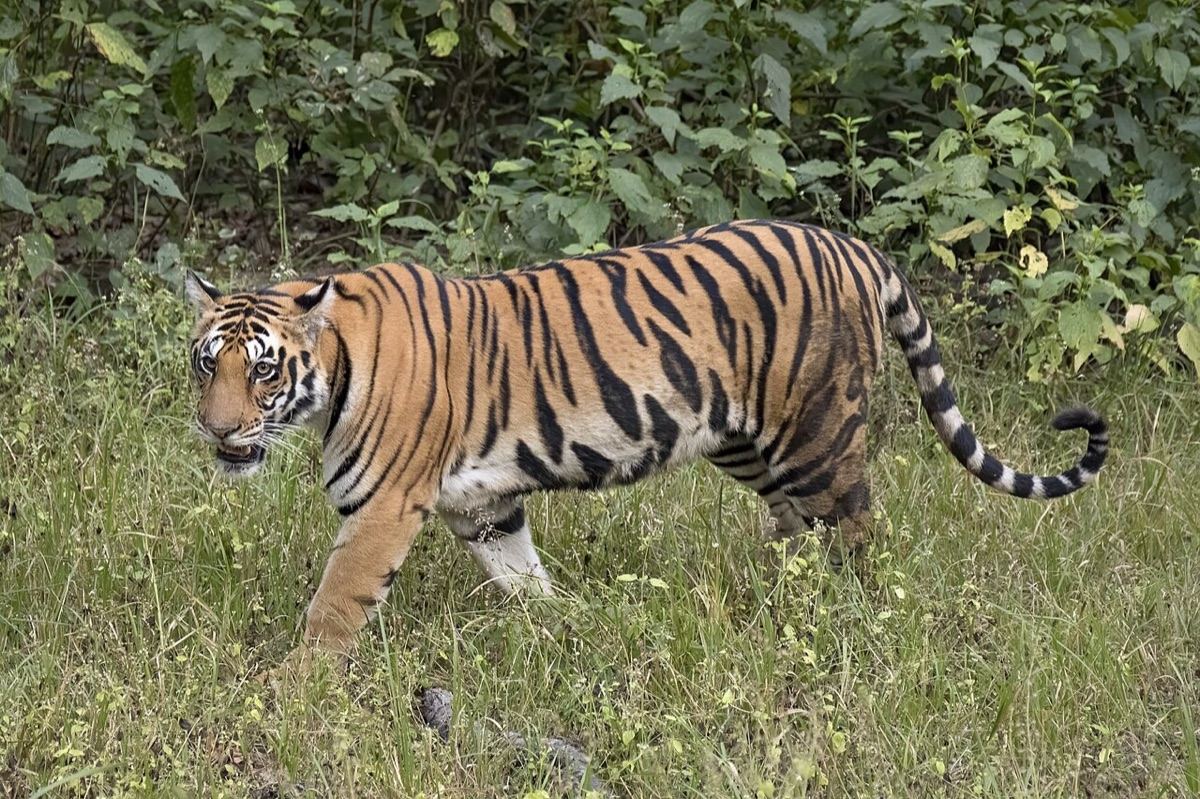
ENVIRONMENTAL SCIENCE · LESSON 7.2
Who Took Them?
Follow along with your worksheet, one question at a time.
mrsajdak.com/hippco
Photo: Charles J. Sharp, CC BY-SA 4.0
START HERE · PICK AN OPENER
Choose how to open the lesson
Click a card to jump to it. Every option ends at the same Observe, Wonder, Predict slide and the same driving question.
OPTION A · VIDEO
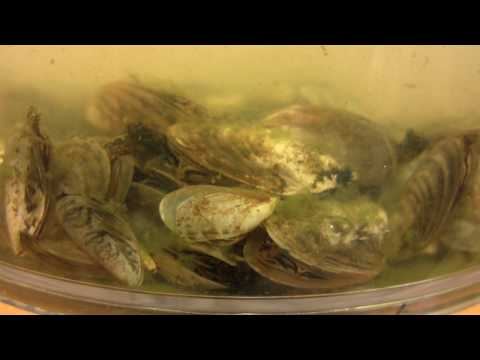
Mussels Clean the Lake
Clip 1 is Wisconsin Sea Grant: quagga mussels (a close cousin of the zebra mussel) feeding, sped up 10 times. Clip 2 is Michigan Sea Grant's short cartoon on how zebra and quagga mussels took over the Great Lakes. Clip 3 is jumping silver carp on the Illinois River.
Watch for
What happens to the cloudy water?
Is clearer water good news for the lake? Who loses the food?
These mussels are not from here. How did they get to the Great Lakes?
Videos on YouTube: Wisconsin Sea Grant; Michigan Sea Grant; Nate Wallick.
OPTION B · TRY IT · 5 MINUTES
Pass the Poison
1
Mix 5 red beans (DDT) into 200 white beans (food). Pour them on a tray: this is the lake.
2
Ten "minnows" each scoop a small cup of beans.
3
Each minnow burns off its white beans for energy (put them back) and keeps every red bean.
4
Two "needlefish" each eat five minnows: take all their red beans.
5
One "osprey" eats both needlefish. Count the osprey's red beans.
You need
About 200 white beans and 5 red beans
A tray and 10 small cups
A volunteer for each level
Watch for
How many red beans did one minnow have? The osprey?
Where did the white beans go? Where did the red beans go?
Why do the red beans pile up at the top?
OPTION C · PHOTOS
Phenomenon: Roads in the Rain Forest
Photos: Rondônia Deforestation (2014), O.V.E.R.V.I.E.W., CC BY 2.0, brightened · Ashishkattoor, CC BY-SA 4.0
START HERE
Observe, wonder, predict
More than 1 million kinds of plants and animals are at risk of extinction. Most of the danger comes from people.
OBSERVEWhat do you see in Photo A? What do the straight lines look like?
WONDERWhat do you wonder about the animals that lived there?
PREDICTIs one big forest better than many small pieces with the same trees? Why?
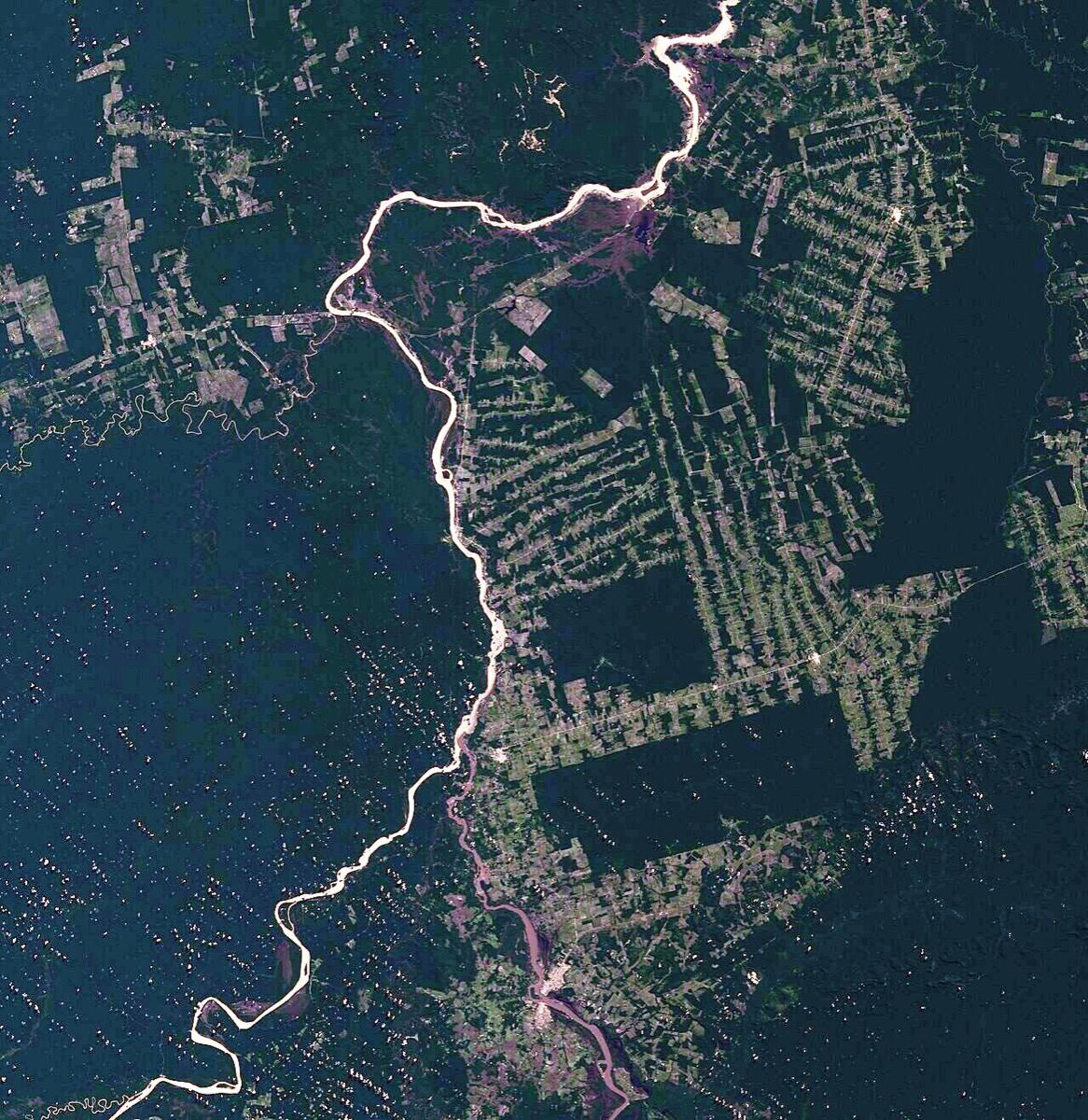
Photo A. Rondônia, Brazil, from space.
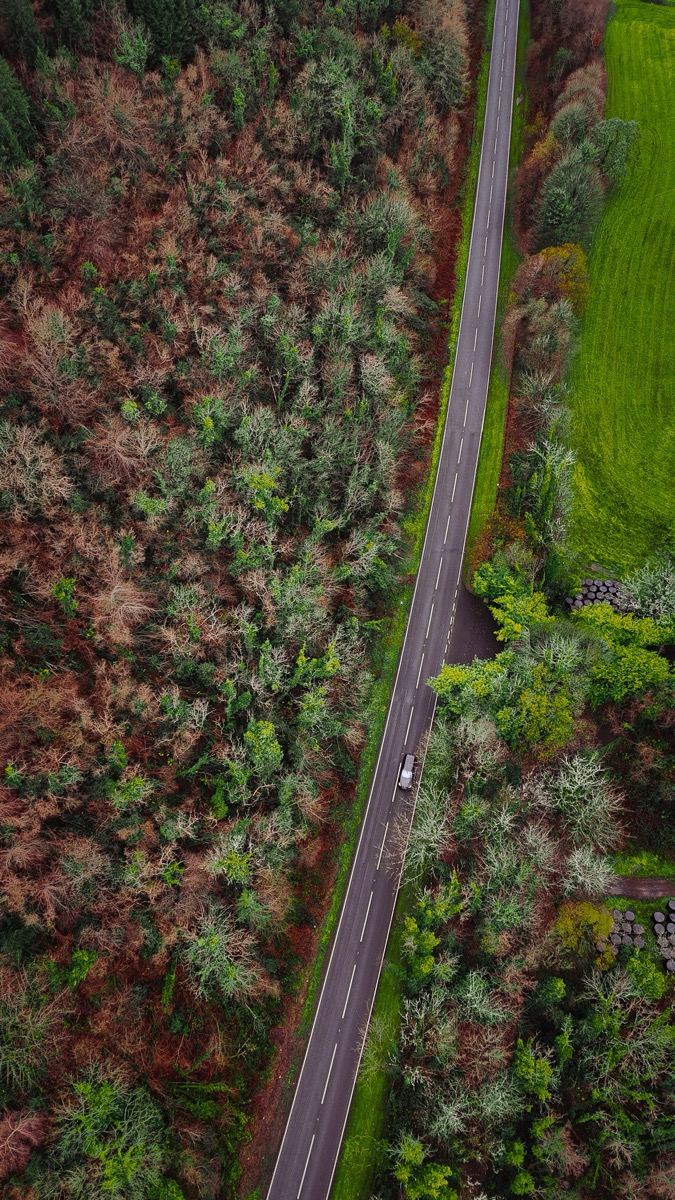
Photo B. A road through a forest.
Photos: Rondônia Deforestation (2014), O.V.E.R.V.I.E.W., CC BY 2.0, brightened · Ashishkattoor, CC BY-SA 4.0
DRIVING QUESTION
Species are disappearing. How much of that is caused by people, and how?
START HERE
What Happened Here?
Looked at the photos? Click here to find out.
The roads came first. Then farms spread out along each road, like the bones of a fish. The forest that is left is cut into pieces, with edges everywhere. Animals that need deep forest have nowhere to go.
Watched the mussels, or passed the poison? Click here.
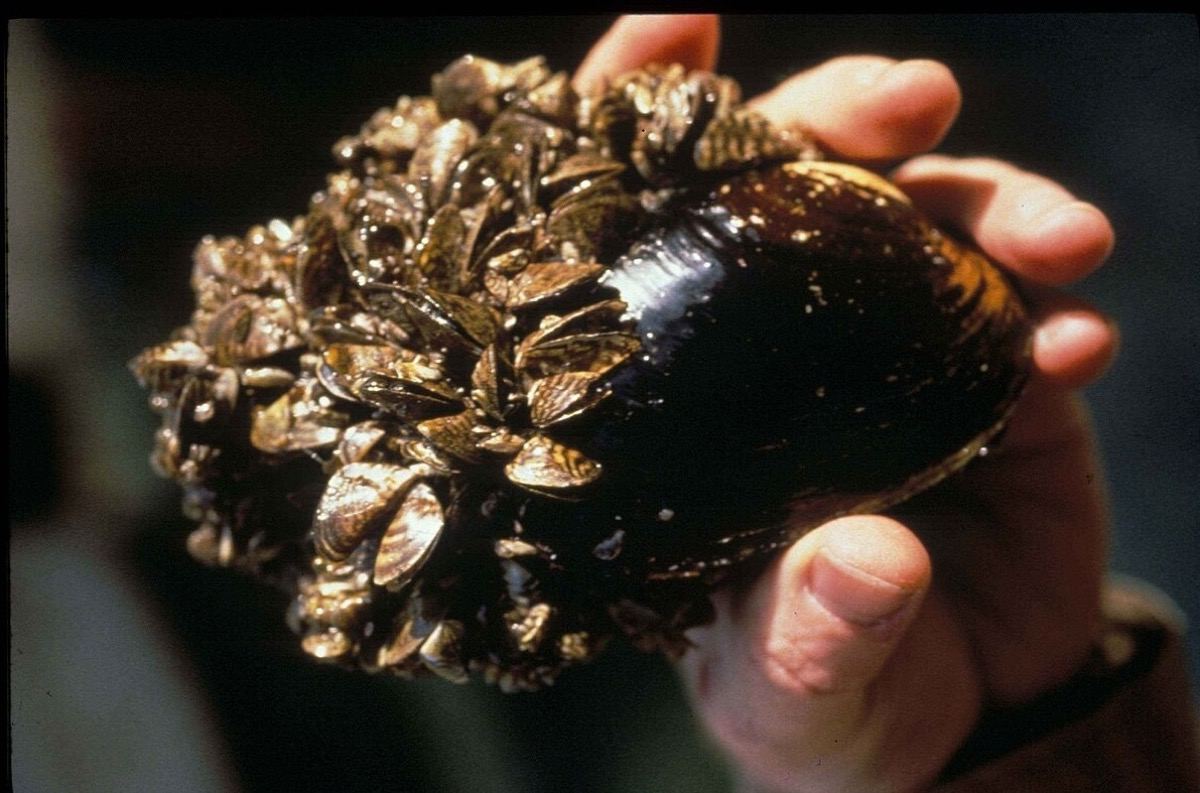
The mussels came to the Great Lakes in ships' ballast water. They clear the water by eating the plankton that young fish need. In the bean game, every red bean ended up in the osprey, because each eater keeps the poison from everything it eats.
Today, you will cut a road through a forest four ways and count what is left. You will follow a poison up a food chain. Then you will open six real case files and decide which human cause took each species.
BEFORE YOU START
What you will learn
I can
name the six human causes of species loss (HIPPCO).
I can
explain how habitat fragmentation and invasive species push species toward extinction.
I can
explain how DDT built up in a food chain.
I can
build an explanation with a claim, evidence and reasoning for why a species declined.
BEFORE YOU START
Get set up
1
Do the Do Now at the top of your sheet.
2
Open mrsajdak.com/hippco.
3
Keep your pencil and your sheet beside you.
4
Everything you pick goes in a log. Copy from the log.
Screenshot: mrsajdak.com/hippco, Tab 1
TAB 1 · QUESTIONS 1 TO 5
Part 1. Break up the forest
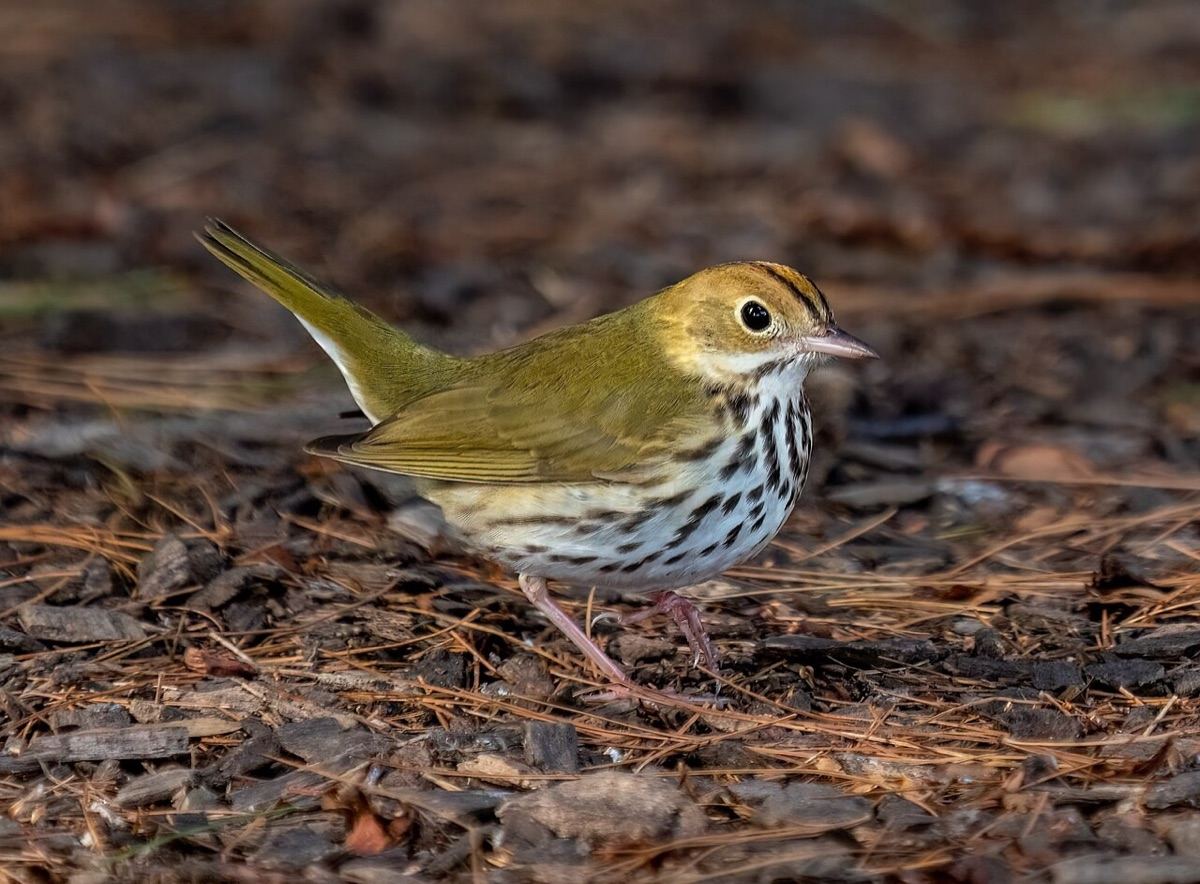
The ovenbird nests on the ground, deep inside big forests.
What happens to it when a road comes through?
Photo: Rhododendrites, CC BY-SA 4.0
PART 1 · QUESTIONS 1 AND 2
Four road plans
1
Pick Plan A. Count the dark green interior squares.
2
Pick Plans B, C and D.
3
Copy your plan log into Question 1.
4
Subtract for Question 2.
PART 1 · LEARN IT · 1 OF 3
Habitat loss is the number one threat
The greatest threat to wild species is losing their habitat.
Forests are cut. Wetlands are filled in. Grasslands become farms.
The United States lost about half of its wetlands between the 1780s and the 1980s.
Photo: Rondônia Deforestation (2014), O.V.E.R.V.I.E.W., CC BY 2.0, brightened
PART 1 · LEARN IT · 2 OF 3
Habitat fragmentation
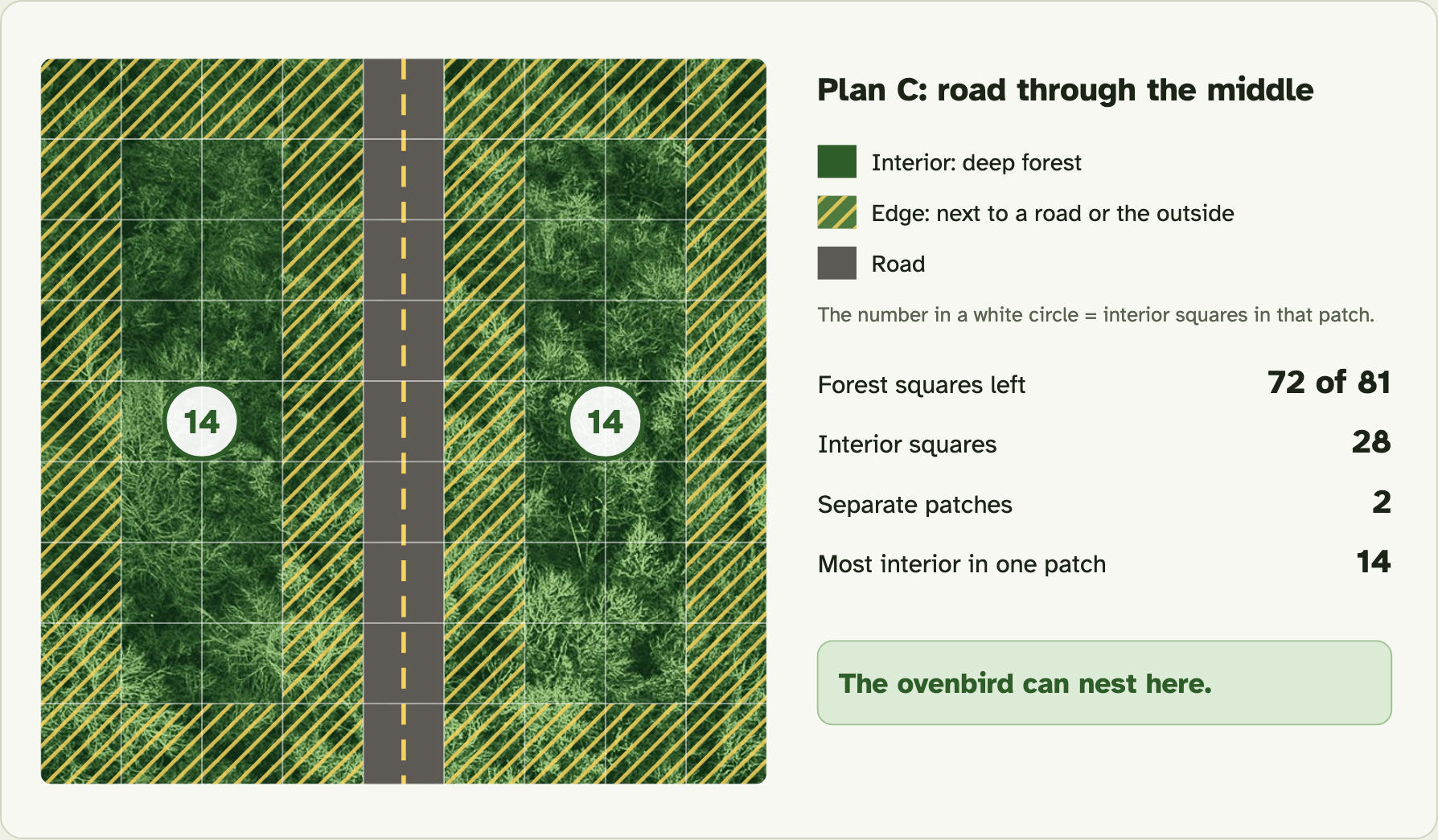
Plans B and C each cut the same 9 squares of forest.
Plan B left 42 interior squares. Plan C left only 28, in two small patches.
Breaking a habitat into small, separated patches is habitat fragmentation. It matters how a habitat is cut, not only how much.
PART 1 · LEARN IT · 3 OF 3
Why edges hurt
Edges let in predators, competitors and disease. Wind and storms hit edges harder.
Small patches are like islands. Animals have trouble finding food and mates, or moving to a new patch.
With two roads crossing, no patch had 9 interior squares. The ovenbird could not nest.
Photo: Ashishkattoor, CC BY-SA 4.0
PART 1 · QUESTIONS 3 TO 5
Same cut, different damage
QUESTION 3
1 word
Name it
Breaking a big habitat into small, separated patches.
QUESTION 4
2 words
Why is Plan C worse?
Use edge.
Use interior.
QUESTION 5
Model
Model check
What does a square stand for?
What does the model leave out?
TAB 2 · QUESTIONS 6 TO 11
Part 2. Up the food chain
DDT was sprayed to kill mosquitoes. A tiny bit washed into the water.
Where did it end up?
Photo: Yellowstone National Park, public domain
PART 2 · QUESTIONS 6 TO 8
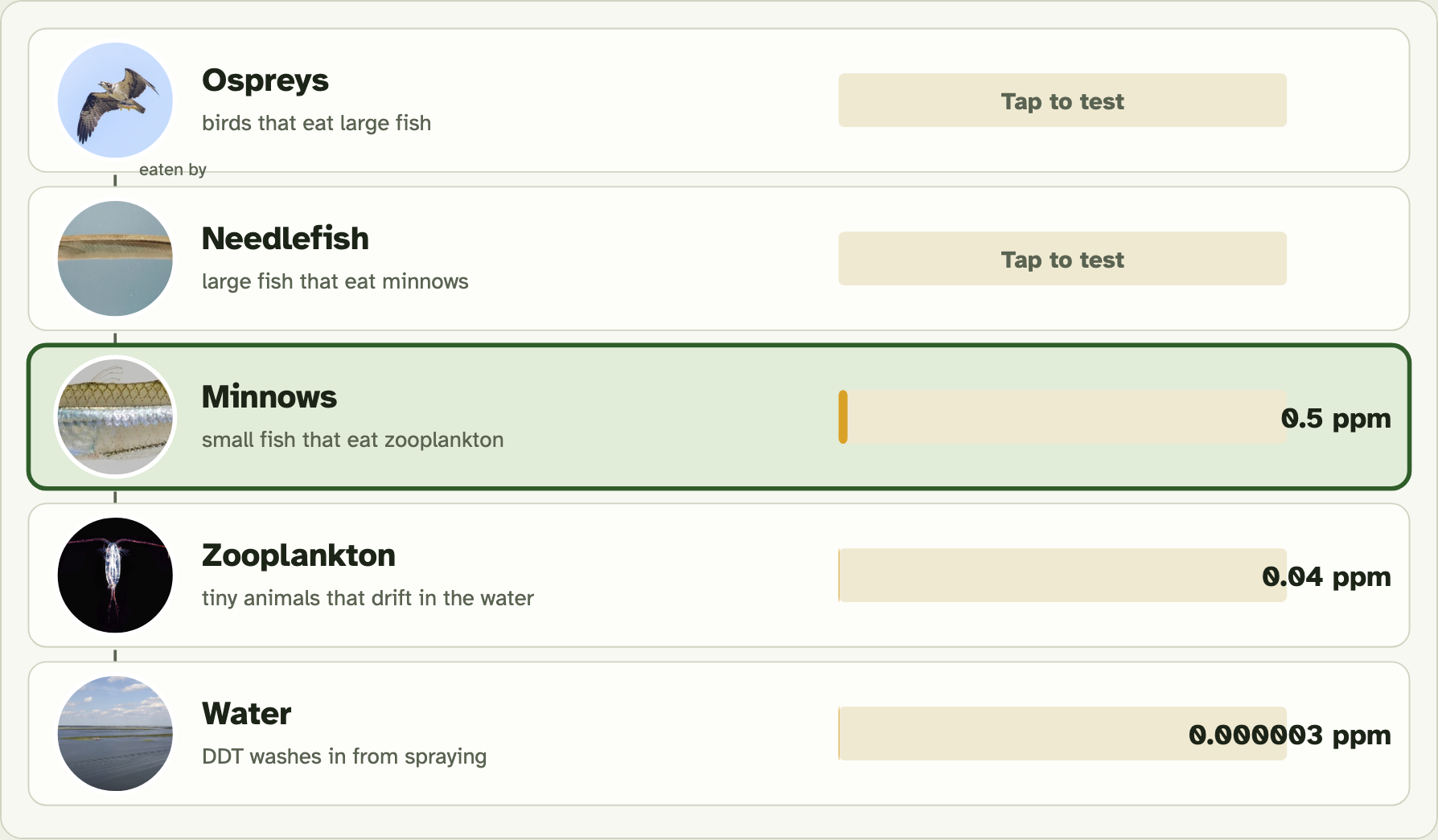
Follow the DDT
1
Tap each step, from Water up to Ospreys.
2
Copy the DDT for each step into Question 6.
3
Use How many times more? to compare two steps.
4
Answer Questions 7 and 8.
PART 2 · QUESTIONS 7 AND 8
How many times more?
1
Find the bigger number.
2
Find the smaller number.
3
Divide the bigger by the smaller.
Example
A dog eats 6 cups of food a day.
A cat eats 0.5 cups.
6 ÷ 0.5
= 12 times as much
These are not your numbers. Use your own.
Screenshot: mrsajdak.com/hippco, Tab 2
PART 2 · LEARN IT · 1 OF 3
Bioaccumulation: it builds up in one body
DDT is stored in fat. The body does not break it down or get rid of it.
So every meal adds a little more. It builds up over the animal's life.
That is bioaccumulation: in one body, over time.

Photo: Smithsonian Environmental Research Center, CC BY 2.0
PART 2 · LEARN IT · 2 OF 3
Biomagnification: it grows up the chain
A needlefish eats many minnows. It keeps the DDT from all of them.
An osprey eats many needlefish. It keeps the DDT from all of those.
So the higher up the chain, the more concentrated the DDT. That is biomagnification. You measured it: about 8 million times more in an osprey than in the water.
PART 2 · LEARN IT · 3 OF 3
Why the birds crashed
DDT made the birds lay eggs with thin shells.
The eggs cracked under the parents before they could hatch.
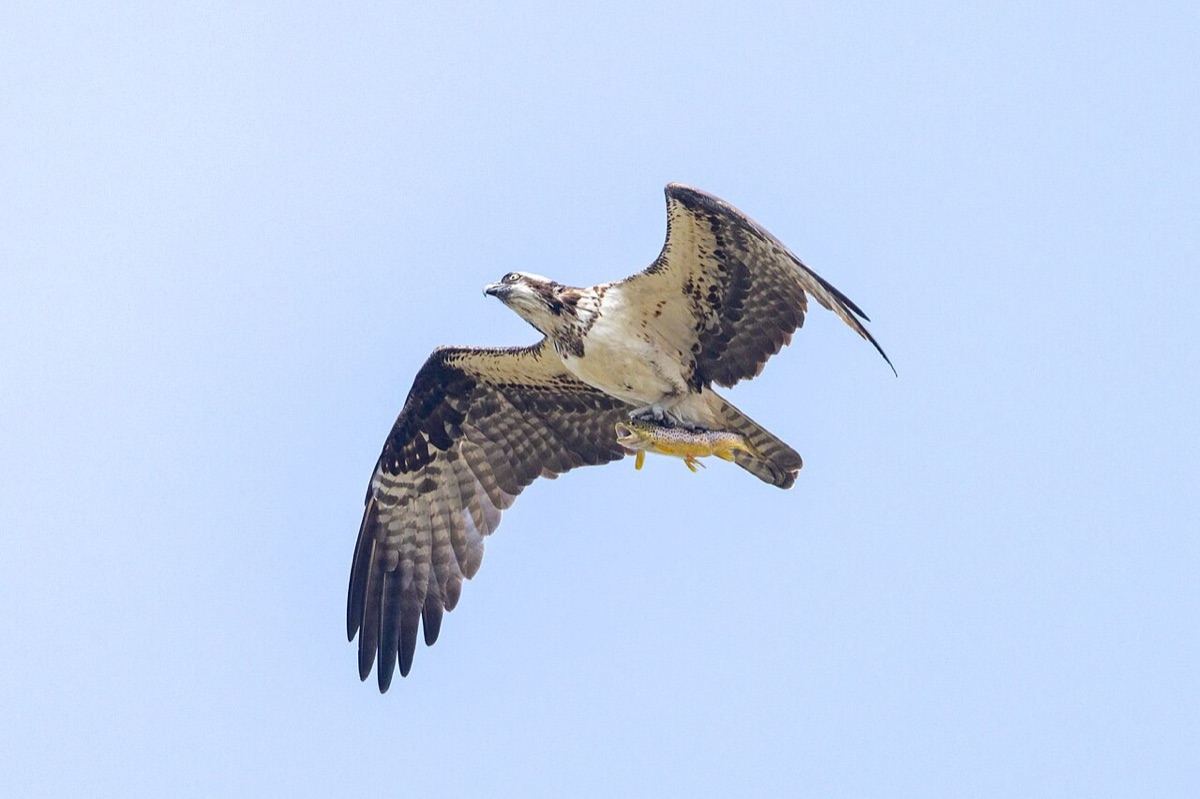
Ospreys, bald eagles, brown pelicans and peregrine falcons all crashed. The United States banned DDT in 1972. Most came back.
Photo: Yellowstone National Park, public domain
PART 2 · QUESTIONS 9 TO 11
Up the chain, then back
QUESTION 9
2 words
Which word?
Inside one body.
Up the food chain.
QUESTION 10
1 to 4
Cause and effect
Put the DDT steps in order.
QUESTION 11
After
After the ban
Eagle pairs in 1963 and in 2007.
What does the change show?
TAB 3 · QUESTIONS 12 TO 14
Part 3. Case files
Zebra mussels from Europe have smothered this native mussel.
Six species, six real stories. Who took them?
Photo: U.S. Fish and Wildlife Service, public domain
PART 3 · QUESTION 12
Open the case files
1
Tap each of the six case files.
2
Copy two numbers from each one.
3
Leave the last column for later.
4
Then open the Learn It box.
PART 3 · LEARN IT · 1 OF 4
HIPPCO: six human causes
Habitat loss and fragmentation
Invasive species: a species brought to a new place that harms the ecosystem there
Population growth: more people using more resources
Pollution
Climate change
Overexploitation: taking so many that the species cannot keep itself going
PART 3 · LEARN IT · 2 OF 4
The first P drives the rest
Look at the graph. The world went from under 1 billion people in 1800 to about 7.9 billion today.
Each person also uses more land, water and energy than before.
More people using more means more habitat loss, pollution, trade and hunting.
PART 3 · LEARN IT · 3 OF 4
Invaders arrive by accident
Most invaders hitch a ride: in a ship's ballast water, in wooden crates, on fruit, in luggage.
Some were pets or bait that people let go.
In the new place, nothing eats them. They spread fast and crowd out native species. Zebra mussels and round gobies came to Lake Erie this way.
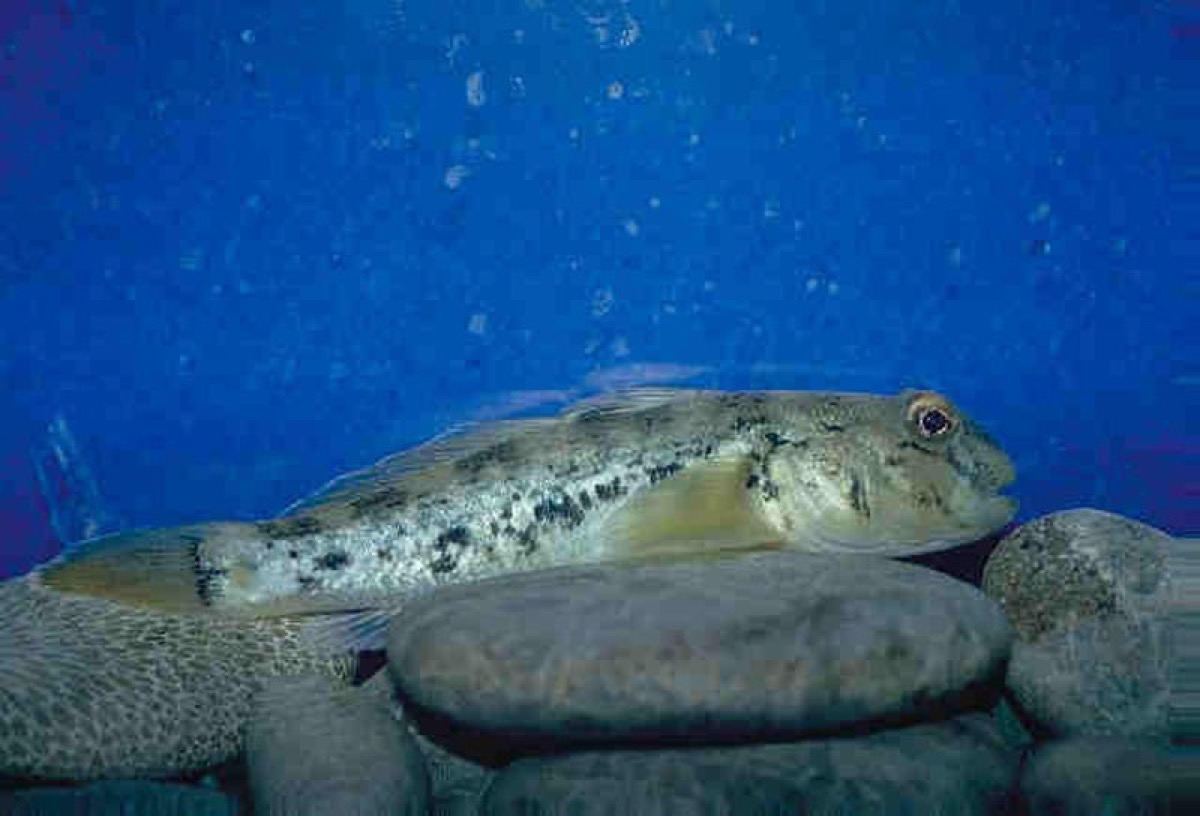
Photo: D. Jude, University of Michigan, public domain
PART 3 · LEARN IT · 4 OF 4
Build an explanation
Claim: the cause, in one sentence. Ospreys crashed because of pollution.
Evidence: real numbers. DDT was 25 ppm in ospreys and 0.000003 ppm in the water.
Reasoning: the science that links them. DDT biomagnifies up the food chain and makes eggshells thin, so few chicks hatched.
PART 3 · QUESTIONS 13 AND 14
Name the cause
QUESTION 13
HIPPCO
One letter each
Fill the last column.
Check with the letter buttons.
QUESTION 14
P
More people
People in 1800, and today.
How does more people make another cause worse?
ARGUE IT · QUESTION 15
Explain a decline
Pick one case file.
Claim: the HIPPCO cause, in one sentence.
Evidence: two numbers or clues from the case file.
Reasoning: the science that links the cause to the decline.
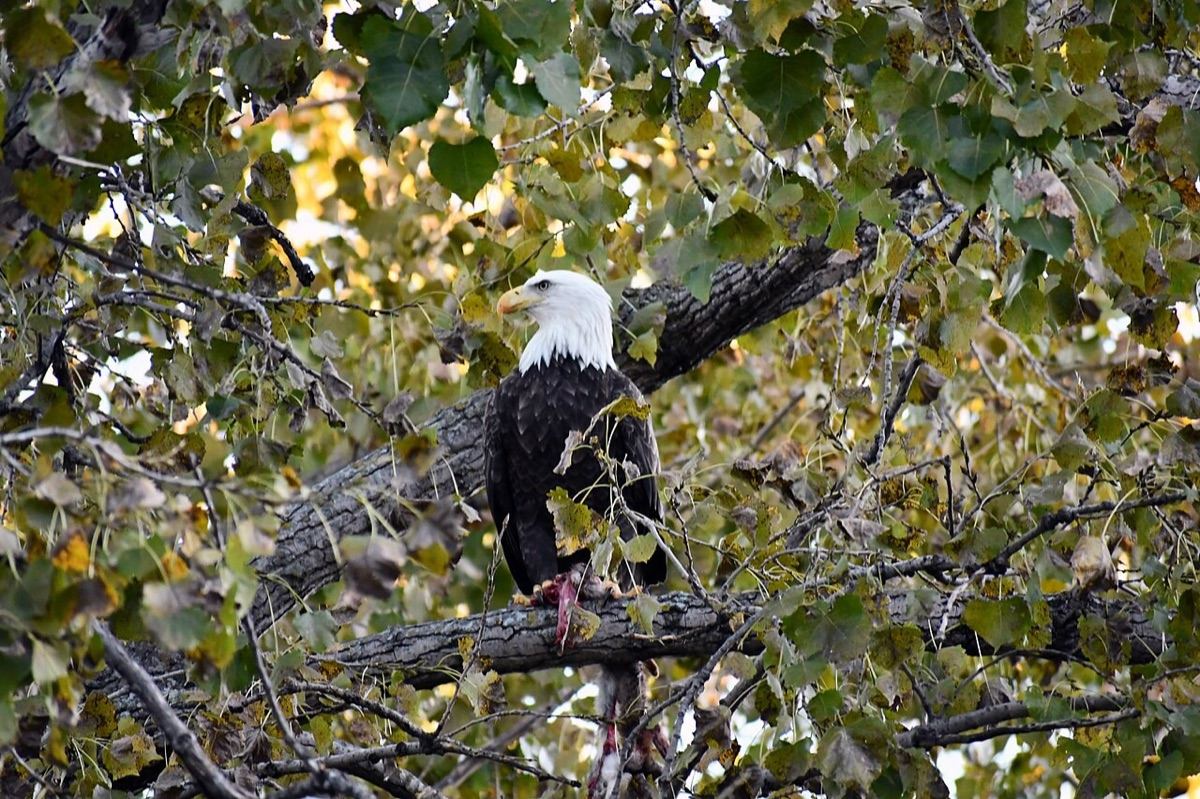
Photo: U.S. Fish and Wildlife Service, public domain
WRAP IT UP · BACK TO THE START
Revisiting the Phenomenon
Species are disappearing. How much of that is caused by people, and how?
EVIDENCE
The forest
Same trees cut. Which plan left the least deep forest?
EVIDENCE
The food chain
Where did the DDT end up, and why?
EVIDENCE
The case files
Which human cause showed up the most?
Back to the opener: name the HIPPCO letter behind the roads in the rain forest, the mussels in the lake, or the red beans in the osprey.
Hand in your worksheet.
Check your name, date and period.