ANATOMY & PHYSIOLOGY · SECTION 8.8
Muscle Map
Follow along with your worksheet, one question at a time.
mrsajdak.com/muscle-map
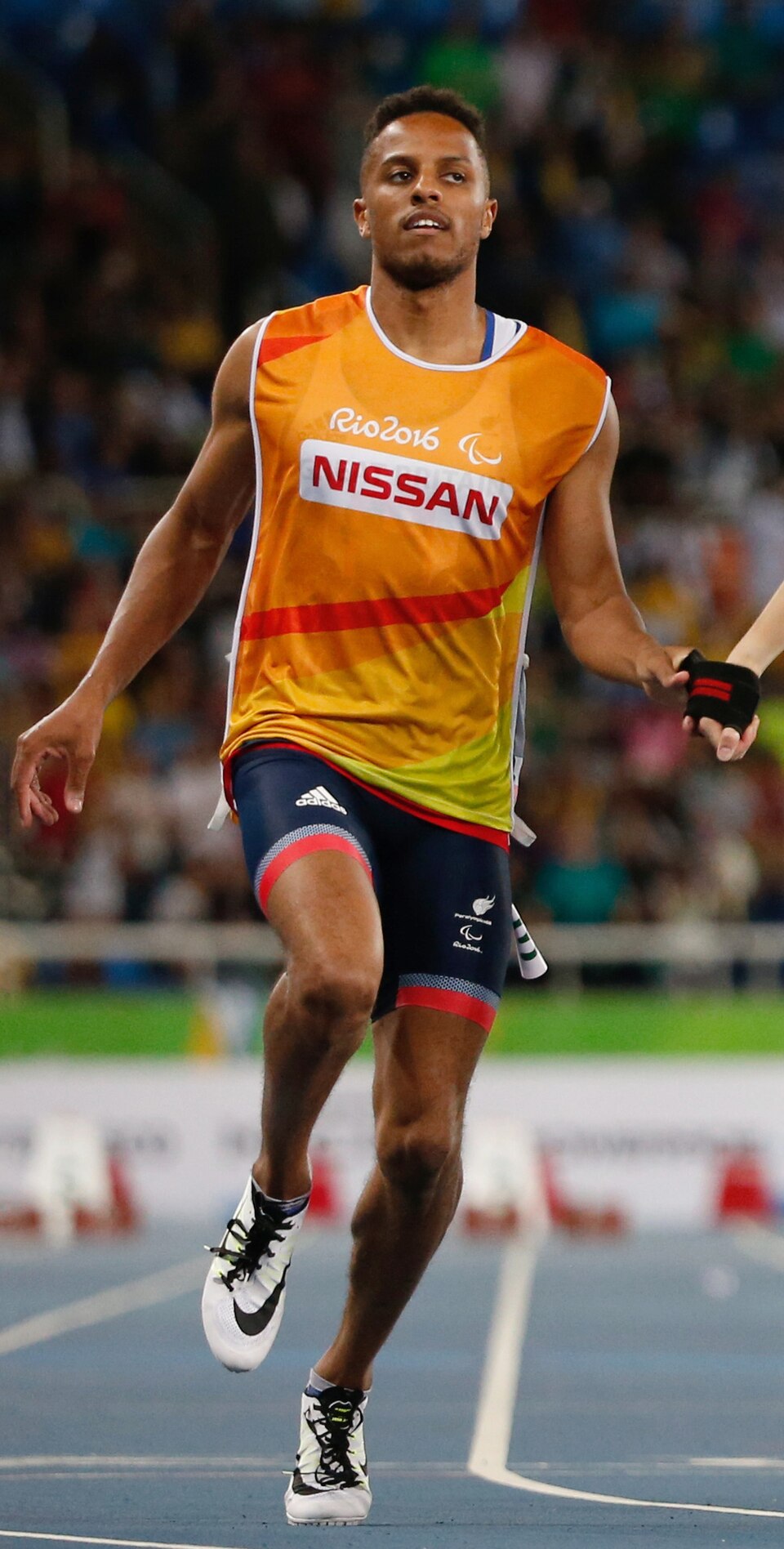
Photo: Fernando Frazão/Agência Brasil, CC BY 3.0 BR
START HERE · PICK AN OPENER
Choose how to open the lesson
Click a card to jump to it. Every option ends at the same Observe, Wonder, Predict slide and the same driving question.
OPTION A · VIDEO
Painted Muscles
Clip 1 is Insider Art on Danny Quirk, who paints muscles onto people. Clip 2 is Alice Roberts painting the arm muscles onto a student. Clip 3, Naming Muscles, is for the wrap-up.
Watch for
Which painted muscles changed shape when the person moved?
Where on the body are the biggest muscles?
How do you think scientists named all these muscles?
Videos on YouTube: Insider Art; Science for Schools; DeBacco University.
OPTION B · TRY IT · 2 MINUTES
Clench, Shrug, Stand Tall
1
Put your fingertips on your cheeks, just in front of your ears. Clench your teeth.
2
Put one hand on top of your shoulder, next to your neck. Shrug.
3
Stand up. Put a hand on the back of your lower leg. Rise up on your toes.
4
Each time, notice what got hard under your hand.
You need
Your own body
Room to stand
Watch for
Which of the three felt the biggest?
Did any muscle change shape that you could see?
What would you name each muscle, if it had no name yet?
OPTION C · PHOTOS
Phenomenon: Where Does It Hurt?
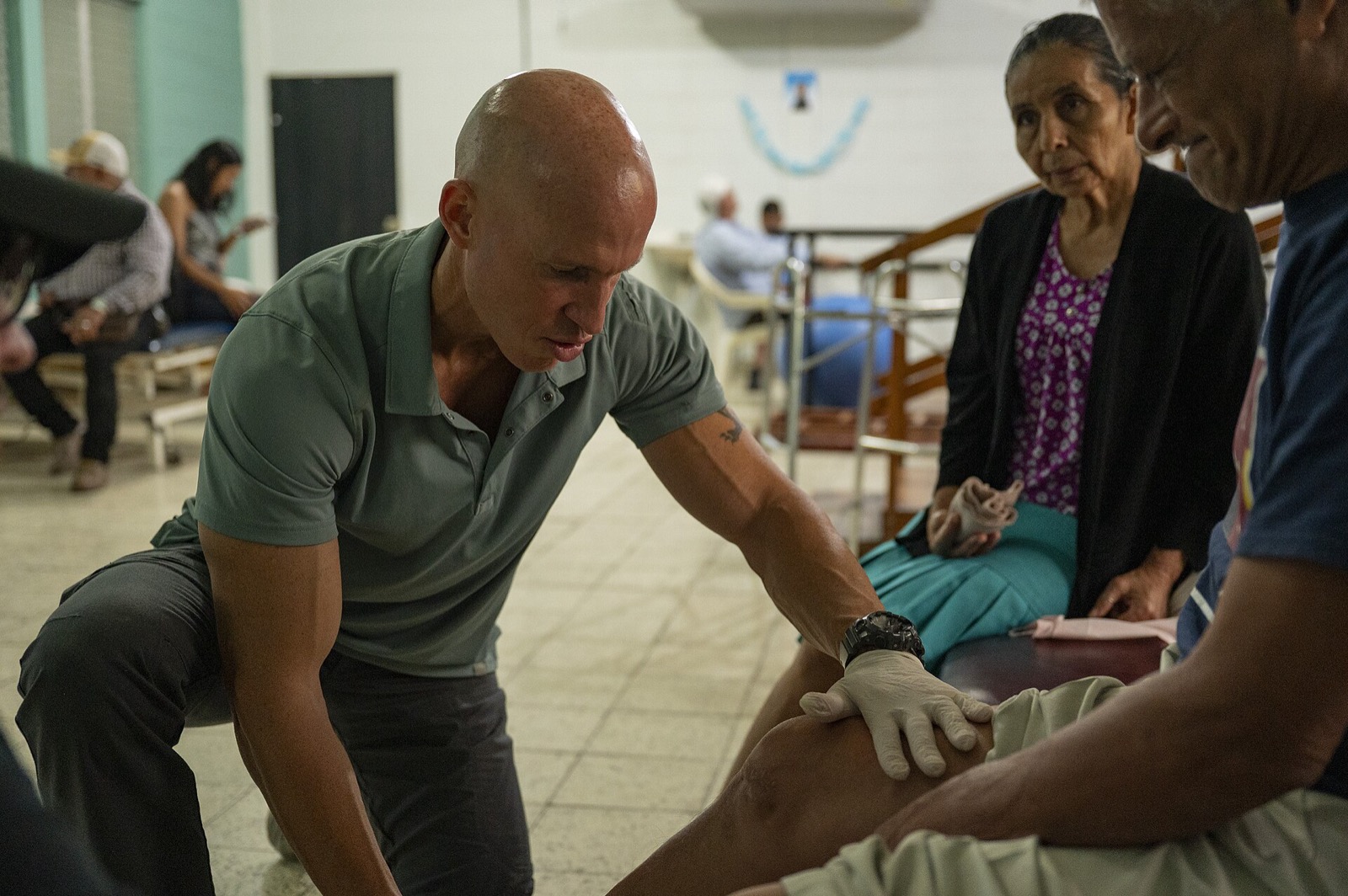
Photos: Fernando Frazão/Agência Brasil, CC BY 3.0 BR · U.S. Air Force photo by Staff Sgt. Sadie Colbert, public domain
START HERE
Observe, wonder, predict
Your body has more than 600 skeletal muscles. Every one has a name.
OBSERVEWhich muscles can you see working on the runner?
WONDERWhat do you wonder about how muscles got their names?
PREDICTCould a long name like sternocleidomastoid be a clue? A clue to what?
Look at the thighs and calves.
Photo: Fernando Frazão/Agência Brasil, CC BY 3.0 BR
DRIVING QUESTION
How can a muscle's name tell you where it is and what it does?
START HERE
What Happened Here?
Finished observing? Click here to find out.
Doctors, trainers and therapists use the same names everywhere in the world. Most names are old Latin or Greek words. They were not picked at random.
Today, you will find 20 big muscles on a body map. You will crack the code inside their names. Then you will move and feel each one pull.
TAB 1 · QUESTIONS 1 TO 5
Part 1. Find the muscles
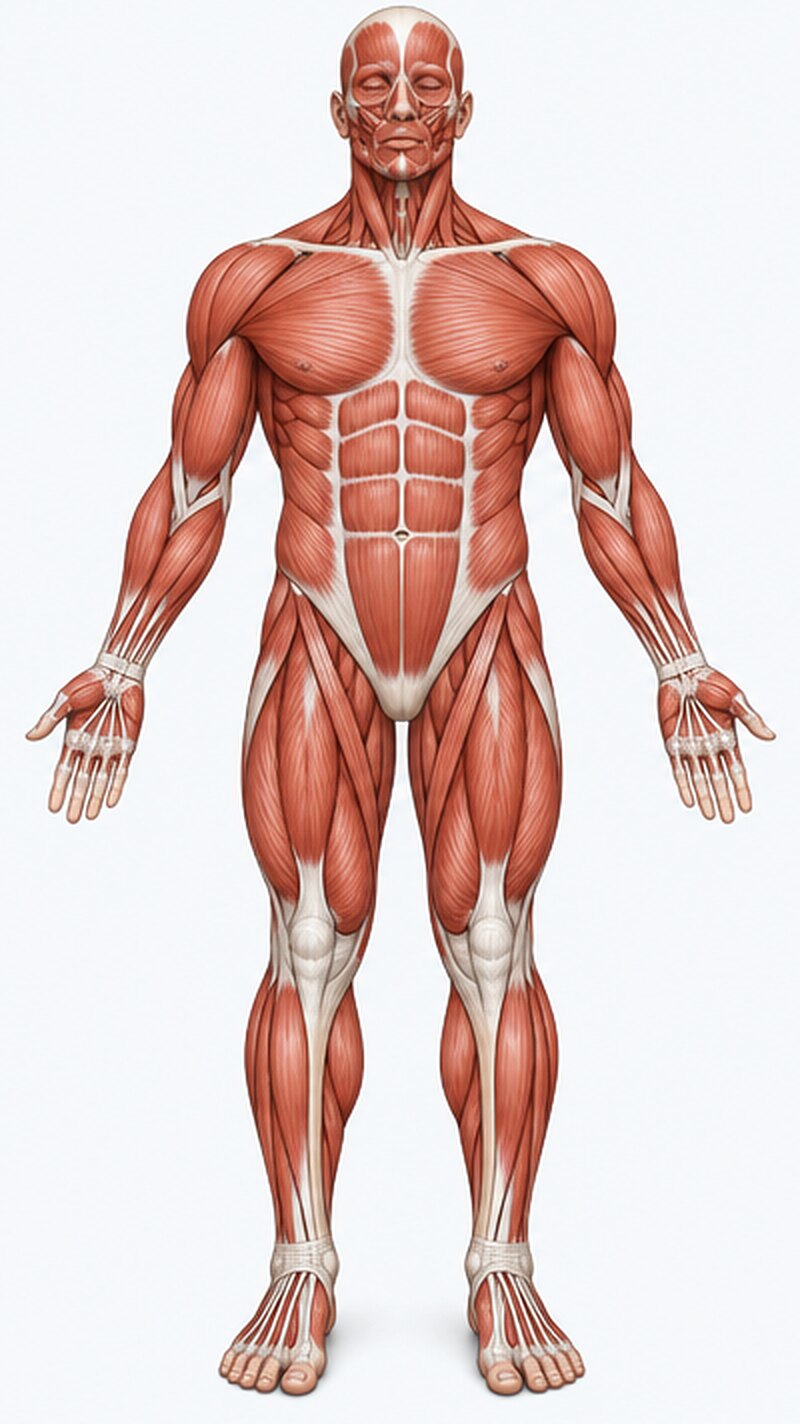
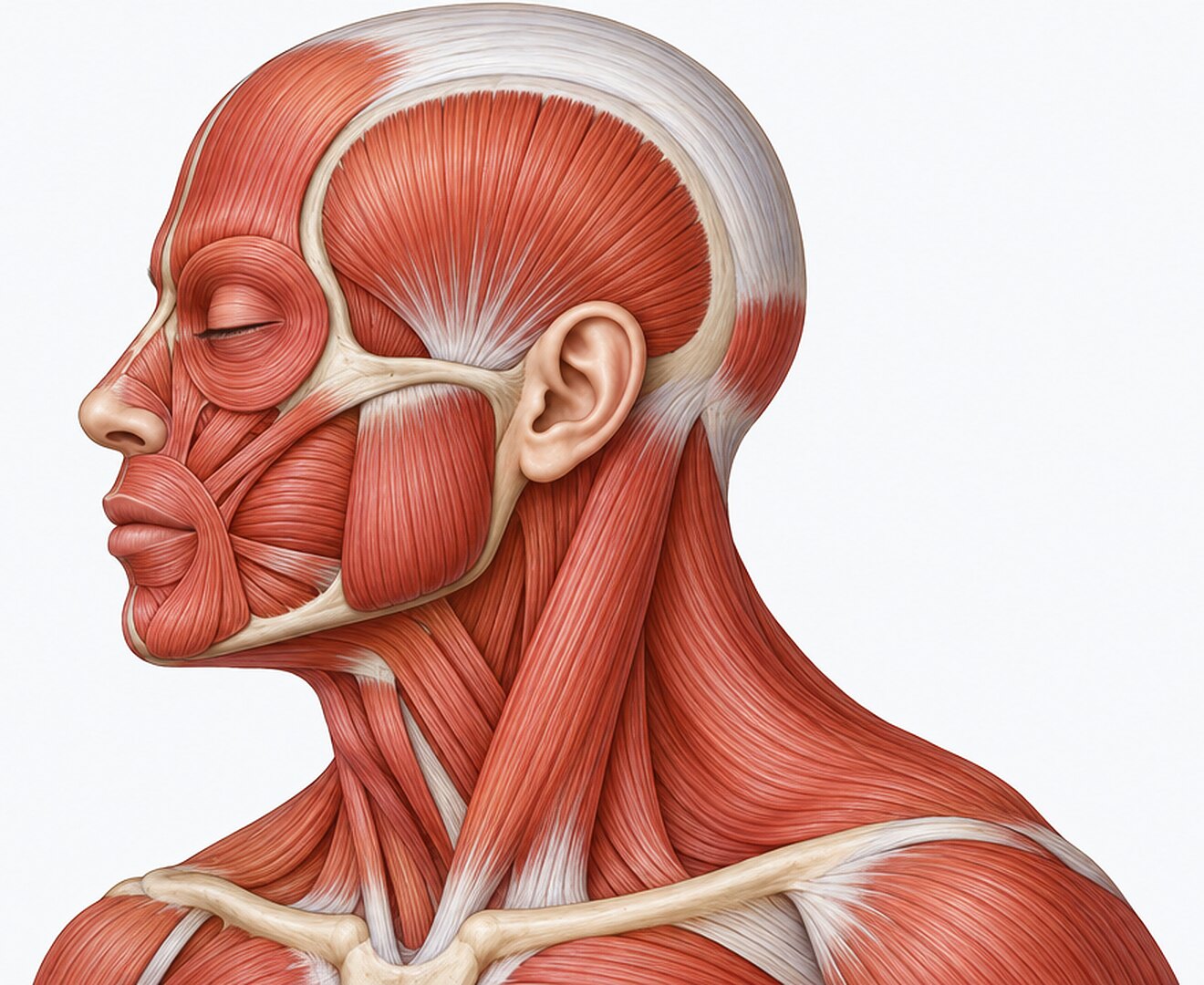
Twenty big muscles, front, back and head.
Drawing: AI illustration made for this lab (gpt-image-2.5), labels in code
PART 1 · QUESTIONS 1 AND 2
Find all 20
1
Click every numbered dot.
2
Switch to Head and neck to find 1 to 6.
3
Write each name in Question 1.
4
Count by region for Question 2.
PART 1 · LEARN IT · 1 OF 4
Words for where
Anterior means the front of the body. Posterior means the back. Superficial means near the surface: the 20 muscles on this map lie on top of deeper muscles.
Drawing: AI illustration made for this lab (gpt-image-2.5), labels in code
PART 1 · LEARN IT · 2 OF 4
Four regions
Head and neck: 6 muscles. Trunk: 5. Shoulder and arm: 3. Hip and leg: 6. These are some of the biggest in the body.
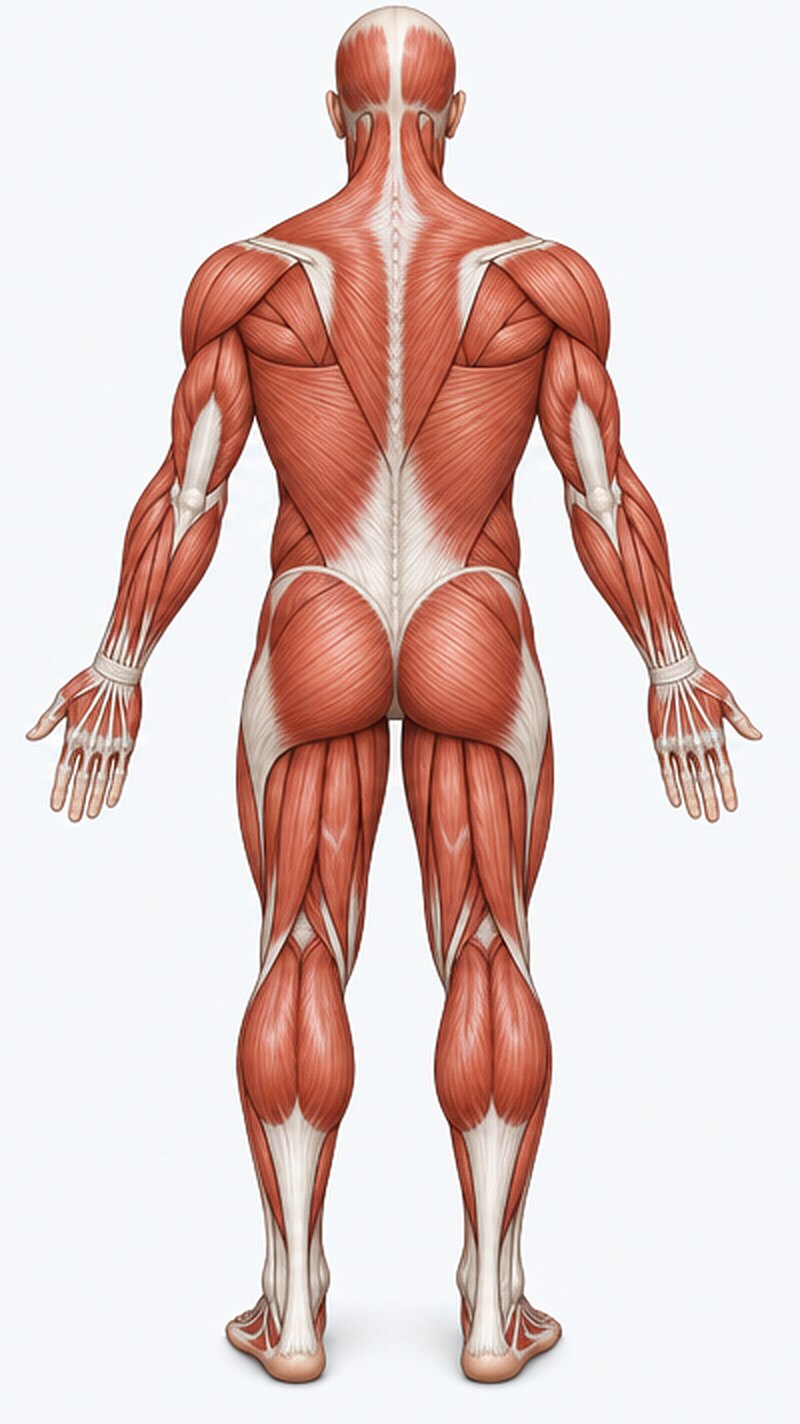
Drawing: AI illustration made for this lab (gpt-image-2.5), labels in code
PART 1 · LEARN IT · 3 OF 4
Some names are teams
The quadriceps femoris is four muscles on the front of the thigh. The hamstrings are three muscles on the back of the thigh. One name can mean more than one muscle.
Drawing: AI illustration made for this lab (gpt-image-2.5), labels in code
PART 1 · LEARN IT · 4 OF 4
How to find a muscle
Pick the region. Front (anterior) or back (posterior)? Find the bump. Then move that part of your body and feel it get hard.
Photo: Fernando Frazão/Agência Brasil, CC BY 3.0 BR
PART 1 · QUESTIONS 3 TO 5
Use the idea
QUESTION 3
Which region?
Tick one region for each muscle.
QUESTION 4
Front or back?
A = anterior, the front.
P = posterior, the back.
QUESTION 5
Find It
Play the game in the lab.
Write your score out of 10.
TAB 2 · QUESTIONS 6 TO 10
Part 2. Read the name
Every part of a name is a clue.
Drawing: AI illustration made for this lab (gpt-image-2.5), labels in code
PART 2 · QUESTIONS 6 AND 7
Decode the names
1
Pick a muscle name.
2
Read what each word part means.
3
Decode at least 8.
4
Read the graph. Answer 6 and 7.
PART 2 · LEARN IT · 1 OF 4
Names are clues
Each part of a name tells you something: location, shape, size, heads or attachments, direction of the fibers, or action.
Drawing: AI illustration made for this lab (gpt-image-2.5), labels in code
PART 2 · LEARN IT · 2 OF 4
Size and direction words
Major / maximus = larger / largest. Minor / minimus = smaller / smallest. Longus = long. Rectus = straight. Oblique = slanted. Anterior / posterior = front / back.
Drawing: AI illustration made for this lab (gpt-image-2.5), labels in code
PART 2 · LEARN IT · 3 OF 4
Action words
Flexor bends a joint. Extensor straightens a joint. Adductor pulls a part in, toward the middle. Abductor pulls a part out, away from the body.
Drawing: AI illustration made for this lab (gpt-image-2.5), labels in code
PART 2 · LEARN IT · 4 OF 4
Look for the body part first
Location was in 14 of the 20 names. Look for a body part: brachii (upper arm), femoris (thigh), tibialis (shin), abdominis (belly), oculi (eye), oris (mouth), digitorum (fingers or toes).
Drawing: AI illustration made for this lab (gpt-image-2.5), labels in code
PART 2 · QUESTIONS 8 TO 10
Use the idea
QUESTION 8
What kind of clue?
Tick one kind for each word part.
QUESTION 9
New names
Then do Step 3 in the lab.
QUESTION 10
Adductor longus
Two words, two clues.
TAB 3 · QUESTIONS 11 TO 16
Part 3. Move it
Do each move yourself. Feel which muscle pulls.
Photo: Fernando Frazão/Agência Brasil, CC BY 3.0 BR
PART 3 · QUESTIONS 11 TO 13
Move and feel
1
Pick a move. Do it yourself.
2
Put your hand on the gold muscle. Press I felt it.
3
Try at least 8 moves.
4
Copy the masses from the graph.
PART 3 · QUESTION 13
How many times heavier?
THE MATH
Divide
The bigger mass ÷ the smaller mass.
That is how many times heavier.
Example
A backpack is 600 grams. A lunch box is 300 grams.
600 ÷ 300
= 2 times heavier
These are not your numbers. Use your own.
PART 3 · LEARN IT · 1 OF 3
Two jobs in every move
The prime mover does most of the pulling for a movement. The antagonist is the partner muscle that pulls the other way.
Photo: Fernando Frazão/Agência Brasil, CC BY 3.0 BR
PART 3 · LEARN IT · 2 OF 3
Muscles work in pairs
A muscle can only pull. Biceps bends the elbow, triceps straightens it. Quadriceps straightens the knee, hamstrings bend it. Gastrocnemius points the foot, tibialis anterior lifts the toes.
Drawing: AI illustration made for this lab (gpt-image-2.5), labels in code
PART 3 · LEARN IT · 3 OF 3
Big jobs, big muscles
The quadriceps weighed 898 grams, more than twice the hamstrings. The gluteus maximus weighed 547 grams. These lift your whole body. A heavier muscle has more fibers, so it can pull harder.
Drawing: AI illustration made for this lab (gpt-image-2.5), labels in code
EXPLAIN IT · QUESTION 16
Why is the quadriceps so heavy?
Claim
Answer the question in one sentence.
Evidence
Use the masses from the graph.
Reasoning
Say what job the quadriceps does, and why that job needs a big muscle.
WRAP IT UP · BACK TO THE START
Revisiting the Phenomenon
How can a muscle's name tell you where it is and what it does?
EVIDENCEName two kinds of clues inside a muscle name.
EVIDENCEDecode one name you learned today.
EVIDENCEWhich muscle would the runner hurt in the back of the thigh?
Hand in your worksheet.
Next lesson: inside a muscle fiber.