ANATOMY & PHYSIOLOGY · SECTIONS 8.1 AND 8.2
Inside a Muscle
Follow along with your worksheet, one question at a time.
mrsajdak.com/muscle-organ
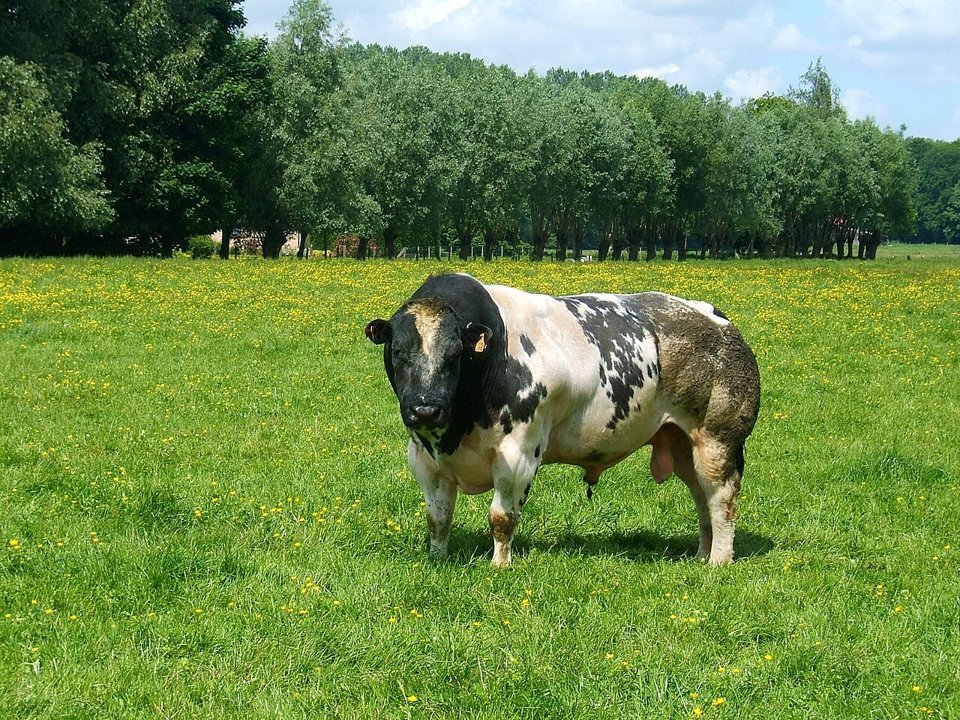
Photo: Peter Van den Bossche, CC BY-SA 2.0
START HERE · PICK AN OPENER
Choose how to open the lesson
Click a card to jump to it. Every option ends at the same Observe, Wonder, Predict slide and the same driving question.
OPTION A · VIDEO
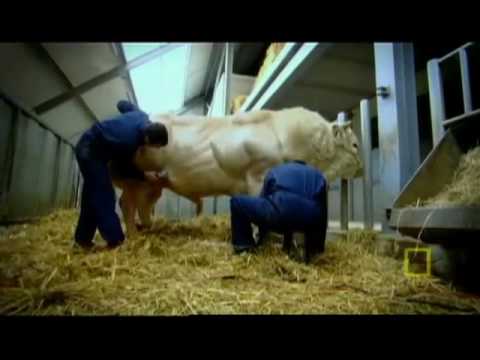
Too Much Muscle?
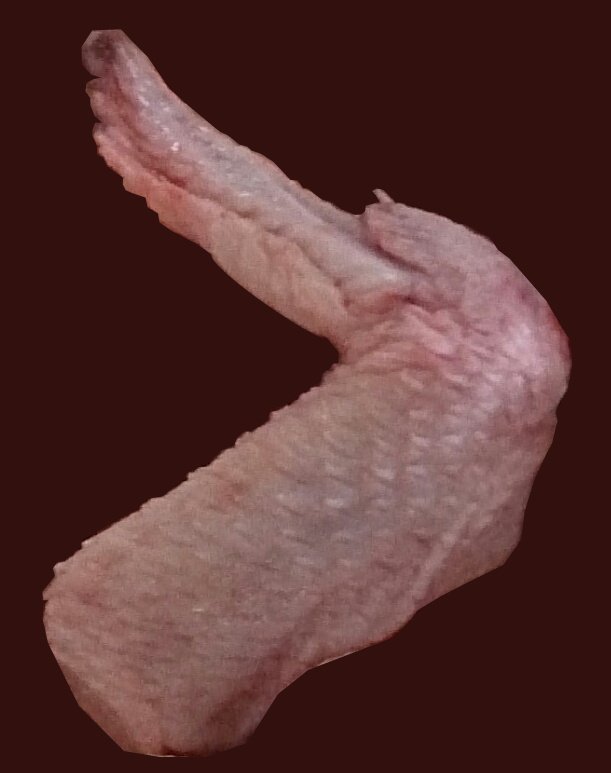
Clip 1 is a National Geographic look at Belgian Blue cattle (a re-upload). Clip 2 is Life Noggin on a rare human mutation that gives very large muscles. Clip 3 is a short look at the tendons in a chicken wing.
Watch for
What looks different about these cattle?
Do you think the cells inside their muscles are different? How?
Could too much muscle ever be a problem?
Videos on YouTube: YouTube re-upload; Life Noggin; Pamela Buchan.
OPTION B · TRY IT · 2 MINUTES
Feel Your Muscles Work
1
Put your left hand on the front of your right upper arm.
2
Bend your right elbow hard against your desk edge or your other hand. What do you feel?
3
Now move your left hand to the back of your right upper arm.
4
Press your right hand down flat on the desk. What do you feel now?
You need
Your own arm and a desk
Nothing else
Watch for
Which muscle got hard and fat when you bent your arm?
Which one got hard when you pressed down?
Can one muscle do both jobs?
OPTION C · PHOTOS
Phenomenon: Too Much Muscle?
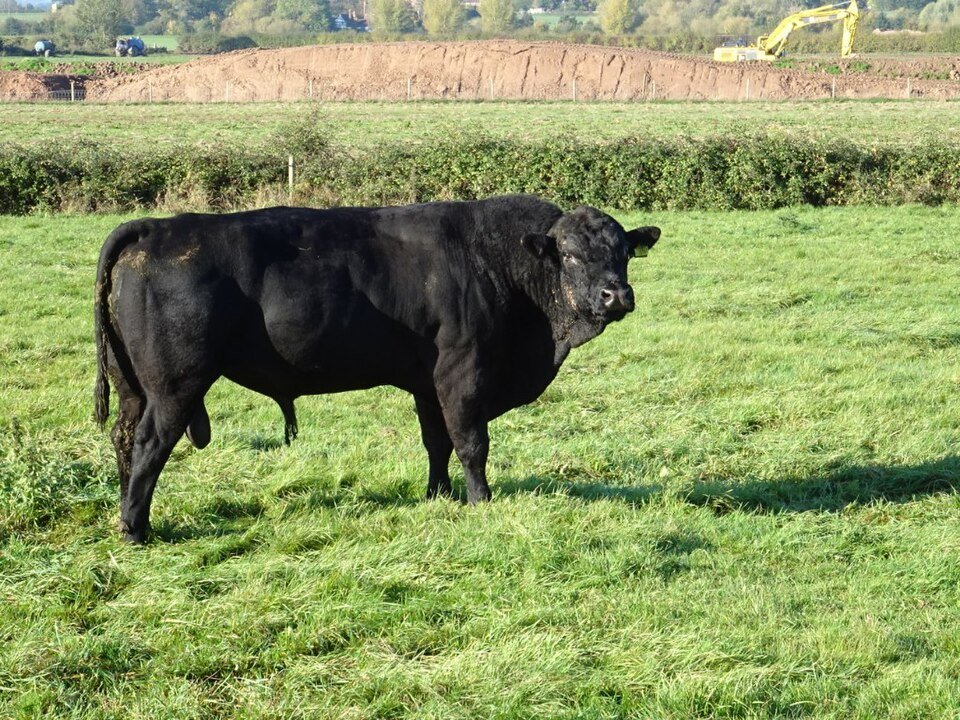
Photos: Peter Van den Bossche, CC BY-SA 2.0 · Philip Halling, CC BY-SA 2.0
START HERE
Observe, wonder, predict
The Belgian Blue was born with much more muscle than most cattle.
OBSERVEWhere on its body is the extra muscle?
WONDERWhat do you wonder about what is inside a muscle?
PREDICTDoes a bigger muscle have more cells, bigger cells, or both?
Look at the shoulders and back legs.
Photo: Peter Van den Bossche, CC BY-SA 2.0
DRIVING QUESTION
What is inside a muscle, what does it do, and what changes when an animal has too much of it?
START HERE
What Happened Here?
Finished observing? Click here to find out.
The Belgian Blue carries a change in one gene. That gene normally puts a brake on muscle growth. With the brake off, the muscles keep growing.
Today, you will see what muscles do. You will zoom inside a muscle with real microscope pictures. Then you will pull a tendon to move an arm.
TAB 1 · QUESTIONS 1 TO 5
Part 1. What muscles do
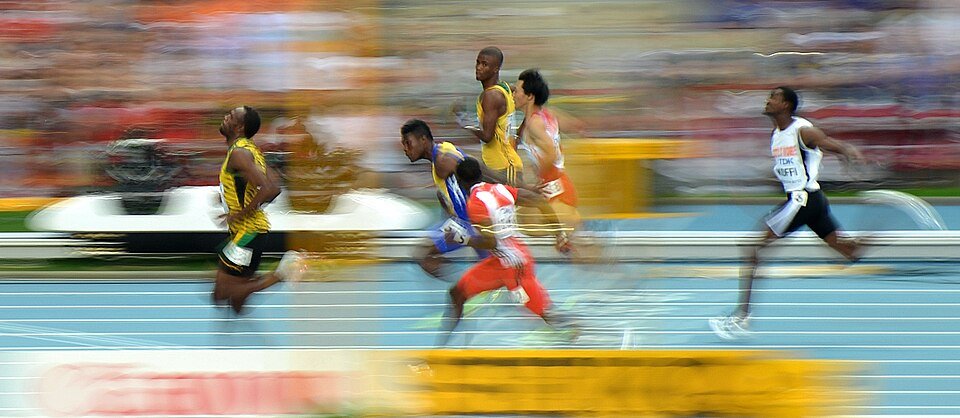
Four activities. How much energy does each one use?
Photo: Tobi 87, CC BY-SA 3.0
PART 1 · QUESTIONS 1 TO 3
Try each activity
1
Click all four activities.
2
Copy the energy for each one.
3
Do Step 2, Feel it.
4
Answer Questions 1 to 3.
PART 1 · LEARN IT · 1 OF 2
Four jobs of muscles
Movement, posture, heat, and moving things inside the body, like food and blood.

Photo: Wilfredor, CC0
PART 1 · LEARN IT · 2 OF 2
Most of the energy becomes heat
Running used about 10 times the energy of lying down. Muscles turn only about one fourth of it into motion. The rest leaves as heat.
Photo: Tobi 87, CC BY-SA 3.0
PART 1 · QUESTIONS 4 AND 5
Use the idea
QUESTION 4
Which job?
Tick one job for each example.
Then do the sort in the lab.
QUESTION 5
Why do you get hot?
Use the energy data from Question 1.
TAB 2 · QUESTIONS 6 TO 11
Part 2. Zoom into a muscle
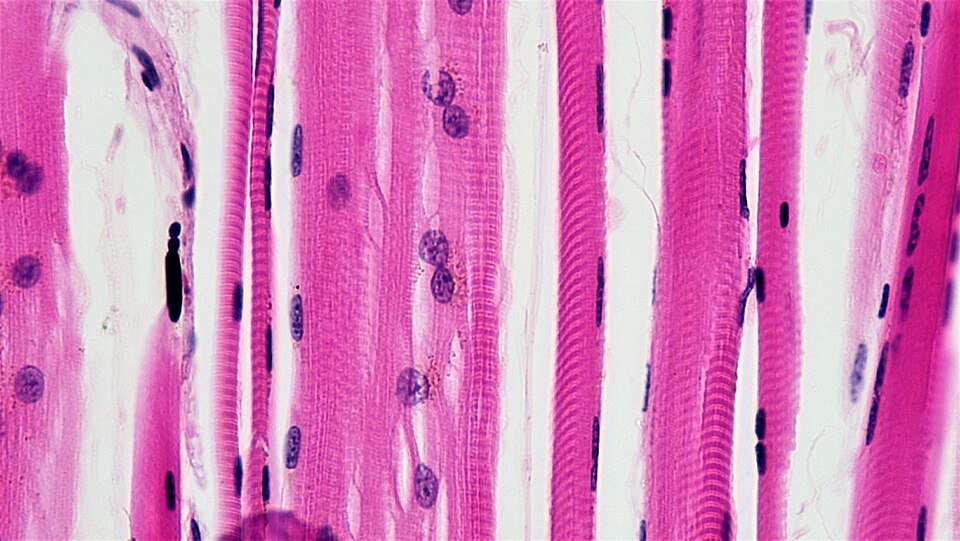
Real pictures, from the whole muscle down to an electron microscope.
Photo: Berkshire Community College Bioscience Image Library, CC0
PART 2 · QUESTIONS 6 TO 8
Zoom in, level by level
1
Click levels 1 to 5.
2
Copy how wide each one is.
3
Do the math in Step 2.
4
Answer Questions 6 to 8.
PART 2 · QUESTION 7
How many fit across?
THE MATH
Divide
Width of the big thing ÷ width of the small thing.
That is how many small things fit across.
Example
A box is 600 cm wide. A brick is 30 cm wide.
600 ÷ 30
= 20 bricks across
These are not your numbers. Use your own.
PART 2 · LEARN IT · 1 OF 3
A muscle is an organ
A whole muscle is made of fascicles (bundles). Each fascicle is made of muscle fibers. Each fiber is one long cell, packed with myofibrils.
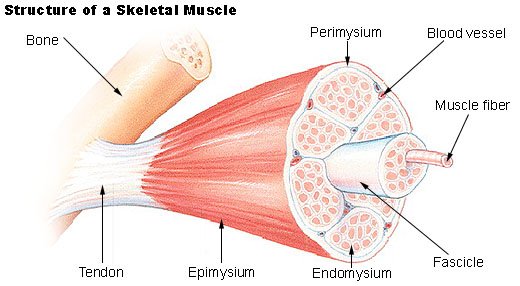
Drawing: National Cancer Institute SEER Training, public domain
PART 2 · LEARN IT · 2 OF 3
The wraps
Epimysium wraps the whole muscle. Perimysium wraps each fascicle. Endomysium wraps each fiber. At the end, the wraps join to form a tendon.
Drawing: National Cancer Institute SEER Training, public domain
PART 2 · LEARN IT · 3 OF 3
The stripes
A fiber has light and dark stripes. They come from two protein threads: actin (thin) and myosin (thick).
Micrograph: Berkshire Community College Bioscience Image Library, CC0
PART 2 · QUESTIONS 9 TO 11
Two models of a muscle
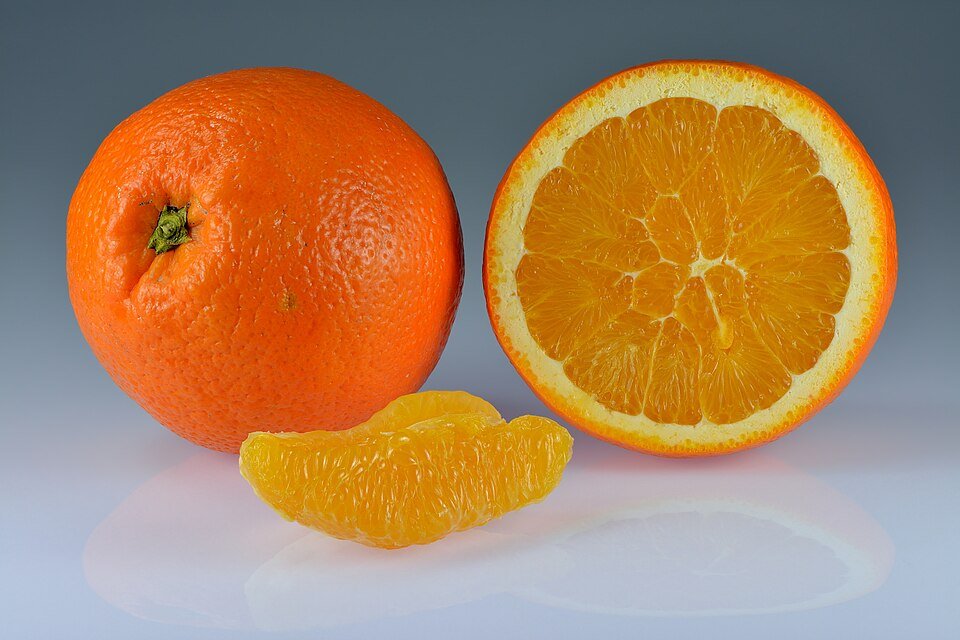
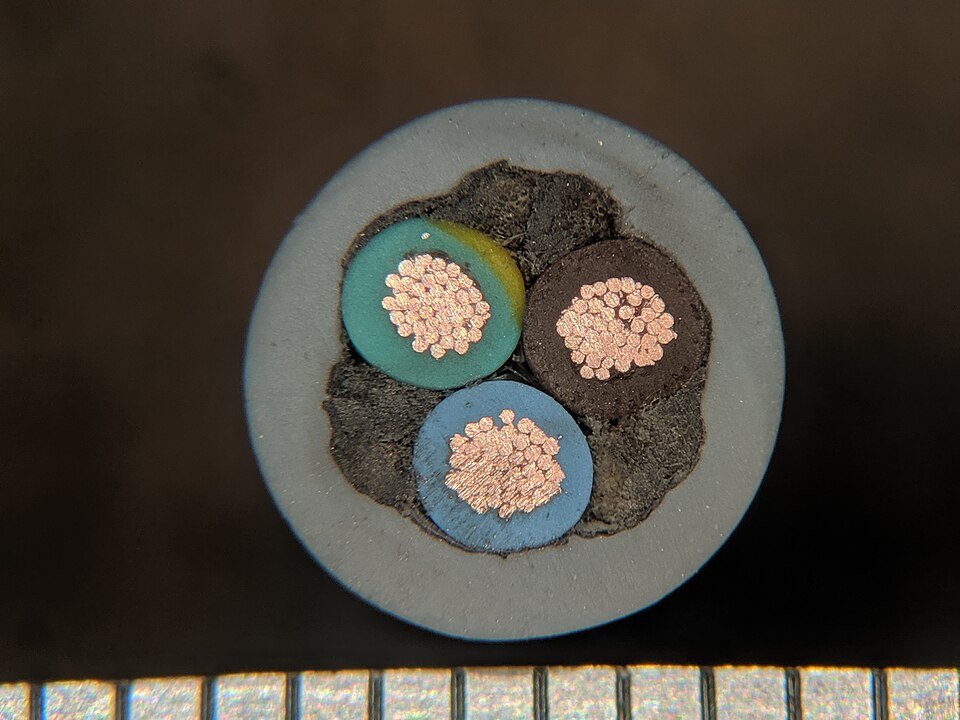
Photos: Ivar Leidus, CC BY-SA 4.0 · TubeTimeUS, CC BY-SA 4.0
TAB 3 · QUESTIONS 12 TO 16
Part 3. Pull the tendon
A muscle cannot move a bone by itself.
Photo: ProjectManhattan, crop by Kersti Nebelsiek, CC BY-SA 3.0
PART 3 · QUESTIONS 12 TO 14
Run four trials
1
Pick a muscle.
2
Slide to shorten it. Press Record.
3
Do four trials. One with a torn tendon or no signal.
4
Answer Questions 12 to 14.
PART 3 · LEARN IT · 1 OF 3
Tendons connect muscle to bone
When the muscle shortens, the tendon pulls the bone. If the tendon tears, the muscle still shortens, but the bone does not move.
Photo: ProjectManhattan, crop by Kersti Nebelsiek, CC BY-SA 3.0
PART 3 · LEARN IT · 2 OF 3
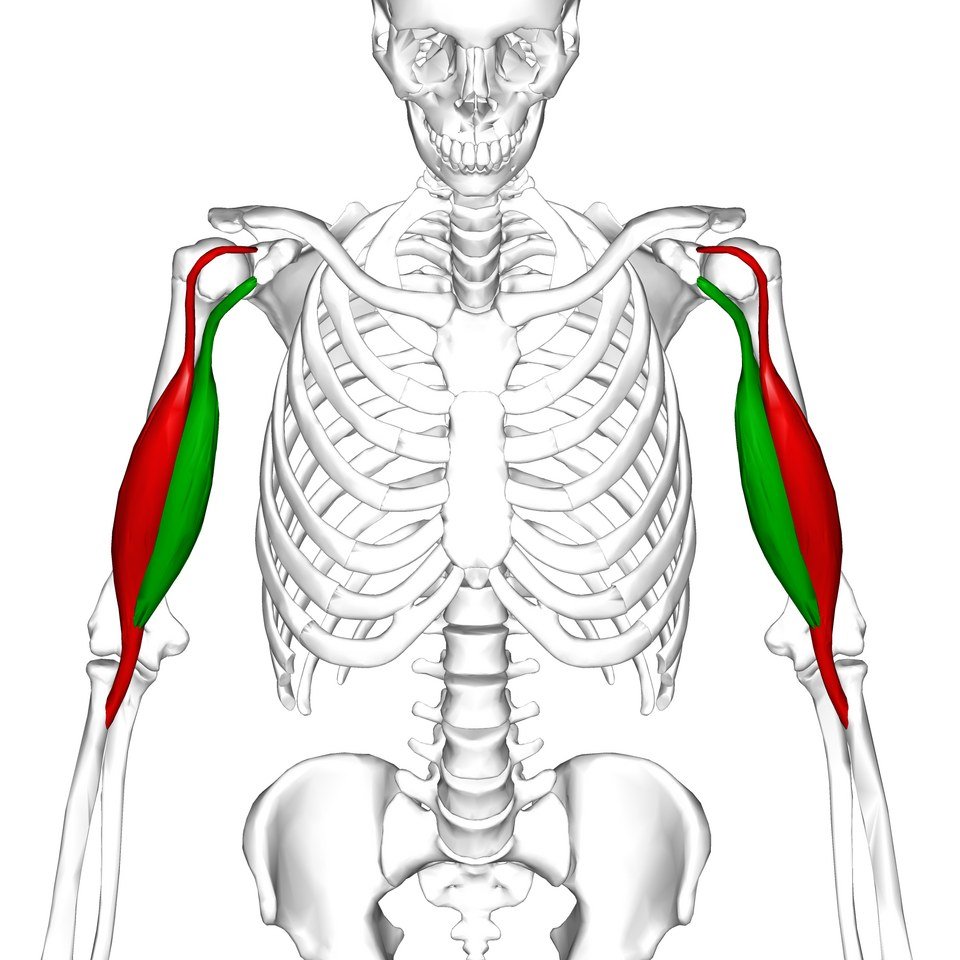
Muscles only pull
A muscle can pull. It can never push. So muscles work in pairs: one bends the elbow, the other straightens it.
Drawing: Anatomography, CC BY-SA 2.1 Japan
PART 3 · LEARN IT · 3 OF 3
The nerve signal
A motor neuron meets a muscle fiber at a neuromuscular junction. It releases a neurotransmitter that starts the pull.
Drawing: Anatomography, CC BY-SA 2.1 Japan
EXPLAIN IT · QUESTION 16
Why can she not point her foot?
Claim
Answer the question in one sentence.
Evidence
What happened in the lab with a torn tendon?
Reasoning
Say how a muscle moves a bone.
WRAP IT UP · BACK TO THE START
Revisiting the Phenomenon
What is inside a muscle, what does it do, and what changes when an animal has too much of it?
EVIDENCEName the levels inside a muscle.
EVIDENCEName two jobs muscles do.
EVIDENCEExtra muscle: more fibers, bigger fibers, or both?
Hand in your worksheet.
Next lesson: identifying the major muscles.