ENVIRONMENTAL SCIENCE · SPECIAL FEATURE 2 · PARTNERS IN SUSTAINABILITY
Partners for a Species
Follow along with your worksheet, one question at a time.
mrsajdak.com/partners
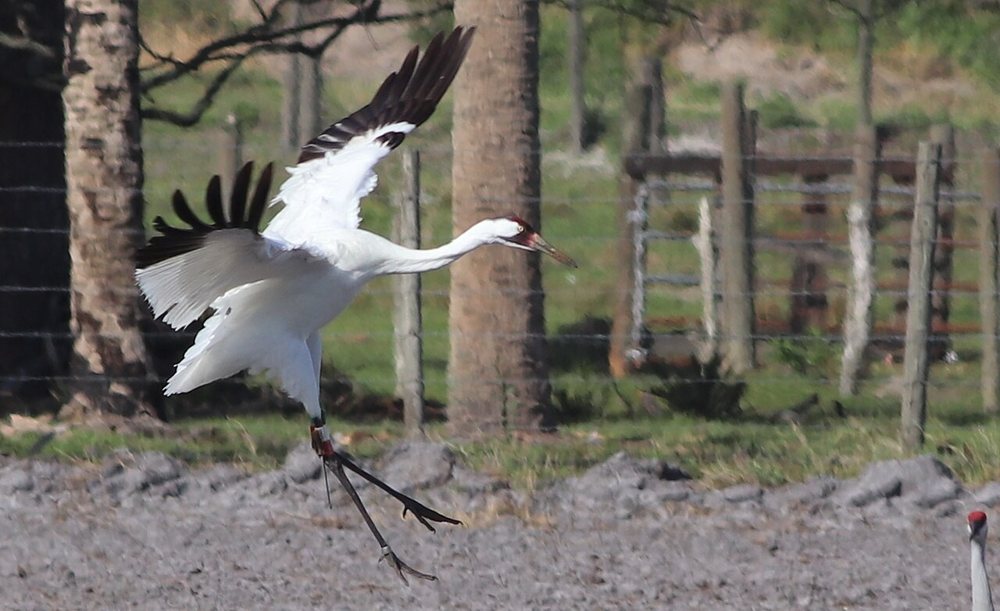
Photo: gary_leavens, CC BY-SA 2.0
START HERE · PICK AN OPENER
Choose how to open the lesson
Click a card to jump to it. Every option ends at the same Observe, Wonder, Predict slide and the same driving question.
OPTION A · VIDEO
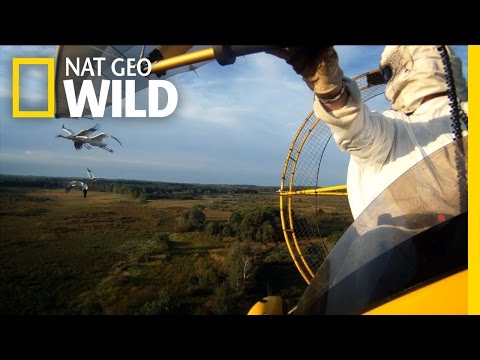
Raised by a Costume
Clip 1 is Nat Geo WILD on raising whooping crane chicks and leading them south with a small plane. Clip 2 is a short look at crane imprinting from Operation Migration. Clip 3 is the Smithsonian golden frog breeding program, a species that now lives only in zoos.
Watch for
Why would a scientist hide inside a crane costume?
Who is doing the work: a zoo, a museum, a park, or someone else?
Is a bird raised by people really wild?
Videos on YouTube: Nat Geo WILD; Operation Migration; AmphibianRescue.
OPTION B · TRY IT · 4 MINUTES
Label It
1
Your pair gets one thing from outside: a leaf, a pinecone, an acorn or a pebble.
2
On a card, write WHAT it is (your best guess is fine).
3
Write WHERE it was found and WHEN (today's date).
4
Write WHO found it. Tape the card to it.
You need
One leaf, pinecone, acorn or pebble per pair, picked up outside
An index card and tape
Watch for
Why would a scientist in 100 years want your leaf?
What could they learn by comparing it with a leaf from that year?
Which part of your label matters most? Why?
OPTION C · PHOTOS
Phenomenon: Drawer or Marsh?
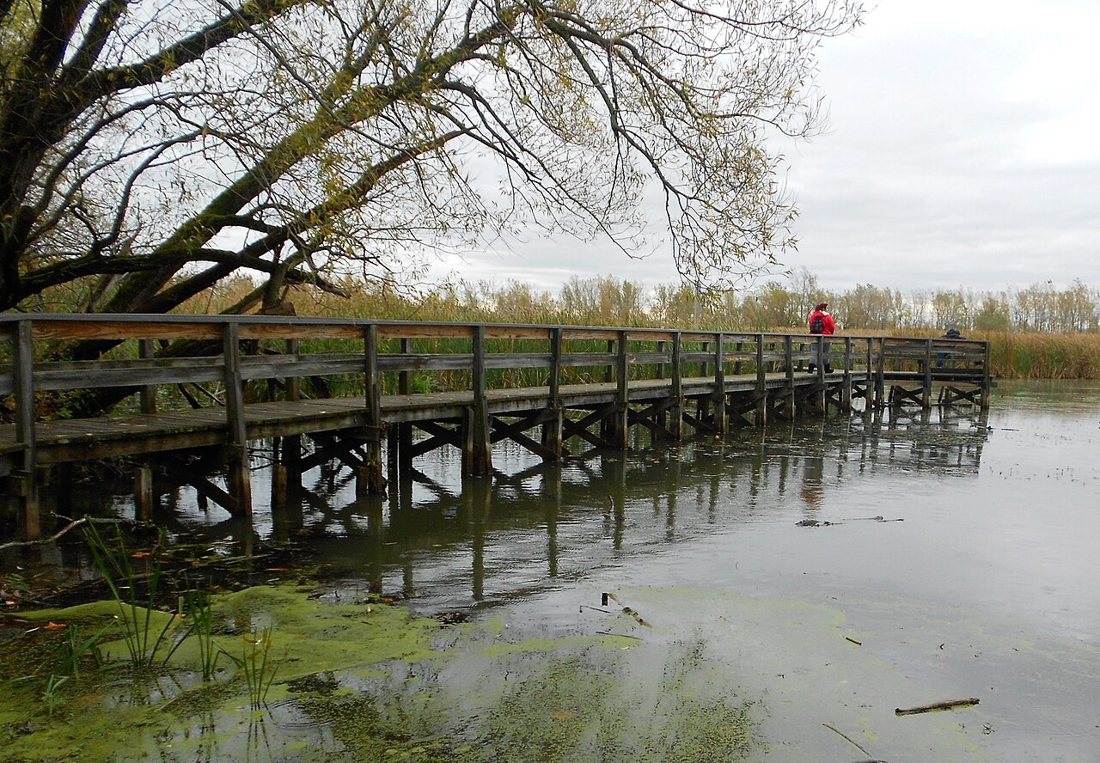
Photos: Notafly, Swedish Museum of Natural History, CC BY-SA 3.0 · U.S. Fish and Wildlife Service, public domain
START HERE
Observe, wonder, predict
Museums, zoos, parks and preserves all say they help wild species.
OBSERVEWhat is written on the tags in the museum drawer?
WONDERWhat do you wonder about how a museum or a zoo could save a wild species?
PREDICTWhich helps a species more: a zoo, or a preserve? Why?
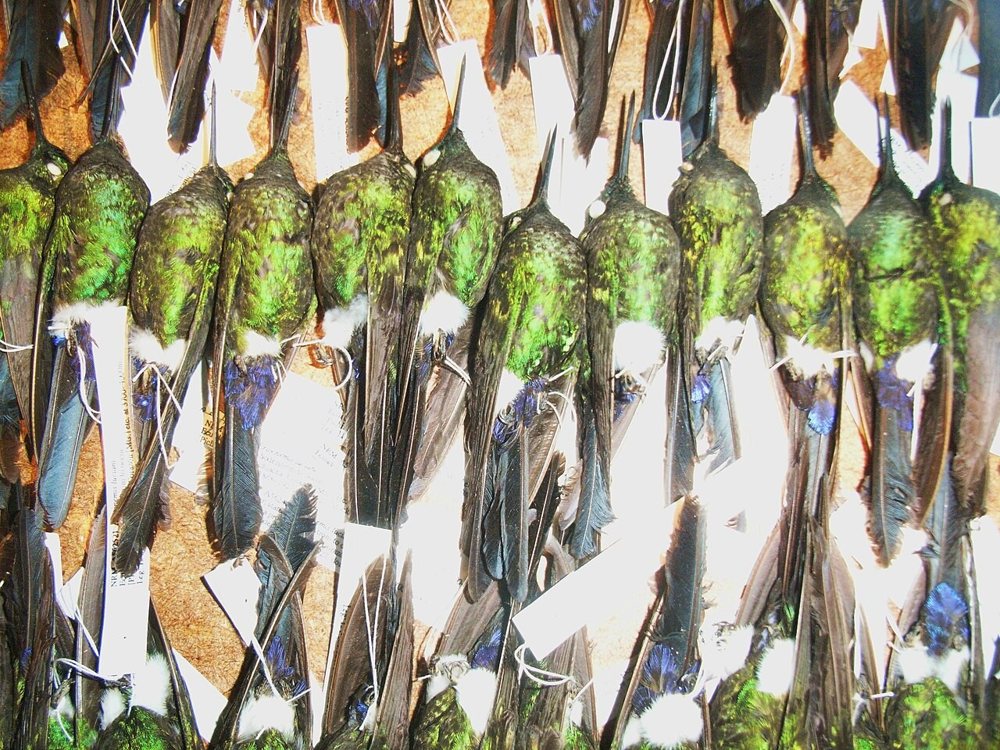
Each tag says what the bird is, where it was found, and when.
Photo: Notafly, Swedish Museum of Natural History, CC BY-SA 3.0
DRIVING QUESTION
Why would scientists dress up as birds, and keep dead birds in drawers? What do museums and preserves really do for wild species?
START HERE
What Happened Here?
Finished observing? Click here to find out.
The costumes keep baby cranes from getting used to people, so they can live wild. The drawers are a record: scientists compare old birds with new ones to see what has changed.
Today, you will find out what eight real partners do. Then you will run a turtle model built on real numbers, and read 85 years of real crane counts.
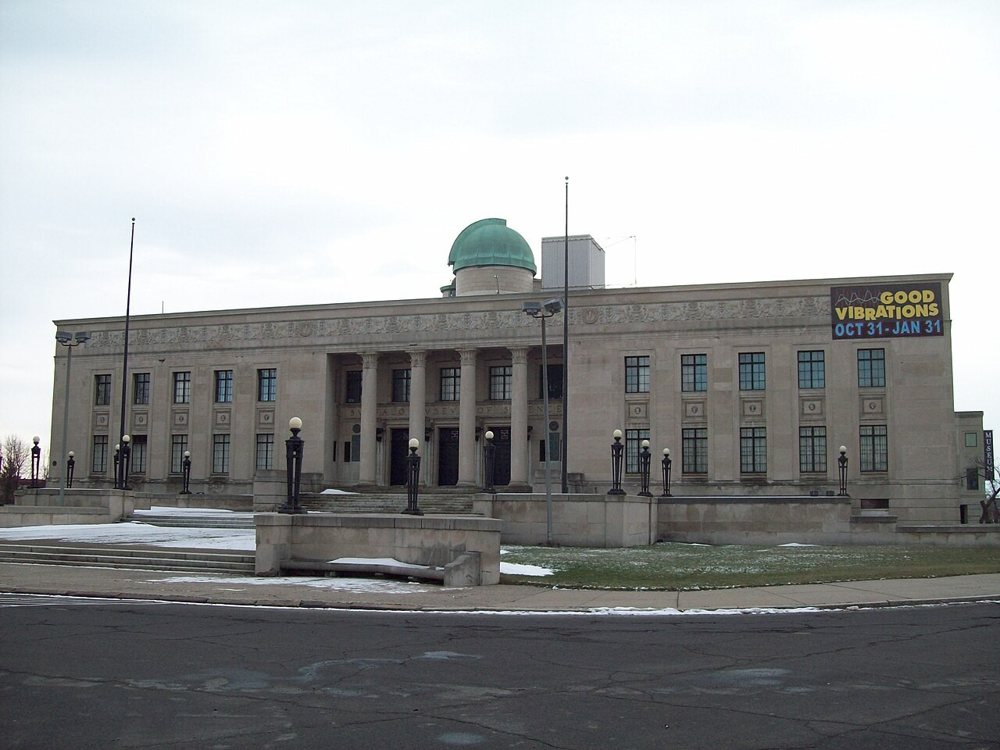
TAB 1 · QUESTIONS 1 TO 5
Part 1. Meet the partners
Eight real places. What does each one actually do?
Photo: Pubdog, public domain
PART 1 · QUESTIONS 1 TO 3
Check all eight partners
1
Tap a photo. Read its card.
2
Tick every job it does. Press Check.
3
Copy it into Question 1.
4
Do all 8. Then answer 2 and 3.
PART 1 · LEARN IT · 1 OF 4
What a partner is for
Biodiversity is the variety of life in a place. To sustain it means to keep it going.
Museums, zoos, parks and preserves are partners in sustainability. You found that they do four jobs.
Photo: Pubdog, public domain
PART 1 · LEARN IT · 2 OF 4
The four jobs
Protect habitat: keep land or water safe for wildlife. A preserve is land kept safe for nature, like Tifft or Reinstein Woods
Raise and release: breed or raise animals to add to the wild, or keep a backup group. Breeding animals in a zoo or center is called captive breeding
Study and collect: do research, or keep specimens: real plants and animals saved with a label that says what, where and when
Teach and involve: teach people, and get them to help. Citizen science is when everyday people collect data for scientists
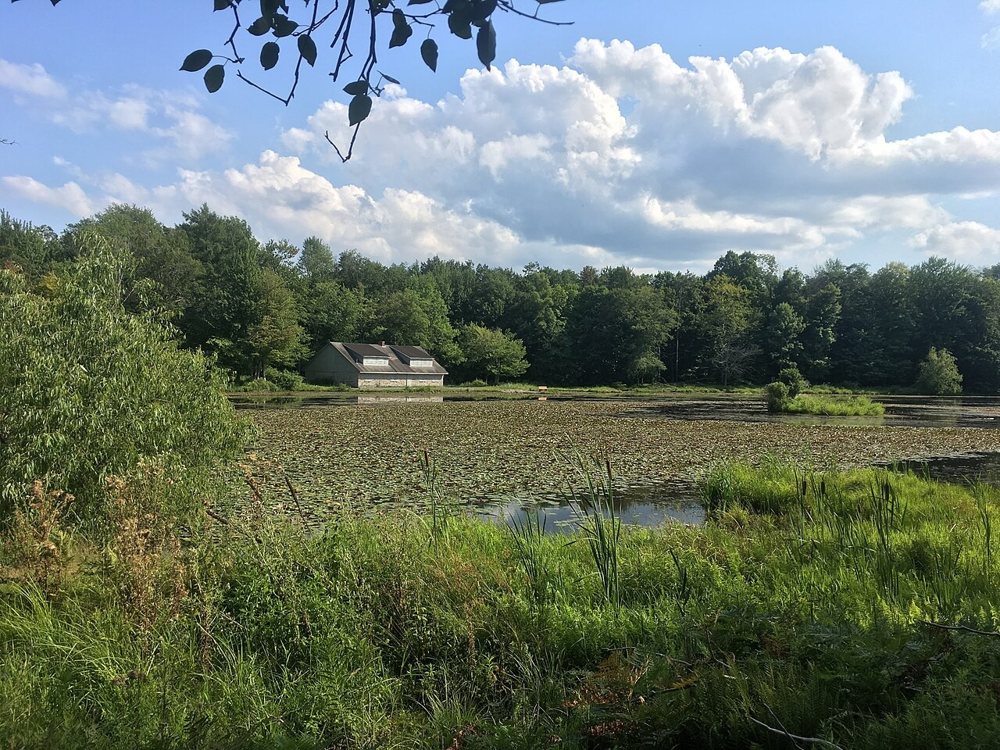
Photo: Andre Carrotflower, CC BY-SA 4.0
PART 1 · LEARN IT · 3 OF 4
Natural history
Natural history is the study of plants and animals by watching them, not by doing experiments.
A museum's drawers are a record of what lived where, and when. Compare a bird from 1900 with one from today, and you can see what has changed.
Photo: Notafly, Swedish Museum of Natural History, CC BY-SA 3.0
PART 1 · LEARN IT · 4 OF 4
Partners work as a system
All 8 partners teach. But no partner does all four jobs.
So they work together, as a system: parts that each do a job, and work as a whole.
Tifft Nature Preserve protects the marsh. The Buffalo Museum of Science, which runs it, studies and teaches. Each one needs the other.
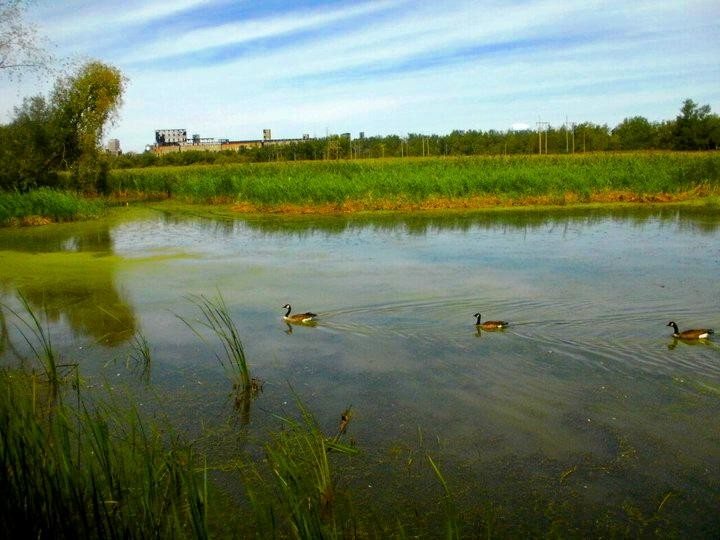
Photo: Andre Carrotflower, CC BY-SA 3.0
PART 1 · QUESTIONS 4 AND 5
Use the idea
QUESTION 4
Match the words
Five words, five meanings.
Each word is in bold in the Learn It.
QUESTION 5
A system
Tifft and the Buffalo Museum of Science.
What does each one do? Why do they need each other?
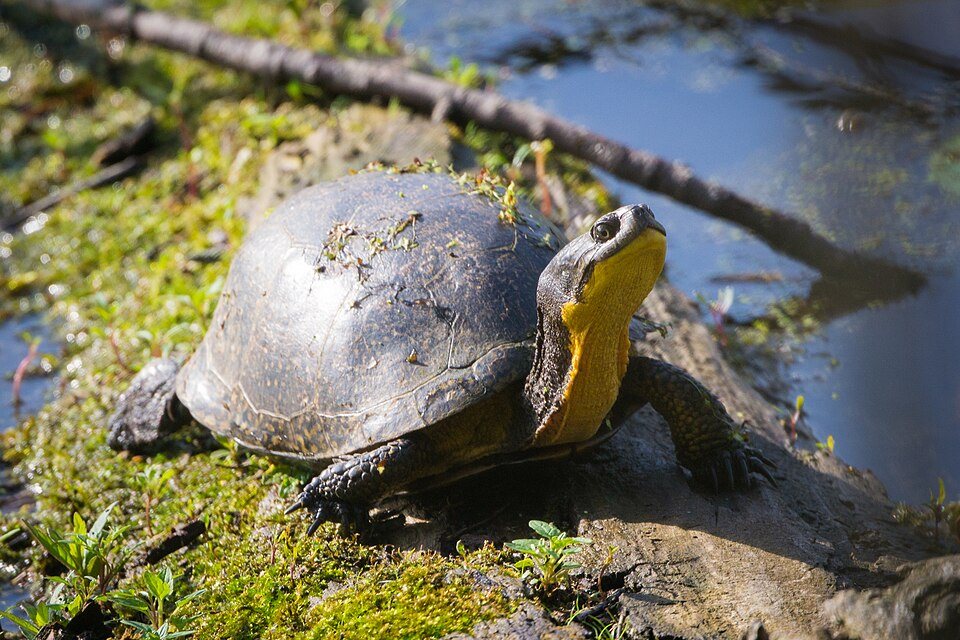
TAB 2 · QUESTIONS 6 TO 11
Part 2. Save a Blanding's turtle
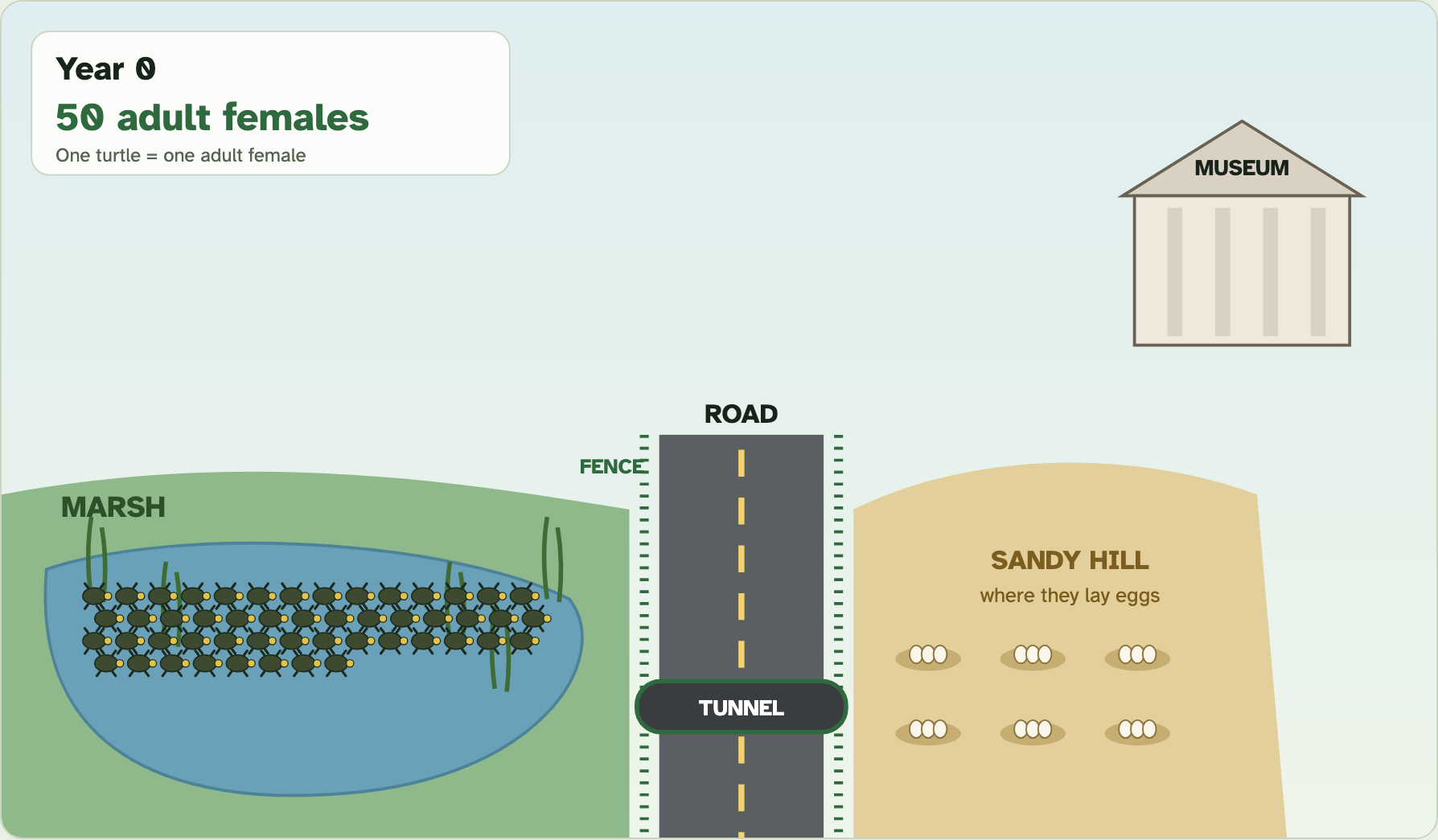
A new road cuts a marsh off from the hill where the turtles nest. What should the partners do?
Photo: Andrew C, CC BY 2.0
PART 2 · HOW THE MODEL WORKS
Two choices, six runs
Fence
A fence and a tunnel keep adults off the road. A preserve job.
Head-start
The museum raises 0, 25 or 50 eggs a year, safe, through the first year.
Run
Watch 50 years. Each turtle in the marsh is one adult female.
Drawing: Ryan Sajdak
PART 2 · QUESTIONS 6 TO 8
Run all six choices
1
Pick fence or no fence.
2
Pick 0, 25 or 50 eggs.
3
Press Run 50 years.
4
Copy Year 10 and Year 50 into Question 6.
5
Do all six. Then answer 7 and 8.
PART 2 · QUESTION 8
Percent lost
THE MATH
Lost, then percent
Lost = start − end.
Percent lost = lost ÷ start × 100.
Example
40 fish drop to 30.
Lost: 40 − 30 = 10.
10 ÷ 40 × 100
= 25% lost
These are not your numbers. Use your own.
PART 2 · LEARN IT · 1 OF 5
What your runs showed
50 to 16 adults in 50 years, the road, no help
50 to 57 adults in 50 years, the fence, no head-start
50 to 92 adults in 50 years, the fence and 50 eggs a year
Photo: Andrew C, CC BY 2.0
PART 2 · LEARN IT · 2 OF 5
Adults are the key
A Blanding's turtle takes about 14 years to grow up. An adult can live more than 75 years, and lays eggs most years.
So every adult lost on a road is a lot of eggs that are never laid. A few more adults dying each year is enough to shrink the whole group.
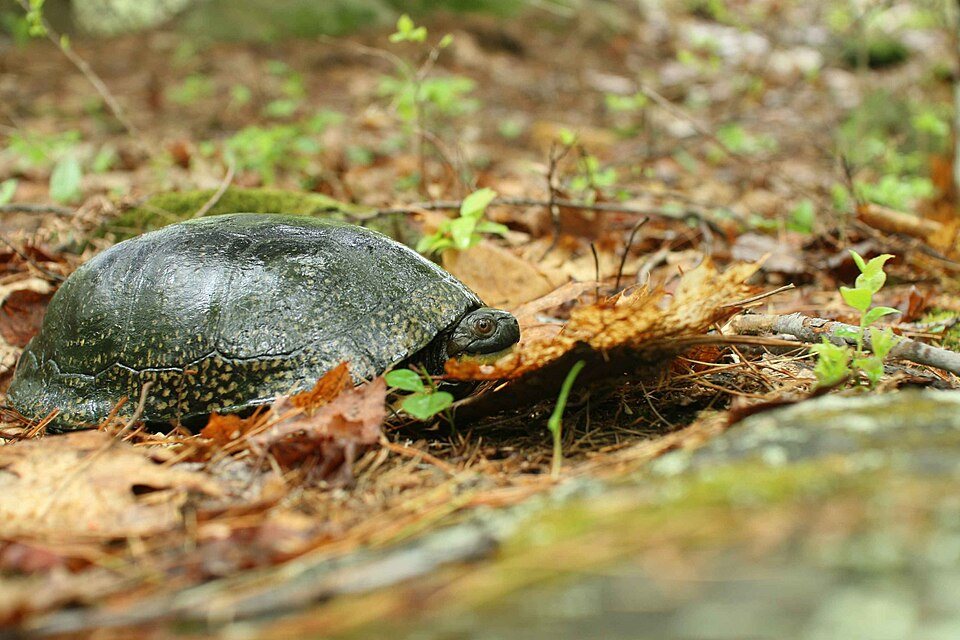
Photo: U.S. Fish and Wildlife Service, public domain
PART 2 · LEARN IT · 3 OF 5
Head-starting buys time
Head-starting means raising eggs and babies somewhere safe, then letting the young turtles go. It is raise and release.
In the wild, only about 26 in 100 eggs survive the nest. In the museum, about 90 in 100 babies live through the first year.
But the babies still need 14 years to grow up. That is why every run had the same number of adults at Year 10.
Photo: Andre Carrotflower, CC BY-SA 3.0
PART 2 · LEARN IT · 4 OF 5
Protect the habitat, and the system works
The fence is a preserve job: protect the habitat so the adults live.
Fence alone: the group stopped shrinking. Head-start alone: it shrank more slowly. Both together: it grew the most.
The partners are parts of one system. Each part does a different job.
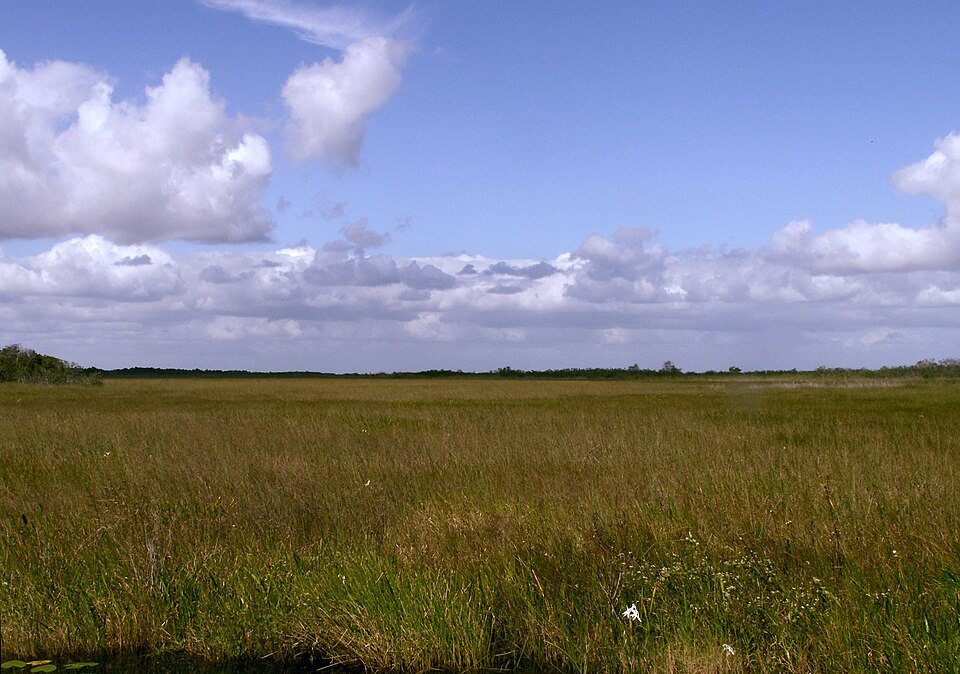
Photo: Moni3, CC BY 3.0
PART 2 · LEARN IT · 5 OF 5
What the model leaves out
It counts only females. It has no dry years, no disease and no bad luck.
The road number and the museum number are estimates. The other numbers are from a real study of these turtles in Michigan.
Drawing: Ryan Sajdak
PART 2 · QUESTIONS 9 TO 11
Use the idea
QUESTION 9
Only one job
Fence alone, or 50 eggs alone?
Use both Year 50 numbers.
QUESTION 10
Model check
What do the fence, the eggs and the road stand for?
What does the model leave out?
QUESTION 11
Why so slow?
Head-starting did nothing by Year 10.
Use a number from the Learn It.
TAB 3 · QUESTIONS 12 TO 15
Part 3. The crane comeback
In 1941, only 16 wild whooping cranes were left.
Photo: gary_leavens, CC BY-SA 2.0
PART 3 · QUESTIONS 12 AND 13
Log all nine winters
1
Pick each winter.
2
Copy the count into Question 12.
3
Read the dashed lines on the graph.
4
Answer Question 13.
PART 3 · QUESTION 13
How many times as many?
THE MATH
Divide
New count ÷ old count.
That is how many times as many.
Example
A town had 20 hawks. Now it has 60.
60 ÷ 20
= 3 times as many
These are not your numbers. Use your own.
PART 3 · LEARN IT · 1 OF 4
The comeback
16 wild whooping cranes, winter 1941
540 wild whooping cranes, winter 2025
134 cranes in zoos and breeding centers, 2023, a backup group
Photo: gary_leavens, CC BY-SA 2.0
PART 3 · LEARN IT · 2 OF 4
No one saved the crane alone
Protect habitat: in 1937, the Aransas National Wildlife Refuge protected the cranes' winter marsh in Texas. In 1954, their nests were found inside Wood Buffalo National Park in Canada, already protected.
Raise and release: in 1967, scientists started captive breeding. In 1973, the International Crane Foundation was founded. Chicks raised by people in crane costumes have been released into the wild.
Study and teach: scientists count the flock every winter. Laws and teaching helped stop people from shooting them.
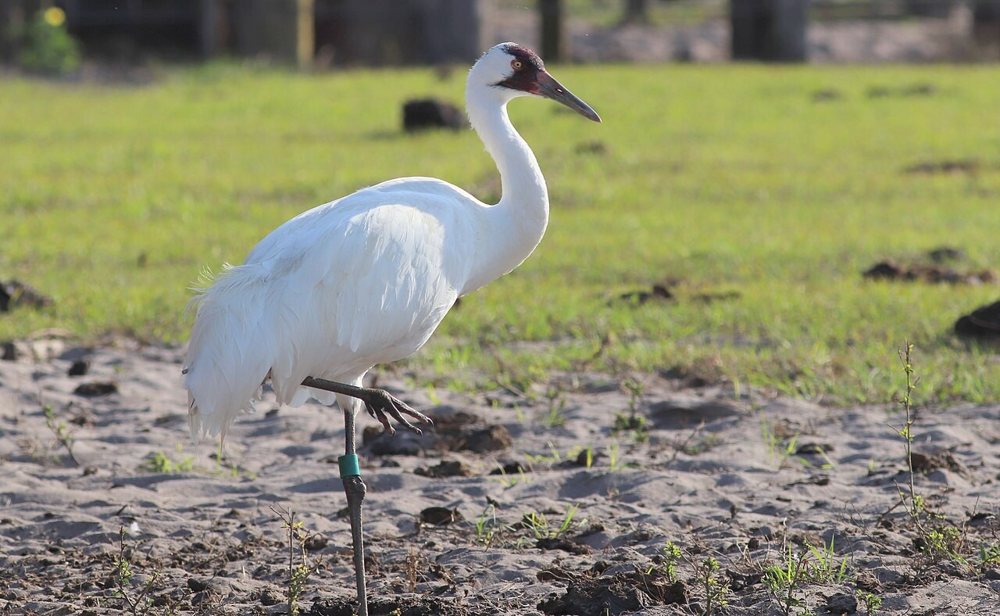
Photo: gary_leavens, CC BY-SA 2.0
PART 3 · LEARN IT · 3 OF 4
Still not safe
Almost all of the natural wild flock spends the winter on one small stretch of Texas coast. One big storm or oil spill could hit most of them.
That is why the backup group in zoos matters, and why the refuge still matters.
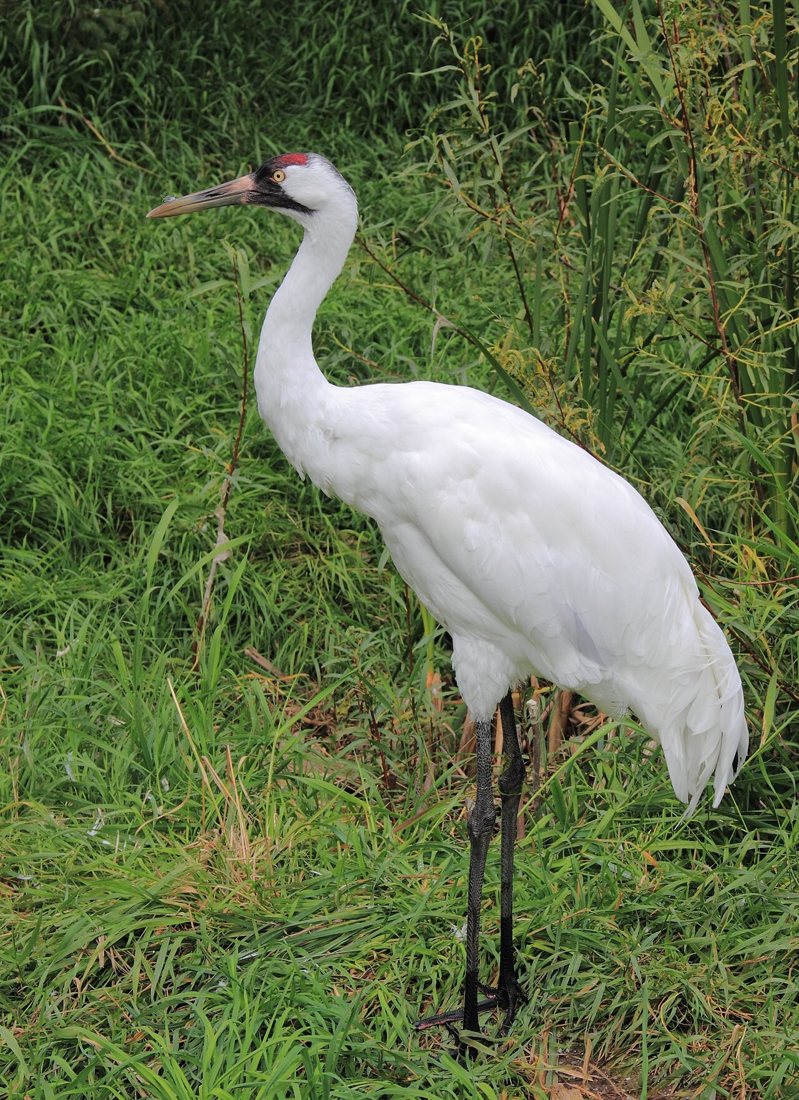
Photo: Sasata, CC BY-SA 3.0
PART 3 · LEARN IT · 4 OF 4
A zoo is not enough by itself
Some people think a species is safe once it lives in a zoo. It is not.
The Panamanian golden frog lives in zoos, but it is still gone from the wild. A species needs a safe place to live in the wild, too.
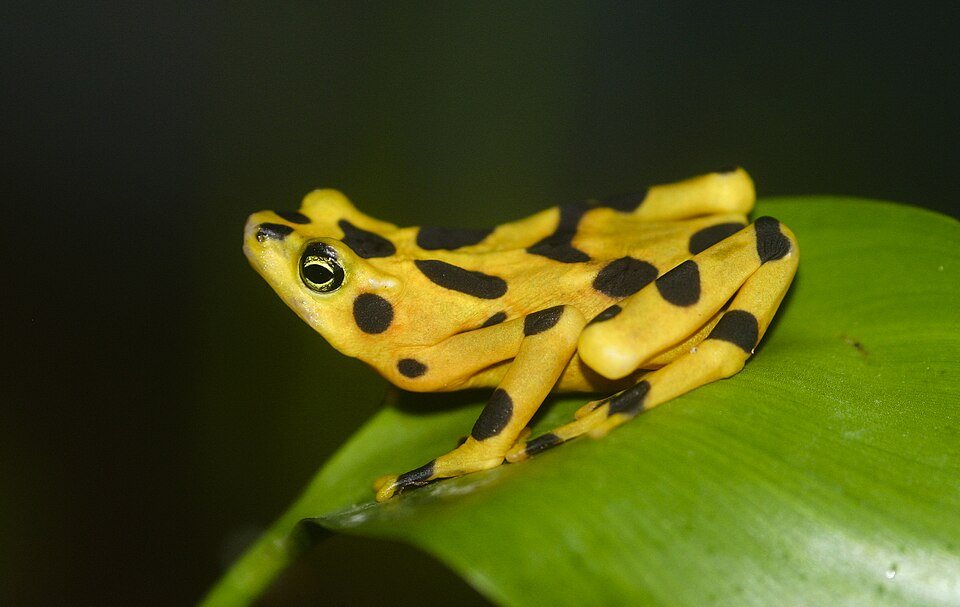
Photo: Brian Gratwicke, CC BY 2.0
ARGUE IT · QUESTION 14
"A zoo saved the whooping crane all by itself."
Claim
Do you agree? Say it in one sentence.
Evidence
Two different jobs from the Learn It, and one number from your crane log.
Reasoning
Say why one partner could not have done it alone.
WRAP IT UP · QUESTION 15
Write the museum caption
Who reads it
A family walking through a museum. Keep it short and clear.
Use
One number from the lab, and one job a partner did.
Length
2 or 3 sentences.
Photo: Sasata, CC BY-SA 3.0
WRAP IT UP · BACK TO THE START
Revisiting the Phenomenon
Why would scientists dress up as birds, and keep dead birds in drawers? What do museums and preserves really do for wild species?
EVIDENCEWhich job is the drawer of birds? Which job is the marsh?
EVIDENCEWhy did the costumes matter for a wild crane?
EVIDENCEZoo or preserve: which helps more? Did you change your prediction?
Hand in your worksheet.
Next lesson: what causes extinction?