Chalk, Coral, and an Acid Ocean Lab
A coral skeleton is made of the same mineral as chalk. Soak chalk as a fair test, read 35 years of real ocean data from near Hawaii, then ask and test your own question about coral in a changing sea.
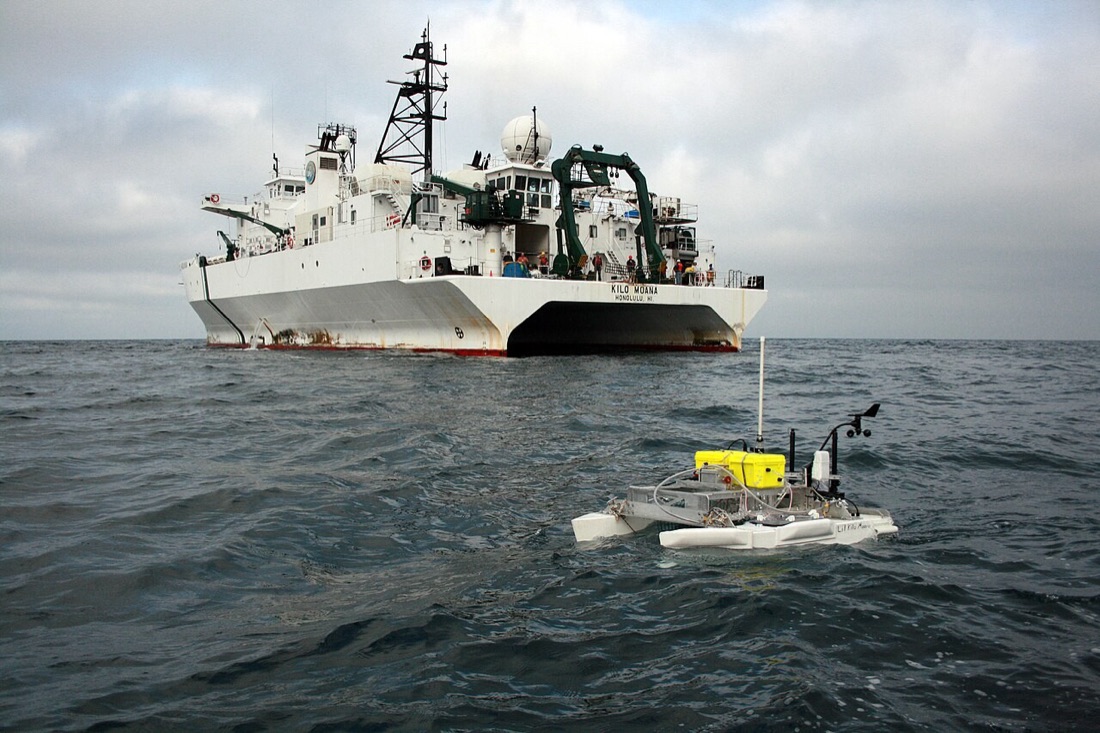
Scientists sail to Station ALOHA, about 100 km north of Oahu, Hawaii, about ten times a year. They bottle seawater and measure its chemistry. This record began in 1988. The ship is the Kilo Moana, a University of Hawaii research ship. Photo: U.S. Navy, public domain.
Graph
Learn It: chalk, coral, and a fair test
Finish these steps in the lab. Then this box opens.
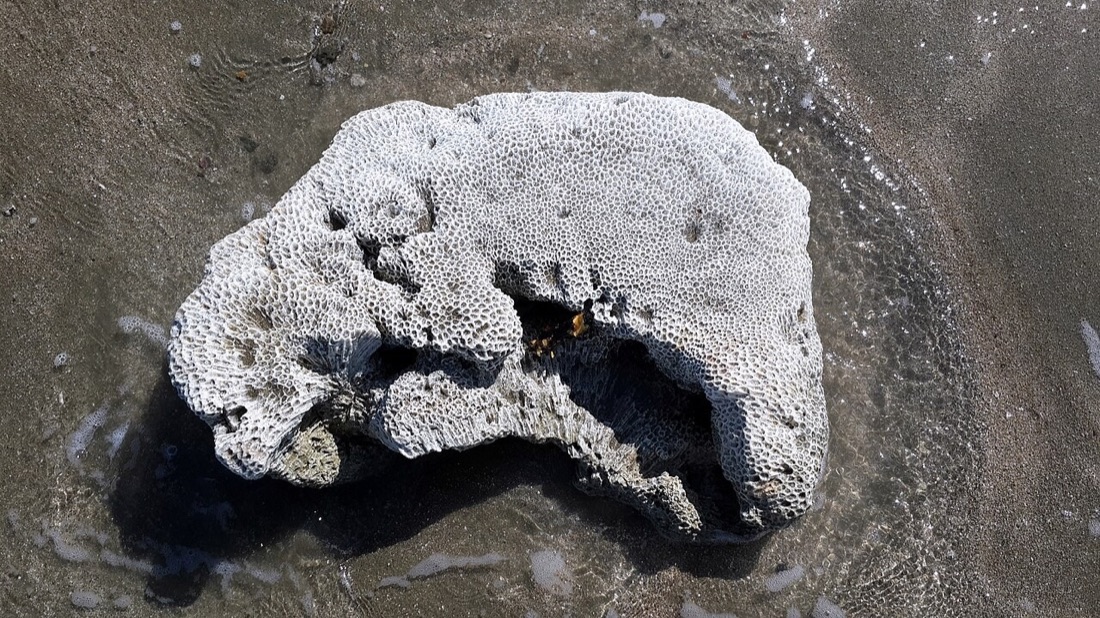
Chalk and coral are the same stuff
A coral is an animal. Each one, a polyp, builds a hard skeleton under itself. The skeleton is calcium carbonate, the same mineral as chalk, eggshells and seashells. Old skeletons pile up for thousands of years. That pile is the reef.
Acid takes it apart
An acid breaks calcium carbonate down. The bubbles are CO2 gas coming out of the chalk. So the chalk loses mass. Stronger acid, warmer acid and more surface (crushed chalk) all make it go faster.
A fair test
The one thing you change on purpose is the independent variable. What you measure, the % of mass lost, is the dependent variable. The cup with the normal condition is the control. Change only one thing. If the cups differ in two ways, you cannot tell which one made the difference.
Seawater did almost nothing
Seawater is not an acid. Its pH is about 8.1, a little basic. It already holds plenty of carbonate, so chalk does not dissolve in it. So how could CO2 hurt a reef? Tab 2 shows what is changing.
Now answer Q4 to Q6 on your worksheet.
Learn It: ocean acidification
Finish these steps in the lab. Then this box opens.
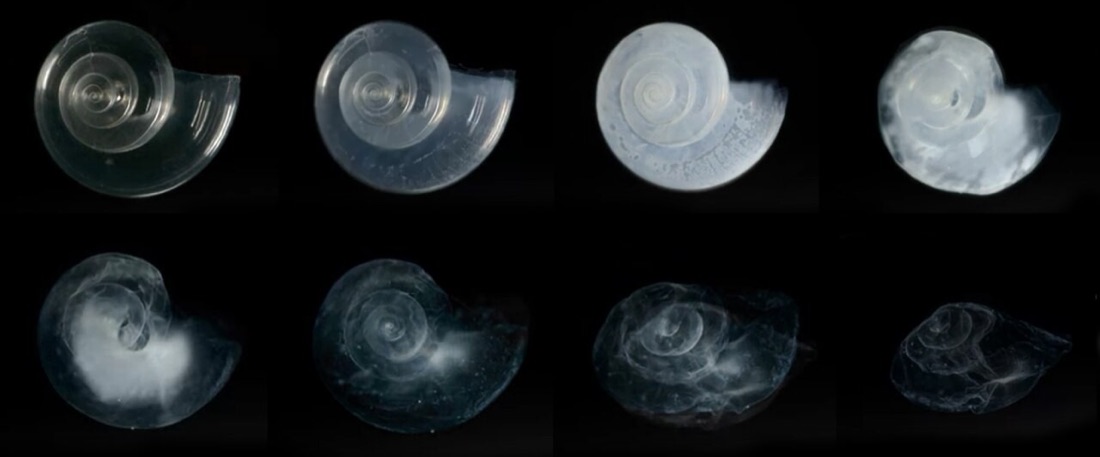
The ocean soaks up CO2
The ocean takes in about a third of the CO2 people put in the air. In water, CO2 makes a weak acid. So the seawater's pH goes down. This is ocean acidification: seawater becoming more acidic as it soaks up CO2.
Small numbers, big steps
Lower pH means more acidic. Each step on the pH scale is 10 times. From 8.12 in 1990 to 8.04 in 2024 is 0.08 of a step. That made the water about 20% more acidic in 35 years. Seawater is still basic, above 7. It is not turning into vinegar. Vinegar, at pH 2.5, is about 400,000 times more acidic.
Less building material
The acid uses up carbonate, the building block for skeletons and shells. The building material number (scientists call it aragonite saturation) tells how easy it is to build. Above 1, shells can form. Coral reefs grow best where it is about 3 or more. Near Hawaii it fell from 3.77 to 3.45.
Slow, steady, every year
The change from year to year is small, and some years bounce up. But the pattern over 35 years goes one way. The harm is not that reefs fizz away. It is that coral has to work harder to build, so it builds less.
Now answer Q9 to Q11 on your worksheet.
Learn It: test a question, check the model
Finish these steps in the lab. Then this box opens.
A testable question
A testable question changes ONE thing and names something you can MEASURE. Data can answer it. "Is the ocean bad for coral?" is not testable yet. "Does more CO2 in the air change how much skeleton a coral builds in a year?" is.
What this model does
Each tank's water soaks up CO2 from its air until they match. The lab works out the pH and the building material with the same chemistry ocean scientists use. Then it uses a rule from many coral lab tests: about 15% less skeleton for each 1 the building material drops.
A real reef
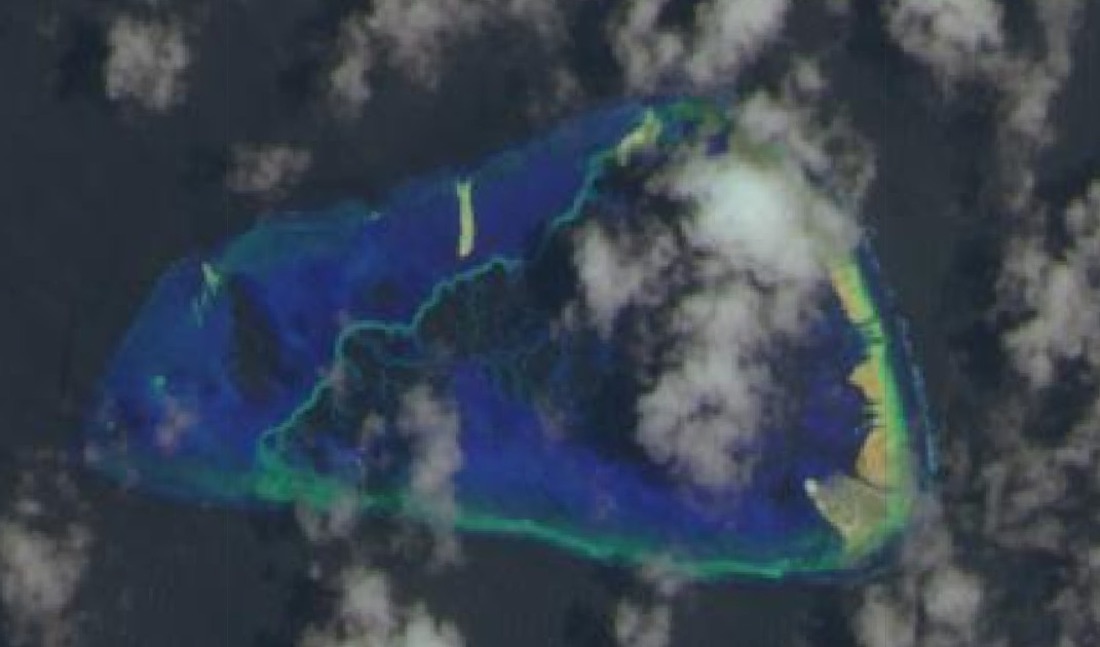
At One Tree Reef, scientists added CO2 to the water flowing over a living reef. The reef built about 34% less skeleton than with normal water (Albright and others, 2018). That is more than this model says. Models leave things out: heat, light, food, and a whole reef full of living things.
Slow and small still adds up
Waves, storms and animals wear a reef down every day. A reef stays only if its corals build faster than it breaks. If coral builds less, year after year, the reef can start to shrink.
Now answer Q14 to Q16 on your worksheet.
Follow-along slideshow · opens with a phenomenon menu, teaches each part with Learn It slides and the live lab, and walks through the worksheet question by question
Printable student worksheet (PDF) · two pages, goes with this lab
Low-write worksheet (PDF) · same questions with tick boxes, word banks and worked examples
Teacher guide: NYSSLS, SEP and CCC alignment (PDF)
What you will learn. I can run a fair test: one change, one measurement, the rest kept the same. I can use real ocean data to explain how CO2 is changing seawater. I can turn a question about reefs and climate into a testable question and test it in a model.
These are models, and models leave things out. Tab 1 copies the classroom chalk test: a wet, blotted piece of about 3 g in about 100 mL for 10 minutes. Its dissolving rates are set to match what full-strength (5%) vinegar does to classroom chalk, about 5% of the mass in 10 minutes at room temperature, with weaker acid slower, warmer acid about half again faster and crushed chalk faster; they are a model, not measurements. The pH values are typical: vinegar about 2.5, seltzer about 4, tap water about 7, seawater about 8.1. Tab 2 is real data: yearly averages of the CO2 in the air at Mauna Loa (NOAA Global Monitoring Laboratory) and of surface seawater at Station ALOHA (Hawaii Ocean Time-series surface CO2 data product, J.E. Dore, University of Hawaii, updated January 2026; Dore and others, 2009, PNAS 106: 12235): seawater CO2, pH and aragonite saturation ("building material"), from every cruise in each year. Tab 3 works out the tank chemistry from its air with standard seawater equations (Weiss 1974; Lueker and others 2000; Dickson 1990; Millero 1995; Mucci 1983) at 25 °C, salinity 35 and the alkalinity of Station ALOHA seawater (2,300 micromoles per kg); checked against Station ALOHA, it matches the real pH within 0.01. Skeleton growth falls 15% for each 1 the building material drops, the average from many lab tests (Chan and Connolly, 2013, Global Change Biology 19: 282); that rule was measured between 2 and 4, so the 936 ppm tank (1.84) is a stretch. The 2100 air values are the IPCC middle path (RCP4.5, 538 ppm) and high path (RCP8.5, 936 ppm); 280 ppm is the air before the 1800s. The model leaves out heat, coral bleaching, light, food and the rest of the reef. Real reef: Albright and others, 2018, Nature 555: 516. Environmental Science, Chapter 6 Case Study: The Importance of Coral Reefs, and Lesson 6.3.
© 2026 Ryan Sajdak. This lab, its worksheets and its slides are free to use, share and change under the Creative Commons BY-NC-SA 4.0 license: give credit, do not sell it, and share your version the same way. Photos: coral skeleton, Muminur Rahman, CC BY-SA 4.0; pteropod shell, NOAA, public domain; One Tree Reef, ESA, CC BY-SA 3.0 IGO; Kilo Moana, U.S. Navy, public domain; all via Wikimedia Commons.